6.3 Rebuilding and extending arguments

💬Speech and Debate Unit 6 Review
6.3 Rebuilding and extending arguments
💬 Speech and Debate
continue practicing 6.3
Multiple choice
Rebuilding and extending arguments are two of the most important skills you'll use during rebuttals. Rebuilding means repairing your argument after an opponent has attacked it. Extending means pushing your argument further, showing why it matters more than your opponent acknowledged. Together, these techniques keep your case alive and growing throughout the round.
Rebuilding Arguments
Rebuilding is what you do when an opponent has poked holes in your case. You're not just repeating what you said before. You're identifying exactly where the attack landed and responding with stronger reasoning, better evidence, or clearer framing.

Top images from around the web for Identifying key components
Logical Arguments | English Composition 1 View original
Is this image relevant?
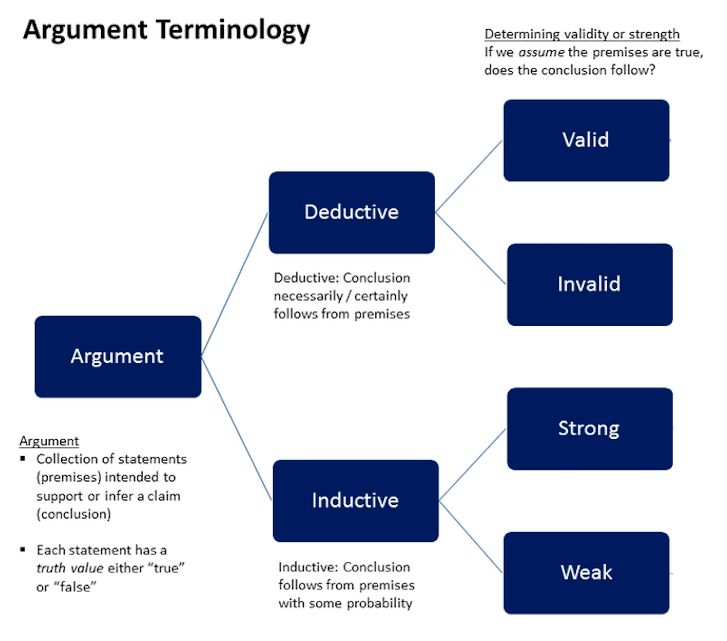
Inductive and Deductive Reasoning | English Composition 1 View original
Is this image relevant?
Finding the Purpose and Central Idea of Your Speech | Public Speaking View original
Is this image relevant?
Logical Arguments | English Composition 1 View original
Is this image relevant?
Inductive and Deductive Reasoning | English Composition 1 View original
Is this image relevant?
Identifying Key Components
Before you can fix anything, you need to figure out what actually got damaged.
- Break your argument down into its parts: claim (what you're asserting), warrant (the reasoning that supports it), and evidence (the facts or data backing it up).
- Figure out which part your opponent targeted. Did they challenge your evidence? Your logic? Your framing?
- Check for gaps or weak links you may not have noticed before.
- Prioritize. Focus on the components that matter most to the argument's success.
Strengthening Logical Connections
Often, opponents attack the link between your evidence and your claim. Rebuilding means tightening that chain of reasoning.
- Make each logical step explicit. Don't assume the judge will fill in gaps for you.
- If your opponent offered an alternative explanation for your evidence, address it directly and explain why your interpretation is stronger.
- Add a new example, analogy, or piece of evidence that reinforces the connection.
Enhancing Persuasive Elements
Rebuilding isn't just about logic. You also want to make the argument land harder the second time around.
- Revisit your use of ethos (credibility), pathos (emotion), and logos (logic). Which could be stronger?
- Sharpen your word choice. Vague language invites attacks; precise language deflects them.
- Tailor your framing to what the judge or audience values most.
Addressing Counterarguments Effectively
A rebuilt argument should show that you've heard the opponent's objection and that your case still stands.
- State the opponent's objection fairly. Don't strawman it.
- Explain specifically why the objection fails: weak evidence, flawed logic, or a mischaracterization of your position.
- Show that even if the objection has some merit, your argument still outweighs or still holds on balance. This "even if" move is one of the most powerful tools in rebuttal because it demonstrates you can win the point under multiple scenarios.
Extending Arguments
Extending is different from rebuilding. You're not repairing damage; you're building upward. An extension takes your original argument and shows the judge something new: a deeper implication, a broader application, or a connection your opponent ignored.
Building on Existing Foundations
Start with what you've already established. Your original claim, evidence, and reasoning are the launchpad.
- Ask yourself: What follows from this? If your argument is true, what else must be true?
- Look for connections to related concepts, theories, or real-world trends.
- Don't abandon your foundation. The extension should feel like a natural next step, not a brand new argument.
Introducing New Perspectives
One strong way to extend is to bring in a viewpoint your opponent hasn't considered.
- This could be a different stakeholder group affected by the issue, a different analytical lens (economic vs. ethical, for example), or a different time horizon (short-term vs. long-term).
- Evaluate whether the new perspective strengthens your original claim or adds a new dimension the judge should weigh.
- Synthesize the new perspective with your existing case rather than just tacking it on. The judge should see how it fits, not wonder why you're suddenly talking about something different.
Expanding Scope and Depth
Extensions often work by zooming out or zooming in.
- Zooming out: Show that your argument applies beyond the specific case at hand. If your evidence is about one country's economic policy, explain why the underlying principle holds in other contexts too.
- Zooming in: Dig deeper into the mechanism. Explain why your evidence works the way it does, not just that it does.
- Bring in additional research or data that wasn't in your original case.
Connecting to Broader Themes
Judges often evaluate which team better explains the big picture. Extensions that connect to larger values or principles can be very persuasive.
- Link your argument to overarching themes like justice, liberty, economic stability, or human welfare.
- Show how your argument fits into larger ongoing debates in the topic area.
- This is especially useful in later rebuttals when you're crystallizing why you should win the round.
Strategies for Rebuilding
Clarifying Main Points
Sometimes an argument gets attacked simply because it wasn't clear the first time. Rebuilding gives you a chance to fix that.
- Restate your central claim in simpler, more direct language.
- Cut any ambiguity. If your opponent misinterpreted your point, that's partly a clarity problem on your end.
- Make sure each supporting point clearly ties back to your thesis.

Reinforcing Supporting Evidence
Weak evidence is one of the easiest things for an opponent to exploit.
- If your original source was challenged, introduce a second source that corroborates the same point. For example, if your opponent questions a single study's methodology, citing a meta-analysis or a second independent study that reaches the same conclusion makes your evidence much harder to dismiss.
- Mix your evidence types: pair a statistic with expert testimony, or a case study with a logical principle.
- Make sure your evidence is from credible, up-to-date sources. Judges notice when it isn't.
Refining Language and Delivery
How you say something matters as much as what you say, especially in rebuttals where time is short.
- Cut unnecessary words. In a rebuttal, every second counts.
- Use confident, direct phrasing. Compare "It could be argued that this might suggest..." with "This proves..." The second version sounds like you believe your own argument.
- Practice your pacing. Rushing through a rebuilt argument undermines its impact.
Anticipating Potential Weaknesses
The best rebuilding happens before the attack. If you can predict where your opponent will strike, you can preempt it.
- Before the round, argue against your own case. Where would you attack?
- Prepare brief responses to the two or three most likely objections.
- Build these preemptive defenses into your constructive speech so the argument is harder to damage in the first place.
Techniques for Extending
Exploring Implications and Consequences
This is the most common and often most effective extension technique. You're answering the question: So what?
- Trace the short-term and long-term effects of your argument's claim.
- Consider who benefits, who's harmed, and what changes if your argument is accepted.
- Address both positive and negative consequences to show you've thought it through fully. Acknowledging a tradeoff and explaining why the benefits still outweigh it is far more persuasive than pretending the tradeoff doesn't exist.
Drawing Parallels and Analogies
Analogies make abstract arguments concrete and can be very persuasive in rounds.
- Find a historical event, a situation in another country, or a well-known example that mirrors your argument.
- Explain specifically what the parallel shares with your case and what it reveals.
- Be ready for opponents to challenge the analogy. Know where the parallel holds and where it breaks down, because a good opponent will go straight for the differences.
Incorporating Expert Opinions
Expert evidence adds credibility and can introduce nuance you might not generate on your own.
- Quote scholars, practitioners, or organizations with recognized authority on the topic.
- Don't just drop the quote. Explain why this expert's view supports your specific claim. A quote without analysis is just decoration.
- If multiple experts agree, that convergence itself becomes a powerful piece of evidence.
Engaging Audience Emotions
Emotional appeals can elevate an extension from informative to memorable, but they need to be grounded.
- Identify which emotions are genuinely relevant to the topic: empathy for affected populations, concern about risks, hope for solutions.
- Use specific stories or vivid details rather than vague emotional language. "Thousands of families displaced" hits differently than "people are affected."
- Always pair emotional appeals with evidence and reasoning. An emotional appeal without logical backing will lose credibility with most judges.
Rebuilding vs. Extending
Differences in Approach
These are two distinct moves, and knowing the difference matters for your strategy:
- Rebuilding is defensive. You're fixing what your opponent damaged.
- Extending is offensive. You're pushing your argument into new territory your opponent hasn't addressed.
- Rebuilding strengthens the core; extending expands the reach.
Complementary Nature of Techniques
You'll almost always need both in a rebuttal speech. A rebuilt argument that isn't extended can feel stale. An extended argument that ignores the opponent's attacks can feel evasive.
- Rebuild first to re-establish your foundation, then extend to show the argument goes further than the opponent acknowledged.
- Sometimes extending naturally rebuilds. Showing a deeper implication can demonstrate that the opponent's attack was superficial and missed the real significance of your point.
Deciding When to Rebuild or Extend
This is a judgment call you'll make in real time during the round.
- If your opponent landed a strong hit on a key argument, rebuild it. Ignoring the attack signals to the judge that you can't answer it.
- If your opponent mostly ignored an argument or gave it a weak response, extend it. Push it further and explain why their lack of response means you're winning that point.
- If time is limited, prioritize the arguments that matter most to the round's central question.
Balancing Effectiveness and Efficiency
Rebuttal time is always short, so you can't do everything.
- Pick the two or three most important arguments to rebuild or extend. Don't try to cover everything superficially.
- Allocate more time to the arguments that are most likely to decide the round.
- Be willing to let go of minor points. Judges respect debaters who focus on what matters rather than scrambling to address every single thing the opponent said.
Evaluating Rebuilt Arguments
Assessing Improved Coherence
After rebuilding, check whether the argument actually flows better than before.
- Does each piece of evidence clearly support a specific claim?
- Are there still gaps in the logical chain?
- Would someone hearing this argument for the first time be able to follow it easily?
Measuring Enhanced Persuasiveness
A rebuilt argument should be more convincing than the original version.
- Does it address the opponent's strongest objection?
- Is the evidence more credible or more relevant than what you started with?
- Does the argument now appeal to the judge's values and decision-making framework?
Considering Audience Reception
Think about how the judge and your opponent will respond to the rebuilt version.
- Will the judge see that you've directly engaged with the opponent's attacks?
- Could the opponent easily re-attack the same weak point, or have you genuinely fixed it?
- Does the rebuilt argument feel responsive and adaptive, or does it sound like you're just repeating yourself with different words?
Comparing to Original Arguments
A quick mental comparison helps you gauge whether your rebuilding effort was worth the time.
- What specifically is stronger now?
- Did you introduce any new weaknesses in the process of fixing old ones?
- Is the rebuilt version meaningfully better, or just slightly rephrased? If it's just rephrased, the judge will notice, and so will your opponent.
Evaluating Extended Arguments
Analyzing Added Value and Insight
A good extension should make the judge think, "That's a dimension I hadn't considered."
- Does the extension introduce genuinely new analysis, or is it just restating the original point in different words?
- Does it deepen understanding of the topic?
- Is the new perspective original and well-supported?
Gauging Increased Impact
Extensions should make your argument matter more.
- Does the extension show why the argument affects more people, more contexts, or more significant outcomes?
- Does it connect to what the judge cares about in this round?
- Will it be memorable when the judge is making their decision?
Determining Relevance to Central Thesis
An extension that wanders off-topic can actually hurt your case.
- Does the extension clearly connect back to your main claim?
- Can you explain in one sentence how the extension supports your thesis?
- If you can't draw a straight line from the extension to your ballot story, cut it. Time spent on a tangent is time stolen from arguments that could win you the round.
Assessing Overall Argument Strength
Step back and look at the full picture: original argument, rebuilt components, and extensions together.
- Does the complete argument tell a coherent, compelling story?
- Can it withstand the opponent's next round of attacks?
- Does it give the judge clear reasons to vote for you on this particular point?
See Fiveable more often in Google
Mark Fiveable as a preferred source and Google is more likely to show you our guides in Top Stories, with a "preferred" badge in AI Mode and AI Overviews.