6.2 Identifying and exploiting weaknesses in opponent's case

💬Speech and Debate Unit 6 Review
6.2 Identifying and exploiting weaknesses in opponent's case
💬 Speech and Debate
continue practicing 6.2
Multiple choice
Analyzing Your Opponent's Case
Finding and pressing on weaknesses in your opponent's case is one of the most important skills you'll develop in debate. It's not about being aggressive for the sake of it. The goal is to systematically take apart their argument so the judge sees that your position is stronger.
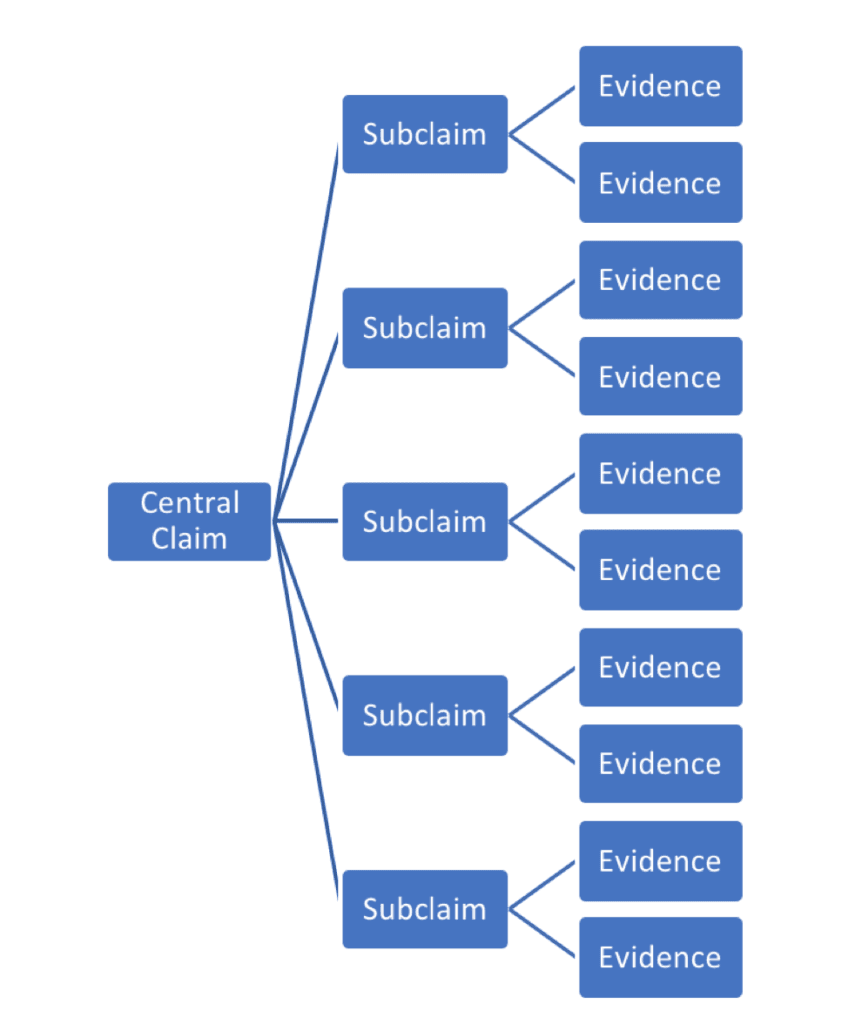
To do this well, you need to break their case into parts and evaluate each one. Think of every argument as having four components: the claim (what they're arguing), the evidence (what supports it), the reasoning (the logic connecting evidence to claim), and the impact (why it matters). Weaknesses can hide in any of these layers.

Top images from around the web for Identifying key arguments
Inductive and Deductive Reasoning | English Composition 1 View original
Is this image relevant?
Making and Supporting Claims | FASTrack WRIT 102 Writing Guide View original
Is this image relevant?
Making and Supporting Claims | FASTrack WRIT 102 Writing Guide View original
Is this image relevant?
Inductive and Deductive Reasoning | English Composition 1 View original
Is this image relevant?
Making and Supporting Claims | FASTrack WRIT 102 Writing Guide View original
Is this image relevant?
Identifying Key Arguments
Before you can attack anything, you need to know what you're attacking. During your opponent's speech, focus on identifying their central contentions, the two or three big ideas their entire case rests on.
- Listen for their thesis or resolution-level claim. Everything else branches from this.
- Note the specific sub-arguments they use to prop up their position (economic benefits, social impact, moral obligations, etc.).
- Distinguish between their core arguments and their supporting details. You want to target the foundation, not the decoration.
If you knock out a central contention, the supporting points collapse with it. That's far more effective than picking off minor details.
Assessing Evidence Quality
Not all evidence is created equal. When your opponent presents a source or statistic, run it through these filters:
- Credibility: Who said it? Is the source an expert in the relevant field, or are they speaking outside their area of knowledge?
- Bias: Does the source have a vested interest in the outcome? A study funded by an industry group arguing that industry is harmless should raise a flag.
- Recency: Is the data current, or has the situation changed since it was published? A 2010 statistic about social media usage, for example, is nearly useless today.
- Sufficiency: One anecdote doesn't prove a trend. Has the opponent provided enough evidence, or are they generalizing from a single case?
- Relevance: Does the evidence actually prove what they say it proves? Sometimes a statistic is real but doesn't connect to the claim being made.
When you spot a gap in any of these areas, that's your opening during cross-examination.
Evaluating Reasoning
Even with solid evidence, an argument can fall apart if the reasoning connecting evidence to conclusion is flawed. Pay attention to:
- Cause-and-effect claims: Does the opponent prove that A caused B, or just that A and B happened around the same time? Correlation is not causation, and this is one of the most common reasoning errors in debate.
- Analogies: If they argue "Policy X worked in Country A, so it'll work here," ask whether the two situations are actually comparable. Differences in population, culture, or economic conditions can break an analogy.
- Deductive leaps: Check whether each step in their logic actually follows from the previous one. Sometimes there's a hidden assumption bridging two points that doesn't hold up under scrutiny.
Spotting Logical Fallacies
Logical fallacies are specific, nameable errors in reasoning. Being able to identify and call them out by name gives your rebuttal more precision and credibility. Here are the ones you'll encounter most often:
- Ad hominem: Attacking the person making the argument rather than the argument itself. ("My opponent has no experience in this area, so their point is invalid.")
- Straw man: Misrepresenting the opponent's argument to make it easier to attack. If someone does this to your case, call it out immediately.
- False dichotomy: Presenting only two options when more exist. ("Either we adopt this policy or the problem gets worse." Really? Those are the only two possibilities?)
- Appeal to emotion: Substituting a sad story or fear-based claim for actual evidence. Emotional examples can supplement an argument, but they can't replace reasoning.
- Circular reasoning: Using the conclusion as a premise. ("This policy is necessary because we need it.")
- Red herring: Introducing an irrelevant topic to distract from the actual issue being debated.
When you spot a fallacy, name it clearly and explain why it undermines their point. Don't just say "that's a fallacy" and move on.
Preparing Counterarguments
Once you've identified where your opponent's case is vulnerable, you need to build targeted responses. Good counterarguments don't just say "you're wrong." They explain why the opponent is wrong and what follows from that.
Challenging Assumptions
Every argument rests on assumptions, and many of them go unstated. Your job is to drag those assumptions into the open and test them.
For example, if your opponent argues that increasing minimum wage will reduce poverty, they're assuming that employers won't cut hours or jobs in response. That assumption may or may not be warranted, but it needs to be defended, not just taken for granted.
- Look for places where your opponent treats a debatable claim as an obvious truth.
- Watch for oversimplifications, like assuming one factor is the sole cause of a complex problem.
- Ask yourself: "What would have to be true for this argument to work?" Then challenge those conditions.
Exposing Flaws in Logic
This is where your fallacy-spotting pays off. When you find a logical error, your counterargument should follow a clear structure:
- State the opponent's argument accurately (so you can't be accused of straw-manning).
- Identify the specific flaw in their reasoning.
- Explain why that flaw matters and how it undermines their conclusion.
- If possible, offer a counterexample that disproves their logic.
For instance, if your opponent argues by analogy that a policy succeeded in Sweden so it will succeed in the U.S., you could point out specific structural differences (population size, existing social programs, tax systems) that make the comparison unreliable.
Questioning Relevance of Evidence
Sometimes the evidence is technically accurate but doesn't actually prove what the opponent claims it proves. This is a subtle but powerful line of attack.
- Cherry-picked data: Did they select only the statistics that support their case while ignoring contradictory data from the same source?
- Outdated sources: Conditions may have changed significantly since the evidence was gathered.
- Misapplied context: A study conducted in one country or population may not apply to the situation being debated.
Pointing out that evidence is irrelevant can be even more effective than arguing it's wrong, because it forces the opponent to re-justify the connection.

Highlighting Inconsistencies
Contradictions within an opponent's case are some of the easiest weaknesses to exploit, and judges notice them.
- Does their evidence in one contention conflict with evidence in another?
- Have they shifted their position between speeches? If they defined a term one way in their constructive and a different way in rebuttal, that's worth flagging.
- Do their proposed solutions contradict their stated values? For example, arguing for individual freedom in one contention but supporting a mandate in another.
When you find an inconsistency, quote their exact words back to them. This is concrete and hard to dismiss.
Exploiting Weaknesses in Rebuttals
Identifying weaknesses is only half the battle. You also need to press those weaknesses effectively during the rebuttal, especially when your opponent tries to recover.
Anticipating Opponent's Responses
Strong debaters don't just prepare arguments; they prepare for the responses to their arguments. Before the round, think through the most likely ways your opponent will defend their case.
- For each counterargument you plan to make, ask: "How would I respond if I were on the other side?"
- Prepare evidence or reasoning that addresses those likely defenses.
- Have a "second layer" ready. If your first attack is parried, you should have a follow-up that goes deeper.
This kind of preparation is what separates competent debaters from dominant ones.
Preparing Effective Refutations
A refutation should be tight and focused. Use this four-step structure:
- "They say..." (Briefly restate the opponent's point.)
- "But..." (Present your counter-evidence or counter-reasoning.)
- "Because..." (Explain why your response is more credible or logical.)
- "Therefore..." (State what this means for the round, how it affects the bigger picture.)
Prioritize your refutations. You won't have time to address everything, so focus on the arguments that carry the most weight with the judge.
Adapting to Opponent's Strategies
No matter how well you prepare, your opponent will say things you didn't expect. Adaptability is essential.
- Listen actively during every speech, not just the ones directed at you. Take careful notes (flowing) so you can track how arguments evolve.
- If the opponent drops an argument (fails to respond to it), point that out explicitly. A dropped argument is essentially conceded.
- If they pivot to a new line of reasoning, decide quickly whether to follow them there or redirect the debate back to ground that favors you.
Maintaining Composure Under Pressure
Debate rounds can get intense, especially during cross-examination. Your demeanor matters as much as your words.
- If your opponent gets aggressive, stay measured. Judges tend to reward the debater who looks in control.
- Don't rush your delivery when you're feeling pressured. Slow down slightly, and your words will carry more authority.
- Maintain steady eye contact with the judge (not just your opponent) and use a confident, even tone. Composure signals that you trust your own arguments.
Delivering Persuasive Rebuttals
A rebuttal can contain great arguments and still fall flat if it's poorly organized or hard to follow. Delivery and structure matter.
Organizing Rebuttal Structure
Judges are flowing your speech in real time. Make their job easy.
- Use clear signposting: "On their first contention..." or "Turning to the economic argument..." This tells the judge exactly where to write your response on their flow.
- Lead with your strongest rebuttal. First impressions set the tone, and if you run short on time, at least your best material was heard.
- Group related responses together rather than jumping between topics.

Prioritizing Key Points
You will almost never have time to respond to every single thing your opponent said. That's normal and expected.
- Focus on the arguments that, if left standing, would win the round for your opponent.
- It's better to thoroughly dismantle two or three key points than to superficially touch on six.
- If a minor argument doesn't affect the overall outcome of the debate, let it go and spend your time where it counts.
Using Rhetorical Devices Effectively
Rhetorical techniques can make your rebuttals more memorable and persuasive when used naturally.
- Repetition: Restating a key phrase reinforces it in the judge's mind. ("They have no evidence for this claim. No study. No data. No expert testimony.")
- Rhetorical questions: These can highlight absurdity. ("If this policy has been tried in three countries and failed in all three, why should we expect a different result here?")
- Analogies: A well-chosen comparison can make a complex point instantly clear. Just make sure the analogy actually holds up to scrutiny.
Use these tools to enhance strong arguments, not to disguise weak ones.
Connecting Rebuttals to Your Main Case
Every rebuttal should do double duty: weaken your opponent's case and reinforce yours.
- After refuting a point, briefly explain how this supports your own position. ("Not only does their evidence fail to prove economic growth, but our evidence shows the opposite trend, which is exactly what our second contention predicts.")
- Tie your rebuttals back to your central theme or framework. This gives the judge a coherent narrative rather than a scattered list of objections.
Strengthening Your Own Case
Debate isn't just about tearing down the other side. You also need to build up your own position throughout the round, especially as new information emerges.
Addressing Potential Weaknesses
The best defense is a good offense, but you should also shore up your own vulnerabilities.
- Before the round, identify the two or three most likely attacks on your case and prepare responses.
- If you know a piece of your evidence is slightly dated or your reasoning has a gap, address it proactively. Acknowledging a limitation and explaining why it doesn't undermine your overall point is far more credible than pretending the weakness doesn't exist.
Incorporating Opponent's Concessions
When your opponent concedes a point, even partially, use it.
- Quote their exact words: "My opponent agreed that the current system is failing. That's precisely why our plan is necessary."
- Concessions from the other side carry extra weight because they come from a hostile source. The judge knows your opponent wouldn't admit something that helps you unless it were clearly true.
- Track concessions carefully on your flow so you can reference them in later speeches.
Emphasizing Key Evidence
As the debate progresses, keep returning to your strongest evidence.
- Don't assume the judge remembers a statistic you mentioned once in your constructive. Repeat key data points in your rebuttals when relevant.
- If you have a particularly strong source (a recent peer-reviewed study, a recognized expert), reference it multiple times across speeches to anchor your case.
Reinforcing Central Arguments
By the end of the round, the judge should have a crystal-clear understanding of your two or three main arguments and why they outweigh your opponent's.
- In your final rebuttal, briefly summarize your core contentions and explain why they still stand despite everything your opponent has said.
- Frame the round for the judge: "This debate comes down to [X], and on that question, our side has provided stronger evidence and better reasoning."
- End with a clear, confident statement of why you've won. Don't trail off or introduce new arguments in your final moments.
See Fiveable more often in Google
Mark Fiveable as a preferred source and Google is more likely to show you our guides in Top Stories, with a "preferred" badge in AI Mode and AI Overviews.