8.1 Concept of implicit differentiation
Updated March 2026Fiveable Content Team

∬Differential Calculus Unit 8 Review
8.1 Concept of implicit differentiation
∬ Differential Calculus
Unit 8 – Implicit Differentiation
Implicit differentiation is a powerful tool for finding derivatives of functions that aren't explicitly defined. It's especially handy when dealing with equations where x and y terms are mixed together, like in circles or other complex shapes.
This technique uses the chain rule to differentiate both sides of an equation with respect to x, treating y as a function of x. It allows us to find derivatives and tangent lines for curves that would be tricky to work with otherwise.
Implicit Differentiation
Concept of implicit differentiation
- Technique for finding derivatives of functions not explicitly defined as
- Useful when both and terms are on the same side of the equation ()
- Necessary when solving for in terms of is difficult or impossible
- Applies when a function is defined by a relationship between and rather than an explicit formula
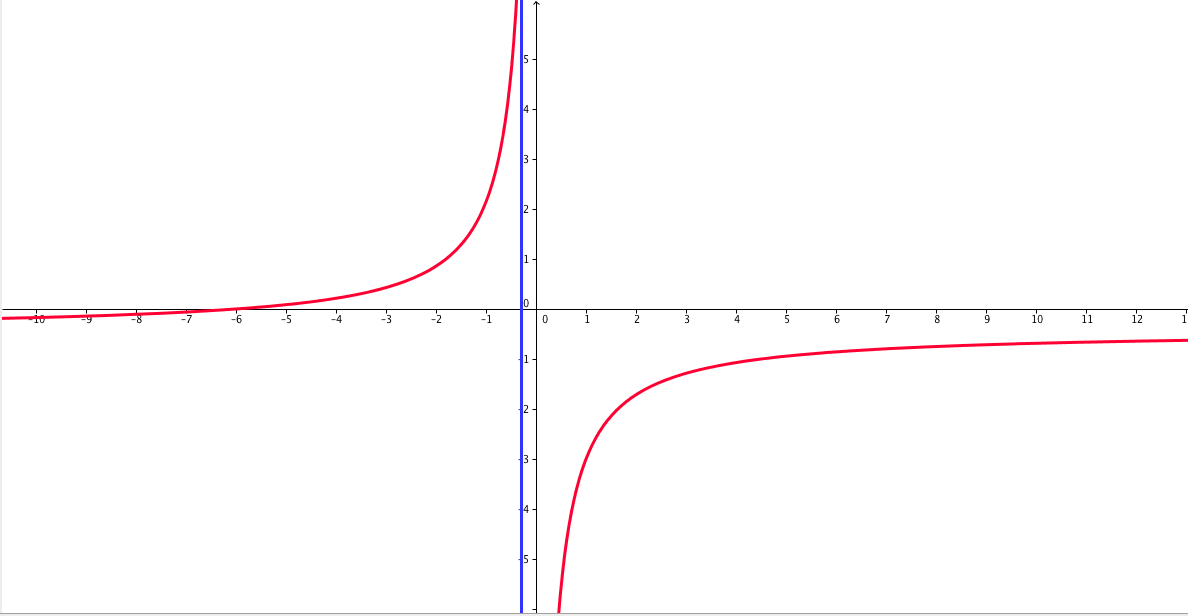
Chain rule for implicit functions
- Differentiate both sides of the equation with respect to , treating as a function of
- When differentiating a term involving , apply the chain rule:
- Implicitly differentiate :
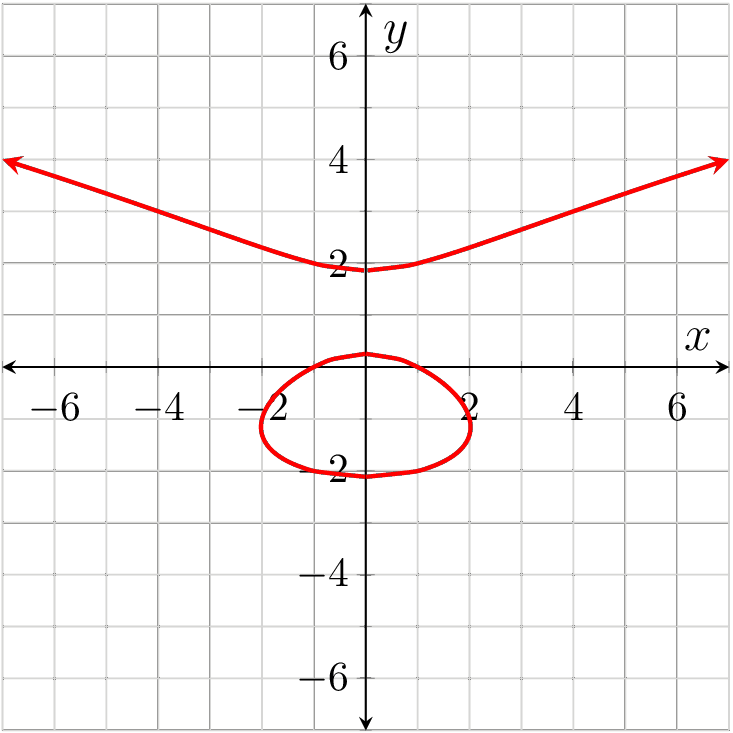
Derivatives of implicit functions
- After implicit differentiation, solve for to find the derivative of the implicitly defined function
- Find for the implicitly defined function :
- (from previous example)
- Solve for :
Tangent lines to implicit curves
- To find the equation of a tangent line at a point on an implicitly defined curve:
- Find using implicit differentiation
- Evaluate at the point to find the slope of the tangent line
- Use the point-slope form of a line: , where is the slope
- Find the equation of the tangent line to the curve at the point :
- (from previous example)
- Evaluate at :
- Use the point-slope form:
See Fiveable more often in Google
Mark Fiveable as a preferred source and Google is more likely to show you our guides in Top Stories, with a "preferred" badge in AI Mode and AI Overviews.