2.3 Techniques for evaluating limits
Updated March 2026Fiveable Content Team

∬Differential Calculus Unit 2 Review
2.3 Techniques for evaluating limits
∬ Differential Calculus
Unit 2 – Limits and Their Properties
Limits are the foundation of calculus, allowing us to understand function behavior near specific points. They're crucial for defining derivatives and continuity, which we'll explore later in the course.
Evaluating limits involves various techniques, from direct substitution to algebraic manipulation and trigonometric identities. Mastering these methods is essential for solving complex limit problems and understanding function behavior.
Evaluating Limits
Direct substitution for limits
- Simplest method for finding limits substitutes limiting value directly into function
- Works when function is continuous at limiting value meaning limit equals function value at that point (polynomial functions)
- Fails when function is undefined or indeterminate at limiting value resulting in forms like , , , , , ,

Algebraic techniques in limit simplification
- Factoring simplifies rational functions and cancels common factors eliminating indeterminate forms like (factoring to )
- Rationalization simplifies limits with roots by multiplying numerator and denominator by conjugate of denominator eliminating or (rationalizing to )
- Multiplying by cleverly chosen form of 1 like , , , reveals limit when direct substitution fails
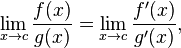
Trigonometric identities in limit evaluation
- Trigonometric identities simplify limits with trigonometric functions using , ,
- Squeeze theorem finds limits of trigonometric functions bounded by simpler functions with equal limits ( squeezed between and as )
- Special trigonometric limits:
Sandwich theorem for bounded functions
- Squeeze Theorem states if near and , then
- To apply:
- Find simpler bounding functions and near limiting value
- Evaluate limits of and
- If bounding limits are equal, squeezed limit exists and equals same value
- Useful for limits involving absolute values, trigonometric functions, or complex expressions ( squeezed between and as )
See Fiveable more often in Google
Mark Fiveable as a preferred source and Google is more likely to show you our guides in Top Stories, with a "preferred" badge in AI Mode and AI Overviews.