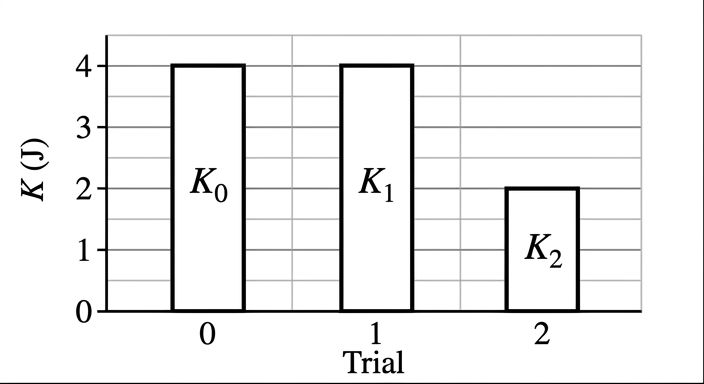
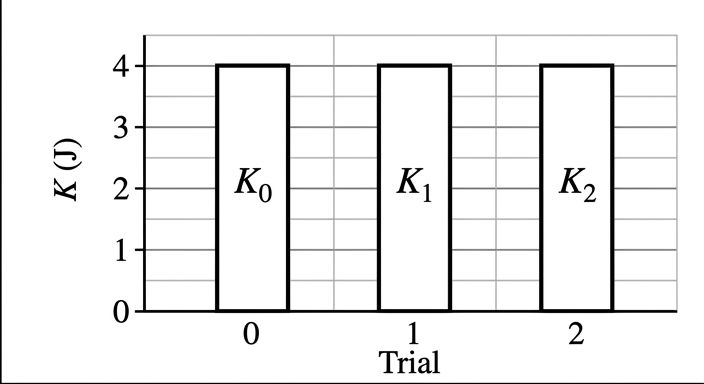
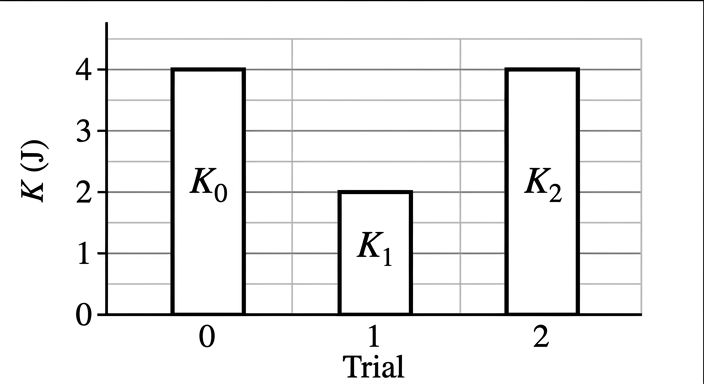
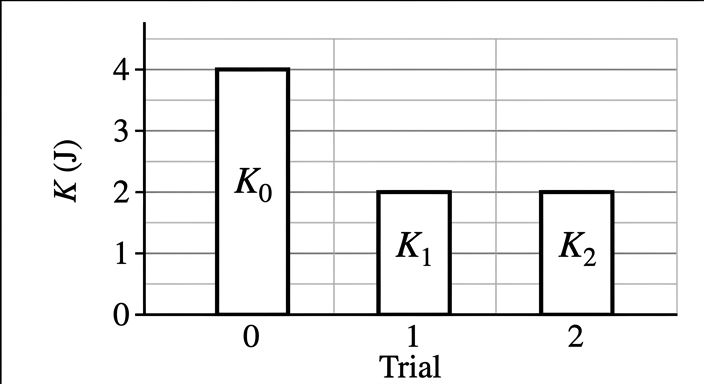
Collisions are classified by what happens to the total kinetic energy of the system. In an elastic collision, total kinetic energy is conserved. In an inelastic collision, total kinetic energy decreases because some energy is converted to thermal energy, sound, or deformation. In a perfectly inelastic collision, the objects stick together and move at a single shared velocity, which represents the maximum possible kinetic energy loss. Momentum is conserved in all collision types.
- Elastic collision: Total kinetic energy of the system is the same before and after. Individual objects may exchange kinetic energy, but the total does not change.
- Inelastic collision: Total kinetic energy decreases. The lost kinetic energy is converted to other forms by nonconservative forces during the interaction.
- Perfectly inelastic collision: Objects stick together and move with a common velocity after the collision. Use p_total_before = (m1 + m2) * v_common to find the shared velocity.
- Kinetic energy loss calculation: delta_KE = KE_final - KE_initial. This value is zero for elastic, negative for inelastic. It is never positive in a standard collision.
- Momentum conserved in all cases: Regardless of collision type, if the system is isolated, total momentum is conserved. Kinetic energy conservation is an additional condition only for elastic collisions.
A 4 kg block moving at 6 m/s collides and sticks to a stationary 2 kg block. Find the common velocity after the collision and the kinetic energy lost.
| Collision type | Momentum conserved? | Kinetic energy conserved? | Objects after |
|---|
| Elastic | Yes | Yes | Separate, may exchange speeds |
| Inelastic | Yes | No (decreases) | Separate, some KE lost |
| Perfectly inelastic | Yes | No (maximum loss) | Stick together, one velocity |