AP Human Geography Unit 6 Cheatsheet: Cities and Urban Land-Use Patterns and Processes

AP Human Geography Unit 6 Cheatsheet: Cities and Urban Land-Use Patterns and Processes

Start with the first 3 sections of the Unit 6 one-page cheatsheet below. The full sheet is a PDF you can print.

Origins & Drivers of Urbanization

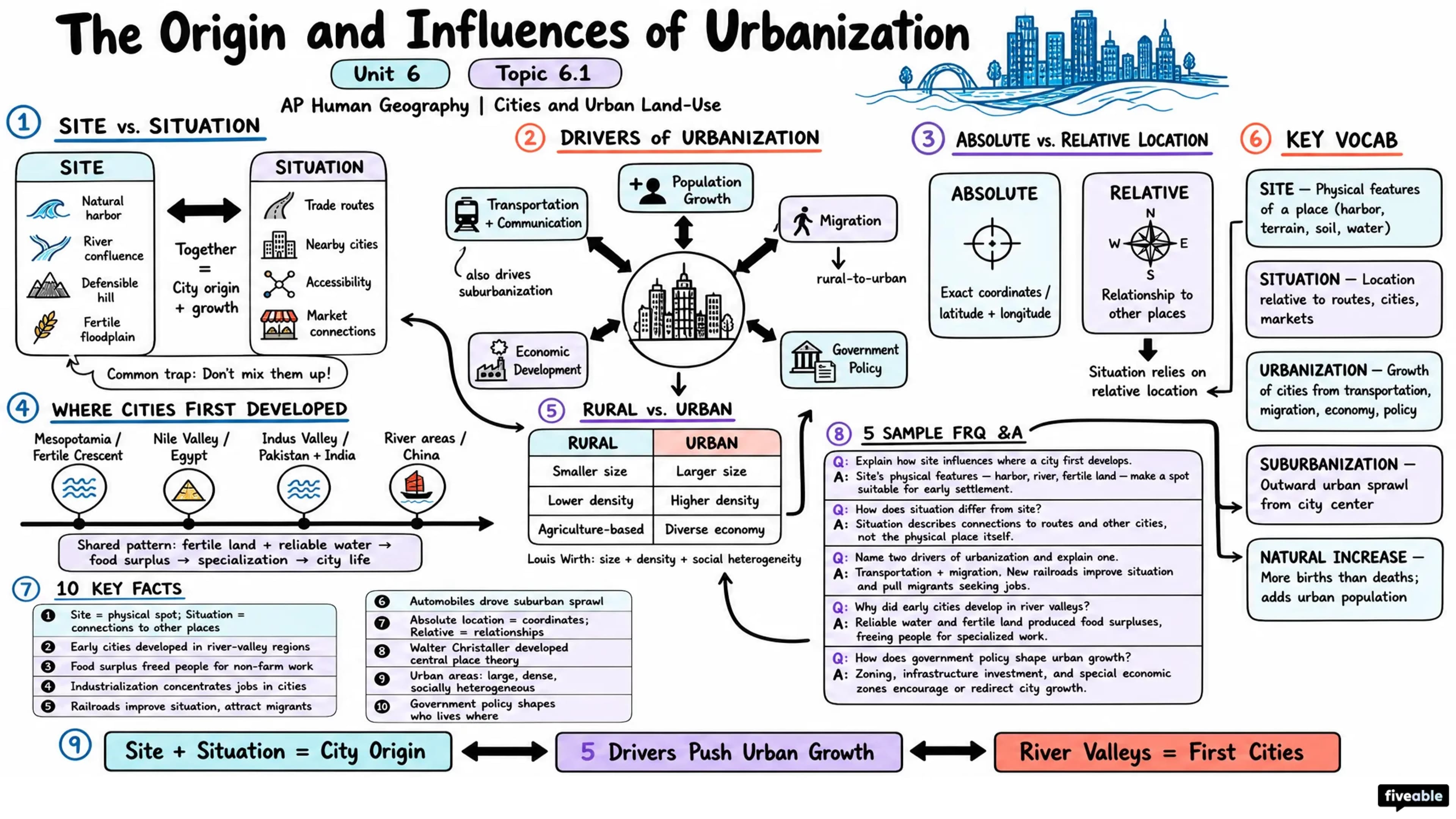
Site vs. Situation

  • Site: Physical characteristics (water, elevation, resources)
  • Situation: Location relative to other places (trade routes, markets)

Key Drivers of Urbanization

  • Transportation & communication improvements
  • Population growth & migration
  • Economic development & industrialization
  • Government policies & investment

Suburbanization & Sprawl

  • Movement of people/jobs from city center outward
  • Creates edge cities, exurbs, boomburbs
  • Results from transportation access, housing costs, lifestyle preferences
Density, Land Use & Housing

Low-Density Residential

  • Single-family homes, large lots, suburban/exurban
  • Requires car dependence, infrastructure spread
  • Reflects wealth, space availability, cultural preference

Medium-Density Residential

  • Townhouses, small apartment buildings, mixed neighborhoods
  • Moderate walkability, some transit access

High-Density Residential

  • Apartment towers, condos, urban cores
  • Walkable, transit-oriented, efficient land use

Infilling & Redevelopment

  • Filling vacant urban land with new construction
  • Reflects cycles of disinvestment & reinvestment
  • Shaped by technology, culture, economic cycles

Sustainable Urban Design

Key Initiatives

  • Mixed-use development: Residential, retail, office in one area
  • Walkability: Pedestrian-friendly streets, reduced car dependence
  • Transit-oriented development (TOD): Dense housing near transit
  • New Urbanism: Human-scale, diverse neighborhoods
  • Greenbelts: Protected open space around cities
  • Slow-growth policies: Limit sprawl, preserve character

Benefits

  • Reduced sprawl & ecological footprint
  • Improved walkability, transit, housing diversity
  • Enhanced livability & sustainability

Criticisms

  • Increased housing costs, gentrification risk
  • Possible de facto segregation (affordability barriers)
  • Loss of historical character or local identity

The rest of the Unit 6 sheet

6 more sections are on the one-page PDF:

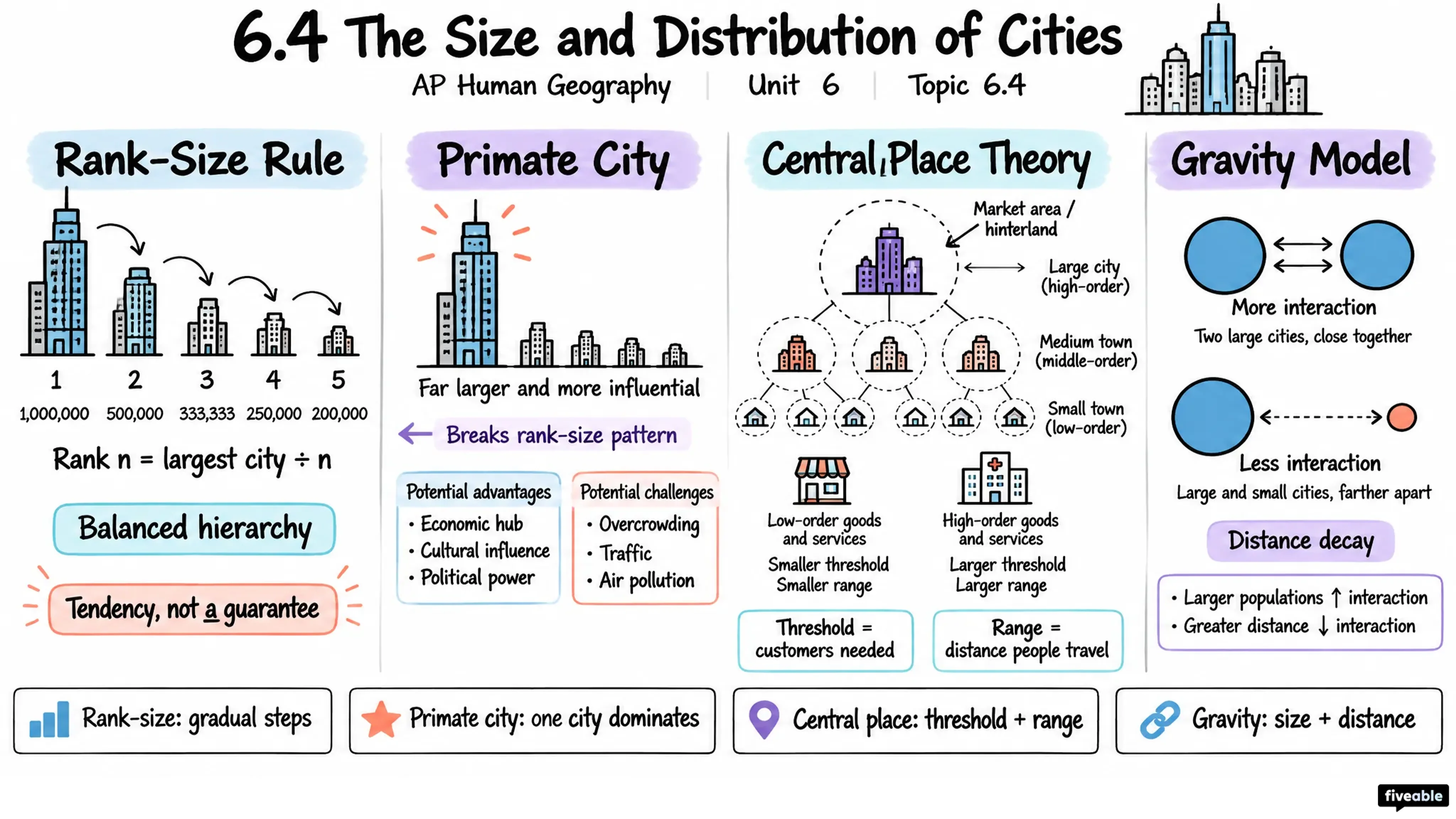
  • Urban Hierarchy & Distribution

  • Global Cities & Networks

  • Urban Challenges & Responses

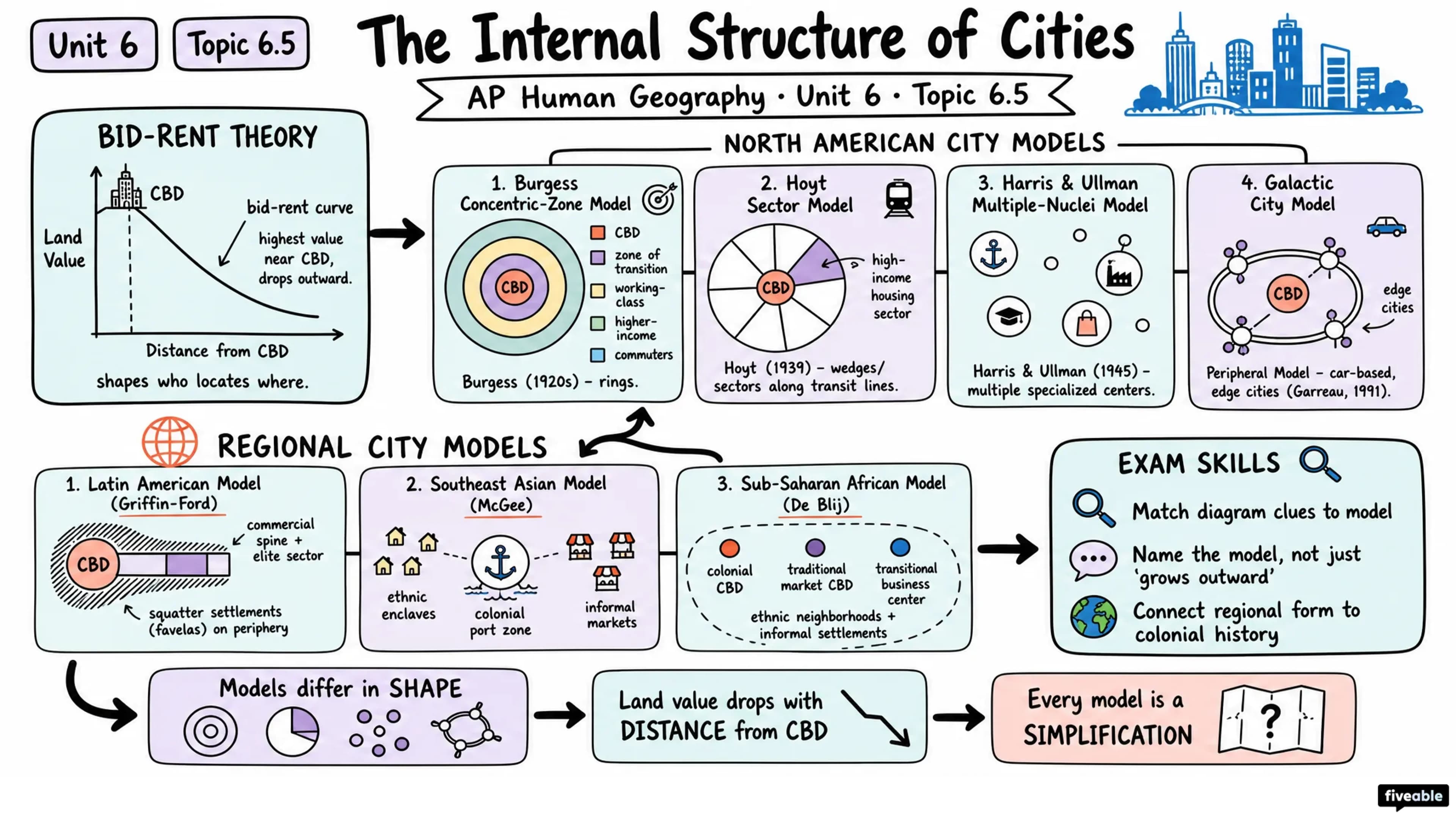
  • Internal City Structure Models

  • Infrastructure & Development

  • Urban Sustainability Challenges & Data

Made by Fiveable

Text-Based Cheatsheet

Unit 6: Cities and Urban Land-Use Patterns and Processes on one page, aligned to the 2026-2027 course. Made and checked by the Fiveable Content Team.

Or get the whole course

Made by you

Visual Cheatsheets

Pick a Unit 6 topic and a format: flowchart, comparison chart, vocab sheet, Cornell notes and more. Ready in about a minute.

Printable PDF · from the Fiveable shop

AP Human Geography Unit 6 Cheatsheet

1 page · Cities and Urban Land-Use Patterns and Processes · PDF

Visual Cheatsheets

One topic, the format you pick, ready in about a minute

Format

Topic

Takes 30–60 seconds

Preview: Standard

Unit 6: Cities and Urban Land–Use, topic by topic

Each topic has a full study guide. See the whole unit.