AP European History Unit 3 Cheatsheet: Absolutism and Constitutionalism

AP European History Unit 3 Cheatsheet: Absolutism and Constitutionalism

Start with the first 3 sections of the Unit 3 one-page cheatsheet below. The full sheet is a PDF you can print.

State Building & Sovereignty (1648–1815)

Core Shift: Peace of Westphalia (1648) established the sovereign state as the primary political unit, ending the Thirty Years’ War and reinforcing state sovereignty over religious affairs.

  • Sovereignty struggle: Monarchs vs. nobles over governance authority
  • Regional resistance: Minority language/cultural groups (Celts, Dutch in Spanish Netherlands, Czechs) resisted dominant national identity
  • Outcome: Varying degrees of centralization—no single model

Key tension: Nobles wanted traditional shared governance + regional autonomy; monarchs sought enhanced centralized power.
Market Economy & Financial Innovation

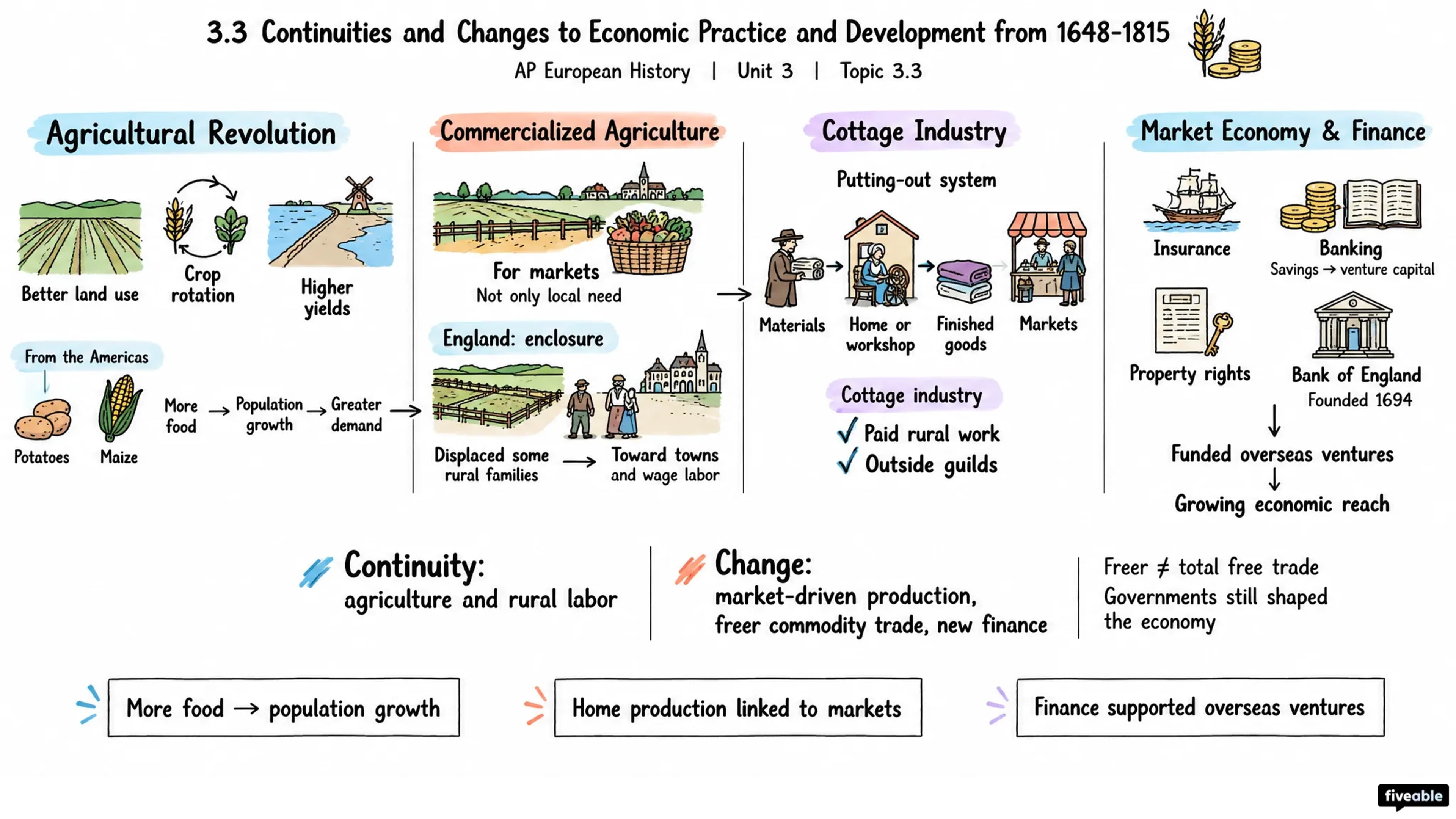
Shift from tradition: Labor and trade increasingly freed from government and corporate restrictions.

New financial practices & institutions:

  • Insurance systems
  • Banking institutions (e.g., Bank of England, est. 1694) mobilizing private capital and expanding credit, especially public/government war finance
  • New property rights definitions + protections against confiscation
  • Enabled long-distance trade and investment

Putting-out system (cottage industry): Merchants/workshop owners employed home laborers for market production—precursor to factory system.

Agricultural Revolution: Increased productivity → more food supply → population growth → larger labor force.

Result: Market economy became foundation for Europe's global economic dominance.

Mercantilism & Global Trade Network

Mercantilist strategy: European states drew resources from colonies (New World, elsewhere) to build wealth and power.

Transatlantic slave-labor system:

  • Middle Passage: forced transport of enslaved Africans
  • Triangle trade: Europe → Africa → Americas → Europe
  • Expanded 17th–18th centuries as demand for New World products surged

Key imports fueling consumer culture: Sugar, tea, silks, tobacco, rum, coffee, American agricultural products.

Global network effects:

  • Raw materials + finished goods from colonies
  • Labor systems (slavery) supplied by Africa
  • Markets for European goods in colonies
  • Agricultural imports (potatoes, maize, etc.) increased European food supply

Outcome: Wealth concentration in merchant/state hands; consumer revolution in Europe; colonial dependency.

The rest of the Unit 3 sheet

6 more sections are on the one-page PDF:

  • English Civil War & Glorious Revolution

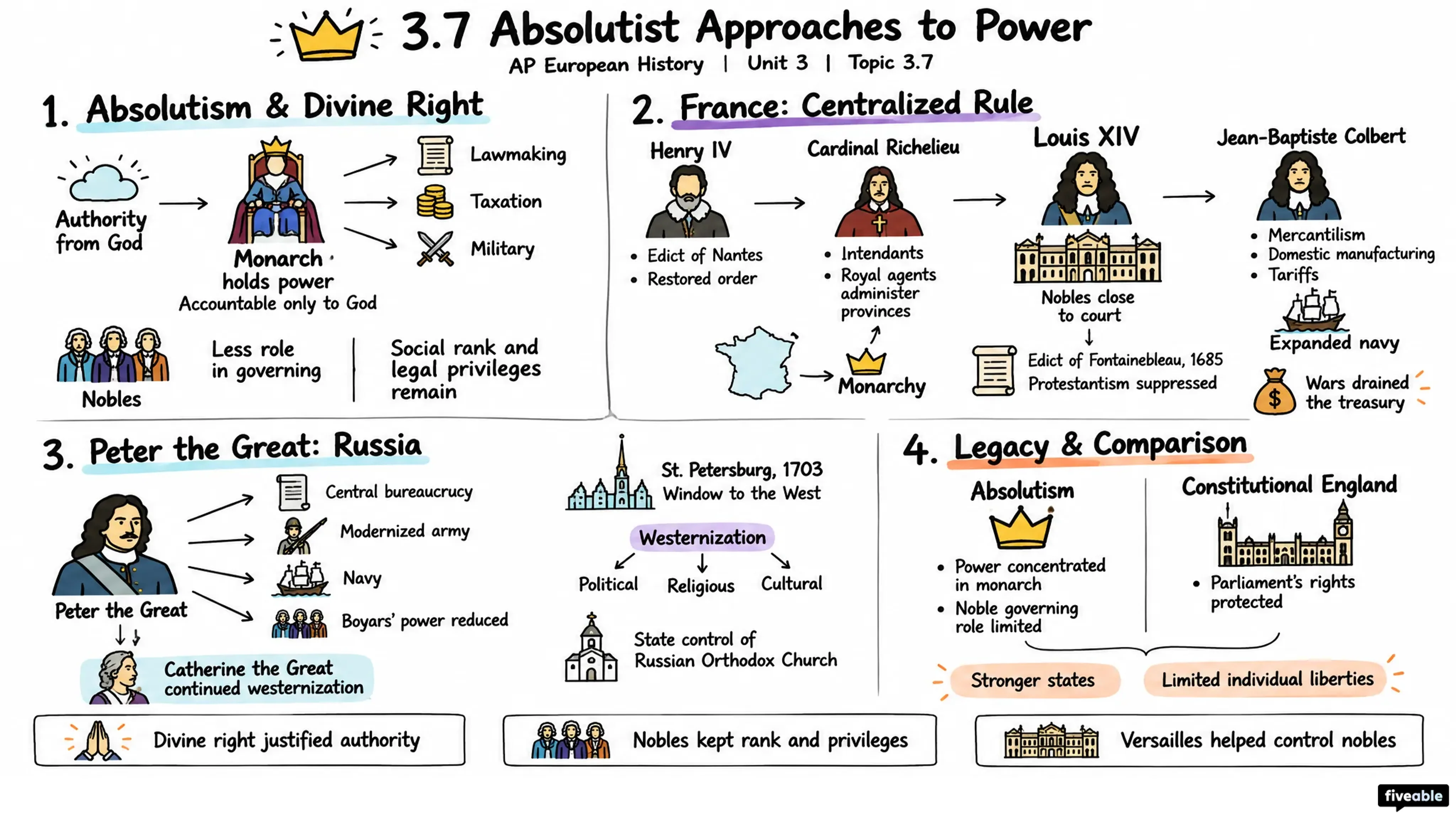
  • Absolutism in Practice

  • Balance of Power Diplomacy

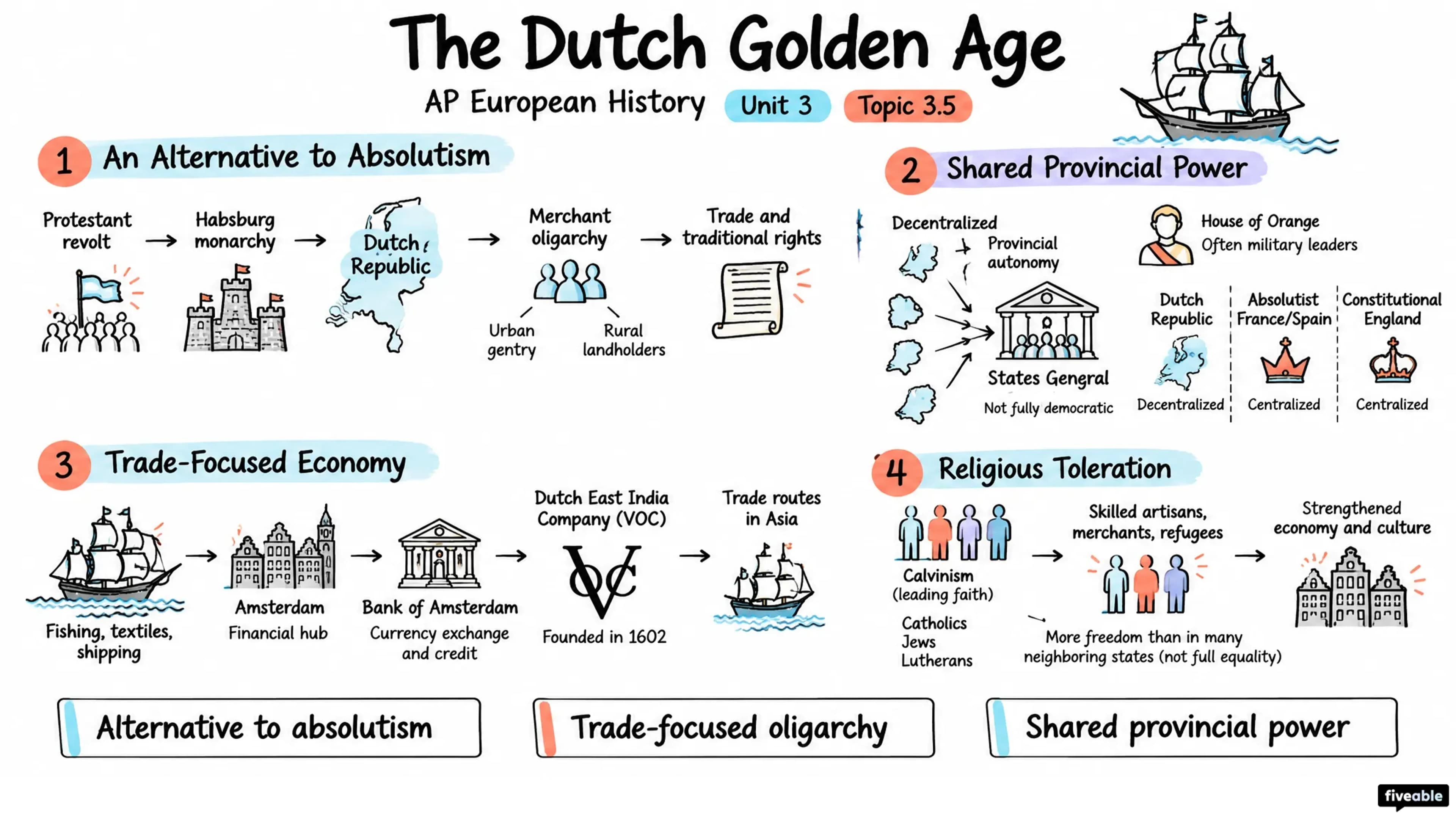
  • Dutch Golden Age

  • Military Revolution & State Power

  • Comparing Absolutism & Constitutionalism

Made by you

Visual Cheatsheets

Pick a Unit 3 topic and a format: flowchart, comparison chart, vocab sheet, Cornell notes and more. Ready in about a minute.

Printable PDF · from the Fiveable shop

AP European History Unit 3 Cheatsheet

1 page · Absolutism and Constitutionalism · PDF

Visual Cheatsheets

One topic, the format you pick, ready in about a minute

Format

Topic

Takes 30–60 seconds

Preview: Standard

Unit 3: Absolutism and Constitutionalism, topic by topic

Each topic has a full study guide. See the whole unit.