9.5 Indexing and Its Limitations

💵Principles of Macroeconomics Unit 9 Review
9.5 Indexing and Its Limitations
💵 Principles of Macroeconomics
Indexing and Its Limitations
Indexing is an economic tool that adjusts wages, prices, and benefits to keep pace with inflation. Without it, rising prices would steadily erode the purchasing power of workers, retirees, and anyone on a fixed payment. But indexing isn't a free lunch: it can feed back into inflation itself, creating cycles that are hard to stop.

Top images from around the web for Indexing for inflation adjustment
How Is Inflation a Highly Regressive tax on Wages? | Beat the Press | CEPR View original
Is this image relevant?
Why inflation matters: How the Fed is creating real estate inflation and hiding behind inflation ... View original
Is this image relevant?
United States Consumer Price Index - Wikipedia View original
Is this image relevant?
How Is Inflation a Highly Regressive tax on Wages? | Beat the Press | CEPR View original
Is this image relevant?
Why inflation matters: How the Fed is creating real estate inflation and hiding behind inflation ... View original
Is this image relevant?
Indexing for Inflation Adjustment
Indexing ties an economic variable (like a wage or a benefit payment) to a price index so that the variable automatically rises as prices rise. The most common reference point is the Consumer Price Index (CPI).
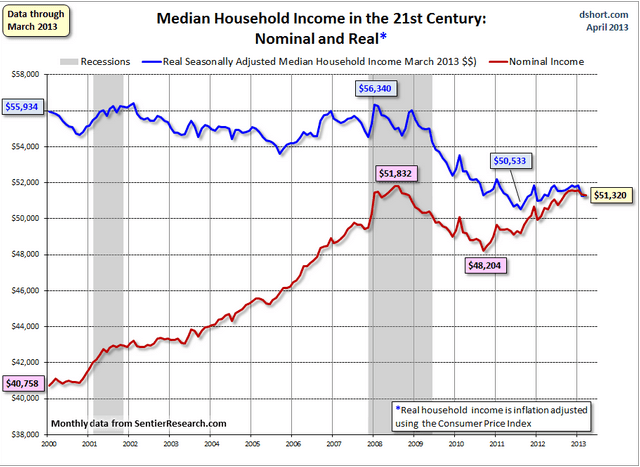
- Wages can be indexed through cost-of-living adjustments (COLAs). A COLA bumps a worker's pay each year by the percentage change in the CPI. This keeps real wages (the actual buying power of earnings) roughly constant even as prices climb.
- Prices of goods and services can be indexed by producers. A business might raise its prices in step with the CPI or the Producer Price Index (PPI) to preserve profit margins as input costs increase.
- Government benefits like Social Security are often indexed automatically. Each year, Social Security payments adjust based on CPI changes, so recipients don't fall behind as the cost of living rises.

Effects of Indexing on the Economy
Indexing shields specific groups from inflation's bite. Workers with COLAs keep their purchasing power, and Social Security recipients maintain their standard of living without needing Congress to vote on a raise every year.
The downside is that indexing can add fuel to inflation:
- Automatic wage increases raise production costs for businesses.
- Businesses pass those costs on by raising prices.
- Higher prices then trigger another round of wage increases through COLAs.
This feedback loop is called a wage-price spiral. Wages push prices up, prices push wages up, and the cycle reinforces itself. Breaking it typically requires aggressive monetary policy, which can be painful for the economy.
Indexing also doesn't protect everyone equally. People on fixed incomes (like a traditional pension with no COLA) or holding non-indexed investments still lose purchasing power when inflation rises. Indexing helps the groups it covers, but it can widen the gap for those it doesn't.

Indexed vs. Non-Indexed Financial Instruments
Indexed instruments have returns tied to a price index. The most well-known example is Treasury Inflation-Protected Securities (TIPS). With TIPS, the principal adjusts upward with the CPI, so the real value of your investment is preserved even during inflationary periods.
Non-indexed instruments include traditional bonds and standard savings accounts. Their returns are set in nominal terms, so if inflation rises unexpectedly, the purchasing power of those returns falls.
There's a trade-off between the two:
- Indexed instruments offer inflation protection but typically pay lower nominal returns. You're essentially paying for insurance against inflation through a reduced yield.
- Non-indexed instruments may offer higher nominal returns, especially during periods of low or stable inflation when the inflation premium investors demand is small.
- Non-indexed instruments tend to be more attractive for short-term investments or when inflation expectations are low, since the risk of purchasing-power loss is smaller over a brief horizon.
Monetary Policy and Price Stability
Central banks use monetary policy (adjusting interest rates, open market operations) to maintain price stability and keep inflation in check. When inflation is low and predictable, indexing mechanisms work smoothly because the adjustments are small and manageable.
If a central bank loses control of inflation, indexing can actually make the problem worse by embedding rising prices into wages and contracts across the economy. That's why effective monetary policy and indexing work best together: the central bank keeps inflation moderate, and indexing handles the remaining adjustments to protect purchasing power.
Purchasing power parity (PPP) is a related concept used to compare price levels across countries, but it's distinct from domestic indexing. PPP helps economists understand whether exchange rates reflect actual differences in the cost of goods between nations.
See Fiveable more often in Google
Mark Fiveable as a preferred source and Google is more likely to show you our guides in Top Stories, with a "preferred" badge in AI Mode and AI Overviews.