2.3 Confronting Objections to the Economic Approach

💵Principles of Macroeconomics Unit 2 Review
2.3 Confronting Objections to the Economic Approach
💵 Principles of Macroeconomics
Evaluating Economic Models and Analyzing Statements
Economic models simplify reality so we can study how economies work, but that simplification comes at a cost. This section tackles the common objections to the economic approach, explains how to read key tradeoff diagrams, and clarifies the difference between positive and normative statements.

Top images from around the web for Critiques of economic models
How the AD/AS Model Incorporates Growth, Unemployment, and Inflation | OpenStax Macroeconomics 2e View original
Is this image relevant?
Economic model - Wikipedia View original
Is this image relevant?
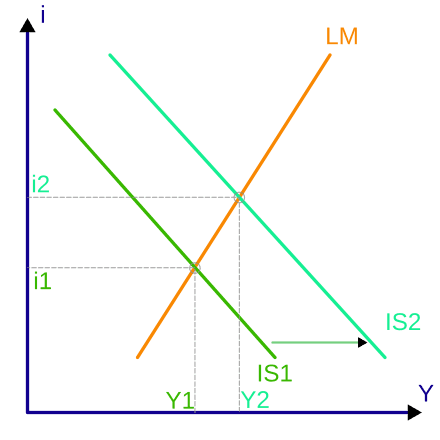
A Model To Explain The Monetary Trilemma Using Tools From Principles of Macroeconomics View original
Is this image relevant?
How the AD/AS Model Incorporates Growth, Unemployment, and Inflation | OpenStax Macroeconomics 2e View original
Is this image relevant?
Economic model - Wikipedia View original
Is this image relevant?
Critiques of Economic Models
Models are useful precisely because they simplify, but critics raise fair points about what gets lost in that process.
Unrealistic assumptions. Most models assume people are rational, fully informed, and operating in competitive markets. In reality, cognitive biases shape decisions, information is incomplete, and many markets are dominated by a few large firms. These gaps between assumption and reality can weaken a model's predictions.
Oversimplification. Models typically isolate a few variables while holding everything else constant. That means political instability, cultural norms, or sudden shifts in public behavior may not show up in the analysis, even when they matter a lot.
Neglect of non-economic factors. Economic models tend to focus on measurable outcomes like GDP growth or inflation. Social concerns like income inequality, environmental damage, or community well-being often fall outside the model's scope.
Measurement difficulties. Some important variables, like consumer satisfaction or quality of life, are hard to quantify. Survey bias and data collection errors can compound the problem, leading to inaccurate predictions.
None of this means models are useless. It means you should treat them as lenses that highlight certain relationships while blurring others. Knowing a model's limitations helps you use it more carefully.

Interpretation of Tradeoff Diagrams
Production Possibility Frontier (PPF)
The PPF shows the maximum combination of two goods an economy can produce with its available resources and technology.
- Points on the curve are efficient: all resources are fully employed.
- Points inside the curve are inefficient: some resources are underutilized or misallocated.
- Points outside the curve are currently unattainable without more resources or better technology.
- Moving along the PPF illustrates opportunity cost: producing more of one good requires giving up some of the other.
Indifference Curves
An indifference curve connects all combinations of two goods that give a consumer the same level of satisfaction.
- Higher curves (farther from the origin) represent higher utility.
- The slope of the curve at any point is the marginal rate of substitution (MRS), which tells you the rate at which a consumer is willing to trade one good for another while staying equally satisfied.
Budget Constraints
A budget constraint shows every combination of two goods a consumer can afford given their income and the prices of the goods.
- The slope equals , reflecting the relative prices of the two goods.
- If income rises or a price falls, the constraint shifts outward, expanding what the consumer can buy.
Optimal Choice
The consumer's best affordable option occurs where the budget constraint is tangent to the highest reachable indifference curve. At that point:
- The consumer can't do better without more income or a price change.
- This reflects marginal analysis: the last dollar spent on each good yields the same additional satisfaction.

Normative vs. Positive Statements
This distinction matters because mixing up facts and opinions can derail economic reasoning.
Positive statements describe what is, was, or will be. They can be tested with data.
- Example: "An increase in the minimum wage leads to higher unemployment among low-skilled workers."
- You might agree or disagree with the claim, but you can gather evidence to evaluate it.
Normative statements express what ought to be. They rest on values and cannot be proven true or false with data alone.
- Example: "The government should raise the minimum wage to help low-income workers."
- This reflects a judgment about fairness, not a testable prediction.
A quick test: if a statement includes words like "should," "ought to," or "fair," it's almost certainly normative. If it makes a claim you could check with data, it's positive.
Keeping the two separate matters for scientific integrity. Positive analysis helps you understand cause and effect. Normative analysis helps you debate goals and priorities. Problems arise when value judgments sneak into what's presented as objective analysis.
Key Economic Concepts
- Scarcity: Resources are limited, but human wants are not. This is the core problem economics tries to address.
- Trade-offs: Because of scarcity, choosing more of one thing means getting less of something else.
- Opportunity cost: The value of the next-best alternative you give up when making a choice. Closely tied to trade-offs and central to reading a PPF.
- Economic rationality: The assumption that people make decisions aimed at maximizing their well-being, given their constraints. Critics note this assumption doesn't always hold, which is one reason models can miss the mark.
- Incentives: Factors (prices, taxes, regulations, social pressure) that influence how people and firms behave.
- Economic efficiency: Using resources so that output is maximized and waste is minimized. An economy operating on its PPF is productively efficient.
See Fiveable more often in Google
Mark Fiveable as a preferred source and Google is more likely to show you our guides in Top Stories, with a "preferred" badge in AI Mode and AI Overviews.