
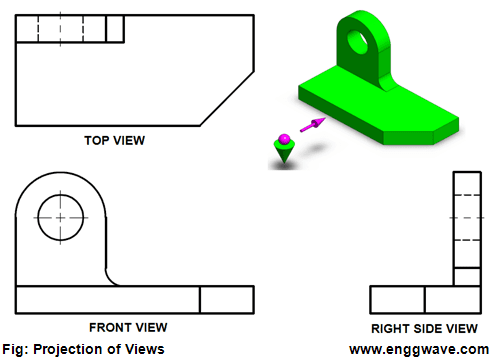
Engineering drawings are crucial for communicating design ideas. They use orthographic projections to show multiple 2D views of 3D objects, including front, top, and side views. These drawings also employ various line types and symbols to convey different information.
Isometric views offer a 3D representation, making it easier to visualize objects. CAD software has revolutionized engineering drawings, allowing for precise, detailed designs with features like layers, parametric modeling, and automated dimensioning. Understanding these drawing types is key to effective engineering communication.
Engineering Drawings: Orthographic vs Isometric
Orthographic Projections
- Orthographic projection represents 3D objects in 2D by showing multiple views on a single plane
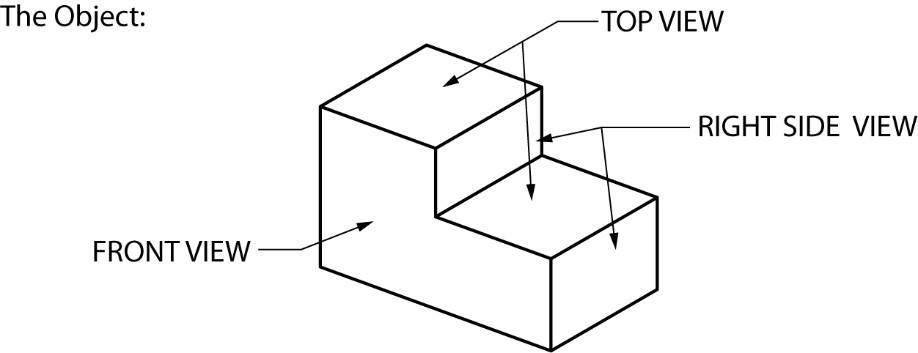
- Principal views include front, top, and right side views arranged in first-angle or third-angle projection
- First-angle projection places top view below front view and right side view to the left of front view
- Third-angle projection places top view above front view and right side view to the right of front view
- Section views reveal internal features by cutting through object with imaginary plane
- Auxiliary views display true shapes of inclined surfaces not parallel to standard projection planes
- Line types convey different information in engineering drawings
- Visible lines use solid lines to show visible edges and outlines
- Hidden lines use dashed lines to represent edges not visible from current view
- Center lines use alternating long and short dashes to mark axes of symmetry or circular features
- Construction lines use thin, light lines to indicate reference geometry or dimensions
Isometric Views
- Isometric views provide 3D representation with all three axes equally foreshortened at 120° to each other
- Advantages of isometric views include
- Easy to understand and visualize the overall shape of an object
- Useful for presenting complex assemblies or products
- Can be created quickly without specialized software
- Limitations of isometric views include
- Distortion of circular features (appear as ellipses)
- Difficulty in showing internal details
- Not suitable for precise dimensioning
- Isometric grid paper facilitates hand-drawn isometric sketches
- CAD software often includes tools for generating isometric views from 3D models
Computer-Aided Design (CAD) in Engineering Drawings
- CAD software creates precise and detailed engineering drawings
- Features of CAD software for engineering drawings include
- Layers organize drawing elements (dimensions, annotations, geometry)
- Parametric modeling allows quick modifications by changing key parameters
- 3D visualization enables rotation and viewing from any angle
- Automated dimensioning and annotation tools increase efficiency
- Library of standard parts and symbols for quick insertion
- Popular CAD software for engineering drawings includes AutoCAD, SolidWorks, and Fusion 360
- CAD drawings can be easily shared, modified, and integrated with other design and manufacturing processes
Interpreting Engineering Drawings for Manufacturing
Drawing Components and Information
- Title block contains essential information about the drawing
- Part name identifies the specific component or assembly
- Drawing number provides unique identification for filing and reference
- Scale indicates the size relationship between the drawing and actual part
- Revision history tracks changes made to the drawing over time
- Drawing notes provide additional information not conveyed through graphical representation
- Material specifications (steel, aluminum, plastic)
- Surface finish requirements (polished, painted, anodized)
- Heat treatment instructions (quenched, tempered)
- Assembly or manufacturing process notes
- Bill of Materials (BOM) lists all parts, components, and materials required
- Item numbers correspond to labeled parts in the drawing
- Quantities specify how many of each item are needed
- Part numbers for standard or purchased components
- Material specifications for custom-manufactured parts
Assembly Drawings and Visualization Techniques
- Assembly drawings show how individual components fit together to form a complete product
- Exploded views separate components to show their relative positions and assembly order
- Section cuts reveal internal arrangements of complex assemblies
- Balloon callouts link components in the drawing to entries in the BOM
- Detail views magnify small or intricate features for clarity
- Phantom lines indicate alternate positions or movements of components
- Break lines allow long parts to be shown in a compact space on the drawing
Geometric Dimensioning and Tolerancing (GD&T)
- GD&T specifies allowable variations in form, orientation, and location of features
- Common GD&T symbols and their meanings
- Flatness: How flat a surface must be
- Parallelism: How parallel one feature must be to another
- Perpendicularity: How perpendicular one feature must be to another
- Concentricity: How well the center of one feature aligns with another
- True position: The exact location of a feature relative to other features
- Datum references establish baselines for measurements and tolerances
- Feature control frames specify the type and amount of allowed variation
- GD&T provides more precise control over part geometry than traditional dimensioning alone
Dimensioning, Tolerancing, and Annotation
Dimensioning Techniques and Methods
- Linear dimensions specify sizes of straight features (lengths, widths, heights)
- Angular dimensions specify rotational measurements (angles between lines or planes)
- Baseline dimensioning measures multiple features from a single reference point
- Advantages include easy inspection and reduced cumulative errors
- Disadvantages include cluttered appearance and potential redundancy
- Chain dimensioning specifies dimensions in sequence from one feature to the next
- Advantages include clear representation of feature relationships
- Disadvantages include potential for cumulative errors in manufacturing
- Ordinate dimensioning uses a coordinate system to locate features
- Useful for complex parts with many features
- Facilitates computer-aided manufacturing (CAM) programming
Tolerancing Approaches
- Tolerancing defines allowable variation in dimensions for proper fit and function
- Limit dimensioning specifies maximum and minimum allowable dimensions directly
- Example: 10.00 +0.05 / -0.02 indicates a dimension between 9.98 and 10.05
- Plus/minus tolerancing specifies an equal positive and negative variation
- Example: 25.4 ±0.1 indicates a dimension between 25.3 and 25.5
- Unilateral tolerancing specifies variation in only one direction
- Example: 50.0 +0.5 / -0.0 indicates a dimension between 50.0 and 50.5
- Fit tolerances specify how tightly mating parts fit together
- Clearance fit allows space between mating parts (shaft smaller than hole)
- Interference fit requires force to assemble (shaft larger than hole)
- Transition fit can be either clearance or interference depending on actual sizes
Annotation Practices
- Notes provide additional information about features, processes, or specifications
- Standard symbols represent common features or requirements
- Surface finish symbols indicate required smoothness of surfaces
- Weld symbols specify type, size, and location of welds
- Thread symbols indicate thread type, size, and class of fit
- Labels identify specific features, materials, or processes
- Revision clouds highlight areas of the drawing that have been changed
- Cross-referencing links related information between multiple drawings or documents
Communicating Design Intent Through Drawings
Effective View Selection and Presentation
- Choose views that best highlight critical features and relationships between components
- Use section views to reveal internal structures and hidden features
- Employ detail views to magnify small or complex areas of the design
- Arrange views logically on the drawing sheet for easy comprehension
- Maintain consistent scale and orientation across related views
- Include isometric or perspective views to aid in overall visualization of the design
Dimensioning and Tolerancing for Design Intent
- Emphasize critical dimensions that directly affect function or assembly
- Apply appropriate tolerances based on functional requirements and manufacturing capabilities
- Use geometric tolerancing to control form, orientation, and location of critical features
- Indicate datum features that serve as references for other dimensions or tolerances
- Group related dimensions together for clarity and ease of interpretation
- Avoid over-dimensioning or redundant dimensions that may cause confusion
Drawing Organization and Documentation
- Utilize title blocks effectively to provide essential drawing information
- Include part name, drawing number, revision level, and scale
- Specify applicable standards or specifications
- Identify the designer, checker, and approver
- Organize notes logically, grouping related information together
- Use consistent terminology, symbols, and abbreviations across all drawings
- Implement clear revision control processes
- Use revision clouds to highlight changed areas
- Maintain a revision history table with dates and descriptions of changes
- Include reference documents or related drawings when necessary
- Follow industry-specific drawing standards (ASME Y14.5, ISO 128) for consistency