12.1 History and Development of Translation Studies

📔Intro to Comparative Literature Unit 12 Review
12.1 History and Development of Translation Studies
📔 Intro to Comparative Literature
Historical Development of Translation Studies
Translation studies examines how texts move between languages and cultures. Understanding its history helps you see that translation has never been a neutral, mechanical process. Every era brought new assumptions about what a "good" translation should do, and those debates are still alive today.

Top images from around the web for Evolution of translation studies
The effect of the printing press in the Renaissance in the 15th century, Italy | ETEC540: Text ... View original
Is this image relevant?
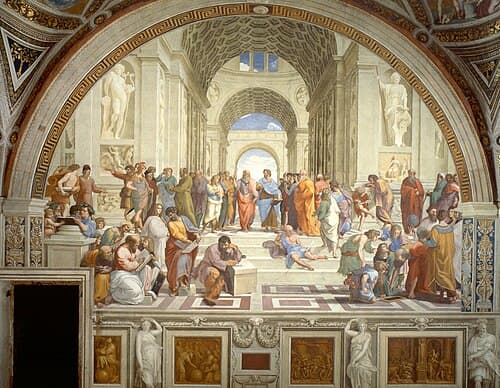
Renaissance humanism - Wikipedia View original
Is this image relevant?
Romanticism - Wikipedia View original
Is this image relevant?
The effect of the printing press in the Renaissance in the 15th century, Italy | ETEC540: Text ... View original
Is this image relevant?
Renaissance humanism - Wikipedia View original
Is this image relevant?
Evolution of Translation Studies
Translation practice is ancient, but translation studies as a formal discipline is surprisingly young.
Ancient and Medieval periods. The Romans were among the first to think systematically about translation. Figures like Cicero translated Greek texts into Latin not just for content but as rhetorical exercises. Early religious translation, especially of the Bible, dominated the field for centuries. Medieval translators tended to stick close to the source text, treating the original (particularly scripture) as sacred and not to be loosely paraphrased. Over time, though, translations into vernacular languages (French, English, German) made texts accessible beyond Latin-literate elites.
Renaissance and Romantic periods. The Renaissance brought a surge of interest in secular texts, and translators began debating method more openly: How faithful should you be to the original's style versus making the text feel natural in the new language? By the 19th century, the Romantic movement added another layer. Romantics valued the unique "spirit" of a literary work and of national cultures, which raised the stakes for what translation was supposed to capture. A growing interest in world literature (Goethe's concept of Weltliteratur) also broadened the scope of what got translated and why.
20th century to today. Translation studies emerged as its own academic discipline in the mid-20th century, drawing on linguistics, literary theory, philosophy, and anthropology. The late 20th century brought the cultural turn, a shift toward studying translation not just as a linguistic problem but as a cultural and political act. Today, digital humanities and new technologies continue to reshape the field.

Milestones in Translation Theory
These are the key figures and ideas you should know, roughly in chronological order:
- Cicero (1st century BCE) drew the foundational distinction between word-for-word (verbum pro verbo) and sense-for-sense (sensum de sensu) translation. This binary has framed translation debates for over two thousand years.
- St. Jerome (4th century CE) translated the Bible into Latin (the Vulgate), which became the standard Western Bible for a millennium. He sided with sense-for-sense translation, arguing that slavishly following the source word order produced nonsense in Latin.
- Martin Luther (16th century) translated the Bible into German with a focus on how ordinary people actually spoke. His approach prioritized accessibility in the target language and helped standardize written German.
- Friedrich Schleiermacher (19th century) introduced the distinction between foreignization (making the reader travel toward the foreign text) and domestication (making the text feel at home in the target culture). This framework remains central to translation theory.
- Eugene Nida (20th century) developed the concept of dynamic equivalence, which prioritizes producing the same effect on the target reader that the original had on its first audience, rather than matching form or structure.
- James S. Holmes (1972) presented "The Name and Nature of Translation Studies," a foundational paper that mapped out the field's scope and subdivisions. This is often cited as the moment translation studies became a recognized discipline.
- Lawrence Venuti (late 20th century) argued for the visibility of the translator. He criticized the dominant English-language preference for fluent, domesticated translations, which he said made the translator's work invisible and erased cultural difference.

Modern Developments in Translation Studies
Technology's Impact on Translation
Technology has reshaped translation at every stage, from production to distribution.
- The printing press (15th century) massively increased demand for translations and helped standardize national languages.
- Typewriters and word processors sped up the physical process of producing translations but didn't change the intellectual work much.
- Computer-assisted translation (CAT) tools introduced translation memories (databases that store previously translated segments) and terminology management systems. These help translators stay consistent across long or repetitive texts.
- Machine translation has evolved through three major phases: early rule-based systems, statistical models trained on large bilingual corpora, and today's neural machine translation (like Google Translate), which produces much more fluent output but still struggles with literary nuance and cultural context.
- The internet opened access to online dictionaries, parallel corpora, and collaborative platforms where multiple translators can work on a project simultaneously.
Changing Status of Translators
How societies view translators tells you a lot about how they think about language and culture.
- In antiquity, translators served as cultural mediators, often diplomats or scholars working between empires.
- During the medieval period, translation was largely the work of monks in monastic scriptoria, preserving and transmitting knowledge across languages.
- The Renaissance elevated some translators to the status of creative writers in their own right. Figures like John Dryden developed explicit theories about translation method, and debates about the translator's creative role intensified.
- The Enlightenment emphasized accuracy and the spread of ideas across borders. Translators were valued as disseminators of knowledge.
- In the Romantic period, translators became associated with nation-building. The Schlegel brothers' German translations of Shakespeare, for example, were seen as enriching German literary culture.
- The 20th century brought professionalization: dedicated university programs (such as those at the University of Ottawa and ESIT in Paris), professional associations, and certification standards.
- Today, translators are increasingly recognized as intercultural communicators, not just linguistic converters. Post-colonial translation theory has raised important ethical questions about power dynamics: Who translates whom, into which languages, and on whose terms?
See Fiveable more often in Google
Mark Fiveable as a preferred source and Google is more likely to show you our guides in Top Stories, with a "preferred" badge in AI Mode and AI Overviews.