
Conditional statements are the backbone of decision-making in Python programs. They allow code to execute different blocks based on specific conditions, enabling dynamic and responsive program flow.
If, elif, and else statements form the core of conditional logic. By combining these with comparison and logical operators, programmers can create complex decision trees, guiding program execution through various scenarios based on input and state.
Conditional Statements
Conditional statements for program flow
ifstatements enable conditional execution of code blocks based on whether a specified condition evaluates toTrueorFalse- Code block under an
ifstatement executes only if the condition isTrue(x > 5) - If the condition is
False, the code block is skipped and program execution continues with the next statement after theifblock
- Code block under an
if-elsestatements provide an alternative code block to execute when theifcondition isFalse- Code block under the
ifstatement executes if the condition isTrue(temperature > 30) - Code block under the
elsestatement executes if theifcondition isFalse(temperature <= 30)
- Code block under the
elif(else if) statements allow for checking multiple conditions if the precedingiforelifconditions areFalse- First condition that evaluates to
Truewill have its corresponding code block executed (grade >= 90,grade >= 80, etc.) - If none of the conditions are
True, the code block under theelsestatement (if present) will be executed
- First condition that evaluates to
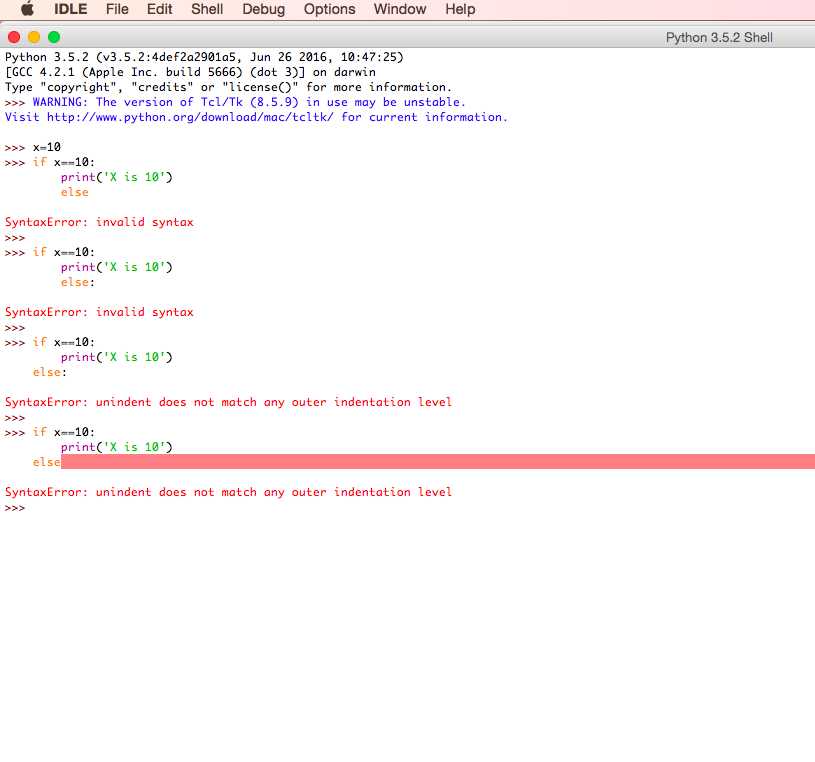
Syntax of if and if-else statements
ifstatements start with theifkeyword, followed by a condition and a colon- Condition is an expression that evaluates to either
TrueorFalse(count == 0,name != "John") - Code block under the
ifstatement is indented (typically by 4 spaces)
- Condition is an expression that evaluates to either
elsestatements follow anifstatement and begin with theelsekeyword and a colon- Code block under the
elsestatement is also indented
- Code block under the
elifstatements can be used between anifandelsestatement to check additional conditionselifstatements begin with theelifkeyword, followed by a condition and a colon- Code block under the
elifstatement is indented
- Proper indentation is crucial for defining the scope of each code block within conditional statements
- Example syntax:
</>Pythonif age >= 18: print("You are eligible to vote") elif age >= 16: print("You can pre-register to vote") else: print("You are not eligible to vote yet")
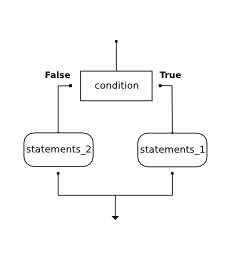
Implementation of conditional code blocks
- Comparison operators create conditions that evaluate to
TrueorFalse==(equal to),!=(not equal to),<(less than),>(greater than),<=(less than or equal to),>=(greater than or equal to)
- Logical operators combine multiple conditions
and(both conditions must beTrue),or(at least one condition must beTrue),not(inverts the boolean value)
- Conditions can include variables, constants, and function calls that return boolean values
- Variable:
if score > 100: - Constant:
if MAX_VALUE == 100: - Function call:
if is_valid_email(email):
- Variable:
- Example implementation:
</>Pythontemperature = 25 if temperature > 30: print("It's a hot day") print("Drink plenty of water") elif temperature > 20 and temperature <= 30: print("It's a nice day") else: print("It's a cold day") print("Wear warm clothes")
Advanced Conditional Concepts
- Control flow in programs is determined by the sequence of conditional statements
- Branching occurs when the program execution takes different paths based on conditions
- Nested conditionals involve placing conditional statements within other conditional statements
- Allows for more complex decision-making structures
- Example:
</>Pythonif outer_condition: if inner_condition: # Code block for both conditions true else: # Code block for outer true, inner false else: # Code block for outer false