
Lists in Python are versatile data structures that allow for easy modification and iteration. They're mutable, meaning you can change their contents after creation, and offer various methods for adding, removing, and accessing elements.
Iterating through lists is a fundamental skill in Python programming. Whether using for loops, list comprehensions, or built-in functions, mastering list iteration techniques enables efficient data manipulation and analysis in your code.
List Modification and Iteration
List modification operations
append()adds an element to the end of a list- Syntax:
list_name.append(element) - Appends the specified element to the end of the list (
numbers.append(10)adds10to the end of thenumberslist)
- Syntax:
remove()removes the first occurrence of a specified element from a list- Syntax:
list_name.remove(element) - Removes the first occurrence of the specified element from the list (
fruits.remove("apple")removes the first occurrence of"apple"from thefruitslist) - Raises a
ValueErrorif the element is not found in the list
- Syntax:
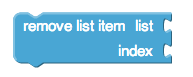
pop()removes an element at a specified index and returns its value- Syntax:
list_name.pop(index) - Removes the element at the specified index from the list and returns its value (
numbers.pop(2)removes the element at index2from thenumberslist and returns its value) - If no index is provided,
pop()removes and returns the last element in the list
- Syntax:
- Lists are mutable, allowing for in-place modification of their elements

Iteration through lists
forloops iterate through each element in a list- Syntax:
for element in list_name: - Iterates through each element in the specified list (
for fruit in fruits:iterates through each element in thefruitslist)
- Syntax:
- Access list elements using their indexes
- List indexes start at
0for the first element and increment by1for each subsequent element - Syntax:
list_name[index] - Accesses the element at the specified index in the list (
fruits[0]accesses the first element in thefruitslist)
- List indexes start at
range()function withlen()iterates through list indexes- Syntax:
for i in range(len(list_name)): - Iterates through the indexes of the specified list (
for i in range(len(numbers)):iterates through the indexes of thenumberslist)
- Syntax:
List comprehensions for creation
- List comprehensions create new lists based on existing lists concisely
- Syntax:
new_list = [expression for element in list_name if condition]expressionis the operation performed on each elementelementis the variable representing each element in the original listlist_nameis the name of the original listif conditionis an optional filter to include elements based on a condition
- Create a new list with each element from the original list squared (
squared_numbers = [x ** 2 for x in numbers]creates a new list with each element fromnumberssquared) - Create a new list with only even numbers from the original list (
even_numbers = [x for x in numbers if x % 2 == 0]creates a new list with only even numbers fromnumbers)
Advanced List Operations
- Slicing allows for extracting a portion of a list using a start index, end index, and optional step
- The
inoperator can be used to check for the presence of an element in a list during iteration - Iteration can be performed using various methods, including
forloops, list comprehensions, and built-in functions likemap()andfilter()