13.4 Human Factors Psychology and Workplace Design

🥸Intro to Psychology Unit 13 Review
13.4 Human Factors Psychology and Workplace Design
🥸 Intro to Psychology
Human Factors Psychology and Workplace Design
Human factors psychology studies how people interact with machines, tools, and environments. The goal is to design these interactions so they're safer, more efficient, and less frustrating for the user. In an intro psych course, this is where you see psychological research directly shaping the physical world around you.
Human-Machine Interaction
Human factors psychologists start from a simple idea: designs should fit the human, not the other way around. That means accounting for both our cognitive abilities (perception, attention, memory, decision-making) and our physical abilities (strength, dexterity, body dimensions) when building systems and interfaces.
Two core practices drive this work:
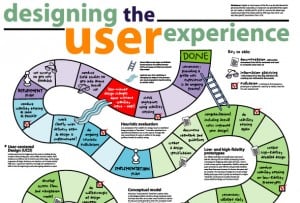
- User-centered design puts the end user's needs, habits, and limitations at the center of the design process. Instead of asking "what can this machine do?", designers ask "what does the person using it actually need?"
- Usability testing evaluates a design by watching real users interact with it. Researchers measure whether people can complete tasks effectively, how long it takes, and where they get confused or make errors.
Workplace Safety and Productivity
Human factors research translates into several practical improvements in the workplace:
- Ergonomic design shapes workstations and equipment to fit the human body. Adjustable chairs, properly positioned monitors, and tools designed for natural hand movements all reduce physical strain and help prevent musculoskeletal disorders like carpal tunnel syndrome.
- Intuitive interfaces lower cognitive load, which is the mental effort required to use a system. When a control panel or software layout matches how people naturally think, users make fewer errors and work more efficiently.
- Environmental controls cover lighting, temperature, and noise. Poor lighting causes eye strain; excessive noise disrupts concentration; uncomfortable temperatures increase fatigue. Controlling these factors has measurable effects on both comfort and performance.
- Safety protocols and training ensure employees recognize potential hazards and know how to respond. Even well-designed environments need clear procedures, because human error is always a factor.

Research Methods in Human Factors
Human factors psychologists use several methods to study how people think and perform during tasks:
- Controlled experiments manipulate specific variables in a lab setting to draw cause-and-effect conclusions. For example, a researcher might test whether changing the color of a warning light affects reaction time.
- Observational and field studies examine behavior in real-world settings like factories or offices. These provide practical insights that lab studies sometimes miss.
- Cognitive task analysis breaks a complex task into its component mental steps. This helps identify what knowledge and strategies a person needs at each stage, which is useful for designing training programs or simplifying procedures.
- Usability testing (also a research method, not just a design practice) collects data on how users interact with a system, measuring effectiveness, efficiency, and satisfaction.
- Simulation and modeling creates virtual or mathematical representations of human-machine interactions. These let researchers study performance in controlled, repeatable scenarios without real-world risk, which is especially valuable in fields like aviation or medicine.
See Fiveable more often in Google
Mark Fiveable as a preferred source and Google is more likely to show you our guides in Top Stories, with a "preferred" badge in AI Mode and AI Overviews.