2.1 Why Is Research Important?

🥸Intro to Psychology Unit 2 Review
2.1 Why Is Research Important?
🥸 Intro to Psychology
The Importance of Psychological Research
Methods of psychological research
Psychological research uses a set of structured methods to study human behavior and mental processes. Each method has its own strengths, and the choice depends on what question the researcher is trying to answer.
- Observation involves watching and recording behavior in natural or controlled settings. This is useful for studying how people actually act, rather than how they say they act.
- Surveys and questionnaires collect self-reported data on thoughts, feelings, and experiences. They're efficient for gathering information from large groups, though they depend on participants answering honestly.
- Experiments involve manipulating one variable to see its effect on another, which makes them the only method that can establish cause-and-effect relationships.
- The independent variable is the factor the researcher deliberately changes.
- The dependent variable is the outcome being measured to see if the manipulation had an effect.
- Case studies are in-depth investigations of a single individual or small group. They provide rich, detailed information but can't easily be generalized to larger populations. Clinical psychology relies on these heavily.
- Longitudinal studies follow the same participants over an extended period, sometimes years or decades. They're valuable for tracking how behavior or development changes over time, such as studying childhood development into adulthood.
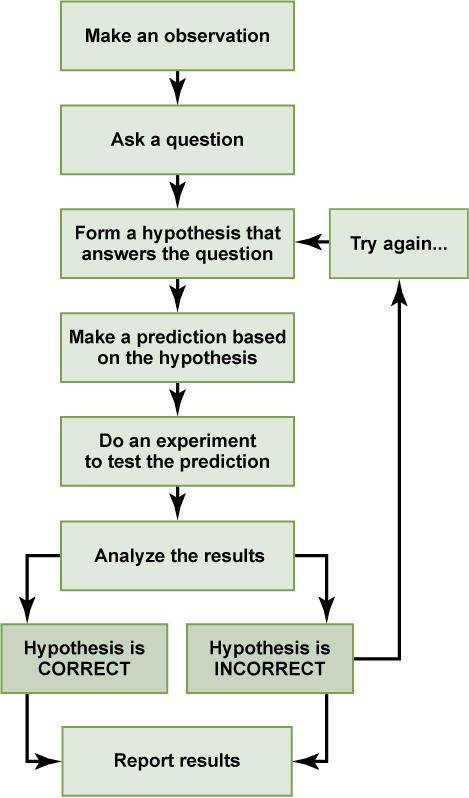
Underlying all of these methods is the scientific method, a structured process that includes forming a hypothesis, collecting data, and testing predictions based on theories.
Scientific evidence in policy-making
Research findings don't just stay in journals. They inform public policies, social programs, and how society responds to pressing issues.
- Evidence-based practices are interventions backed by scientific research, making them more likely to produce the desired results. Cognitive-behavioral therapy (CBT) for treating anxiety and depression is a well-known example.
- Policy decisions can be shaped by behavioral research. For instance, studies on the negative effects of social media on adolescent mental health have prompted discussions about platform regulations to protect younger users.
- Social programs benefit from research too. Studies showing the long-term benefits of early childhood education have led to increased public funding for preschool programs.
Psychological research also helps debunk persistent myths. A major example: extensive research has confirmed that vaccines do not cause autism, countering a misconception that has influenced many parents' decisions. This highlights why relying on empirical evidence matters more than relying on popular belief.
Statistical analysis plays a key role here as well. It allows researchers to quantify their findings and determine whether results are meaningful or just due to chance, giving policymakers a solid foundation for their decisions.

Research applications for decision-making
Beyond policy, psychological research offers practical tools you can use in everyday life.
Cognitive biases are systematic errors in thinking that distort judgment. Recognizing them helps you make more rational choices. One common bias is confirmation bias, the tendency to seek out information that supports what you already believe while ignoring contradicting evidence. Simply being aware of this tendency can push you to consider other perspectives before making a decision.
Research also informs how we communicate and manage stress:
- Active listening techniques like paraphrasing what someone said and asking clarifying questions have been shown to improve conflict resolution in both personal and professional relationships.
- Mindfulness meditation, which involves focusing on the present moment without judgment, has strong research support for reducing stress and improving overall well-being.
Even goal-setting benefits from research on motivation. The SMART goals framework suggests that goals should be Specific, Measurable, Achievable, Relevant, and Time-bound. Studies show that goals structured this way are more likely to be accomplished than vague intentions like "do better at school."
Ensuring research quality and integrity
Not all research is created equal. Several safeguards exist to make sure findings are trustworthy.
- Replication means repeating a study to see if the same results occur again. If findings can be replicated, confidence in them grows significantly.
- Peer review is the process where other experts in the field evaluate a study before it gets published. This acts as a quality check on the methods, analysis, and conclusions.
- Research ethics guidelines protect participants' rights and well-being. For example, researchers must obtain informed consent and ensure participants aren't exposed to unnecessary harm.
- Validity refers to whether a study actually measures what it claims to measure. A study with poor validity might produce results that look interesting but don't reflect reality.
See Fiveable more often in Google
Mark Fiveable as a preferred source and Google is more likely to show you our guides in Top Stories, with a "preferred" badge in AI Mode and AI Overviews.