4.1 Ashikaga shogunate and the Northern and Southern Courts

🎎History of Japan Unit 4 Review
4.1 Ashikaga shogunate and the Northern and Southern Courts
🎎 History of Japan
Establishment and Governance of the Ashikaga Shogunate
The Ashikaga shogunate reshaped how Japan was governed for over two centuries. Founded in 1336, it moved the center of military rule to Kyoto and tried to hold together a fragile balance between the shogun, the emperor, and increasingly powerful regional lords. Understanding this period is key to seeing how Japan eventually fractured into the chaos of the Sengoku era.

Top images from around the web for Establishment of Ashikaga shogunate
Muromachi-Zeit – Wikipedia View original
Is this image relevant?
History of Japan - Wikipedia View original
Is this image relevant?
Category:Ashikaga Takauji - Wikimedia Commons View original
Is this image relevant?
Muromachi-Zeit – Wikipedia View original
Is this image relevant?
History of Japan - Wikipedia View original
Is this image relevant?
Establishment of the Ashikaga Shogunate
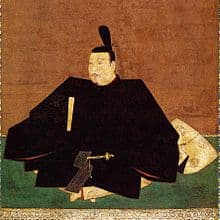
Ashikaga Takauji founded the shogunate in 1336 after a complicated series of events. He had initially helped Emperor Go-Daigo overthrow the Kamakura shogunate in 1333, but Go-Daigo's attempt to restore direct imperial rule (the Kenmu Restoration) alienated many warriors who felt unrewarded. Takauji broke with the emperor, defeated his forces, and installed a rival emperor from a different branch of the imperial family. He then had himself appointed shogun.
Takauji's success depended on support from powerful samurai families like the Hosokawa and Shiba, who became pillars of the new regime. The period that followed is called the Muromachi period (1336–1573), named after the Muromachi district in Kyoto where the shoguns eventually established their headquarters.
Governance Structure
The Ashikaga shoguns ruled through a bakufu (military government) based in Kyoto, keeping the emperor as a ceremonial figurehead. This was similar to the Kamakura system, but with one major difference: by ruling from Kyoto itself, the Ashikaga shoguns were physically close to the imperial court, which created both opportunities for cultural patronage and constant political entanglement.
Key features of Ashikaga governance:
- Shugo (military governors) were appointed to oversee provinces and handle local administration, tax collection, and law enforcement. Over time, many shugo accumulated enough local power to act semi-independently.
- A land distribution system rewarded loyal vassals with estates, reinforcing the bonds between the shogunate and its supporters.
- The shogun balanced competing interests among the imperial court, major warrior families, and religious institutions, though this balance grew harder to maintain as the period went on.

Cultural Developments
The Ashikaga shoguns, especially Yoshimitsu (the third shogun), were major patrons of the arts. Zen Buddhism deeply influenced the culture of this era, shaping aesthetics that are still associated with Japan today.
- Noh theater developed into a refined dramatic art under shogunal patronage
- The tea ceremony (chanoyu) became a formalized practice blending Zen philosophy with social ritual
- Karesansui (dry landscape gardens), like the famous rock garden at Ryōan-ji, reflected Zen ideals of simplicity and contemplation
Political Conflict and Societal Changes

The Northern and Southern Courts Conflict
The founding of the Ashikaga shogunate created an immediate crisis: two rival imperial courts. This split, known as the Nanboku-chō period (1336–1392), lasted over fifty years and had lasting consequences for Japan's political order.
Here's how it happened:
- When Takauji broke with Emperor Go-Daigo, he enthroned a new emperor from the senior branch of the imperial line. This became the Northern Court, based in Kyoto and backed by the Ashikaga shogunate.
- Go-Daigo fled south to Yoshino and established the Southern Court, claiming legitimacy because he still possessed the imperial regalia (the sacred mirror, sword, and jewel that symbolized rightful rule).
- For decades, both courts claimed to be the true imperial line, and regional warriors chose sides based on their own strategic interests as much as any loyalty to a particular emperor.
Political consequences were severe. Regional warlords (daimyo) exploited the divided loyalties to expand their own power. Alliances shifted constantly, and the central authority of the shogunate eroded as local strongmen played both sides.
Social changes followed the political upheaval:
- New samurai families rose to prominence, displacing older warrior houses
- The traditional court nobility (kuge) lost influence and wealth as real power shifted to military figures
- Land ownership patterns changed as estates were seized, redistributed, or simply claimed by whoever could hold them by force
Economic disruption accompanied the fighting. Trade networks were interrupted, military campaigns required heavy taxation, and as power decentralized, new economic centers grew up in provincial areas outside Kyoto's direct control.
Reunification came through the diplomatic skill of the third shogun, Ashikaga Yoshimitsu. In 1392, he brokered an agreement in which the Southern Court surrendered, ending the schism. The deal included a promise that the two imperial lines would alternate on the throne, but this promise was never honored. The Northern Court's line continued unbroken, and Yoshimitsu's settlement consolidated Ashikaga legitimacy at its peak.
Decline of the Ashikaga and Rise of the Warlords
Even after reunification, the Ashikaga shogunate never achieved truly stable central control. Several forces gradually pulled it apart.
Internal weakness:
- Succession disputes within the Ashikaga family repeatedly undermined shogunal authority
- The shugo daimyo, originally appointed to govern provinces on the shogun's behalf, accumulated so much local power that they became effectively autonomous rulers
- The shogunate's treasury was drained by constant military expenses and the shoguns' lavish cultural spending
Social instability:
- Famines, earthquakes, and epidemics destabilized communities across Japan
- Peasant uprisings (ikki), including religiously motivated revolts, challenged both local and central authority with increasing frequency
The Ōnin War (1467–1477) was the breaking point. It began as a succession dispute over whether Ashikaga Yoshimasa's brother or his son would become the next shogun, but it quickly drew in rival shugo families who used the conflict to settle their own scores. Fighting devastated Kyoto and the surrounding region for a decade. By the time it sputtered out, centralized shogunal authority had effectively collapsed.
What followed was the Sengoku period ("Warring States"), in which:
- Former shugo and ambitious local samurai seized power and established independent domains, becoming sengoku daimyo
- Constant warfare between rival daimyo became the norm across Japan
- New military and political strategies emerged as lords competed for survival and expansion
Technological changes accelerated during this era of competition. The introduction of firearms (tanegashima) after Portuguese traders arrived in 1543 transformed battlefield tactics. New castle-building techniques, including the development of large stone-walled fortresses with central towers (tenshu), reshaped both defense and the political geography of power. Armies grew larger, and commanders increasingly relied on combined-arms tactics integrating infantry, cavalry, and gunners.
The Ashikaga shogunate technically survived until 1573, when the last shogun was expelled from Kyoto by Oda Nobunaga. But its real power had vanished a century earlier. The Muromachi period's legacy is a paradox: an era of extraordinary cultural achievement built on a foundation of political fragmentation that ultimately tore itself apart.
See Fiveable more often in Google
Mark Fiveable as a preferred source and Google is more likely to show you our guides in Top Stories, with a "preferred" badge in AI Mode and AI Overviews.