5.4 Functional shifts and multi-class membership

🏆Intro to English Grammar Unit 5 Review
5.4 Functional shifts and multi-class membership
🏆 Intro to English Grammar
Understanding Functional Shifts and Multi-Class Membership
Most English words don't belong to just one part of speech. The word run can be a verb ("I run every morning") or a noun ("a run in the park"). This flexibility is one of the most distinctive features of English grammar, and recognizing it will help you correctly identify how words function in actual sentences.
Two related concepts explain this flexibility: functional shifts and multi-class membership.
Functional Shifts and Multi-Class Membership
Functional shift (also called conversion or zero derivation) occurs when a word changes its grammatical class without changing its form. No suffix gets added, no spelling changes. The word just takes on a new role.
- "Email" started as a noun but shifted to a verb: "I'll email you the notes."
- "Text" began as a noun (a written message) and became a verb: "Text me when you get there."
The term "zero derivation" makes sense once you compare it to regular derivation. With regular derivation, you add something to change a word's class: beauty (noun) → beautify (verb). With zero derivation, nothing gets added. The word simply shows up in a new syntactic position and takes on that role.
Multi-class membership is the broader idea that many words can function in multiple grammatical classes depending on context. Some of these cases result from functional shifts; others reflect words that have belonged to multiple classes for centuries.
- "Run" is both a verb (she runs daily) and a noun (a morning run)
- "Round" can be an adjective (a round table), a noun (a round of applause), a verb (round the corner), or even a preposition (round the back)
Both concepts point to the same underlying reality: you can't determine a word's part of speech in isolation. You have to look at how it behaves in a sentence.
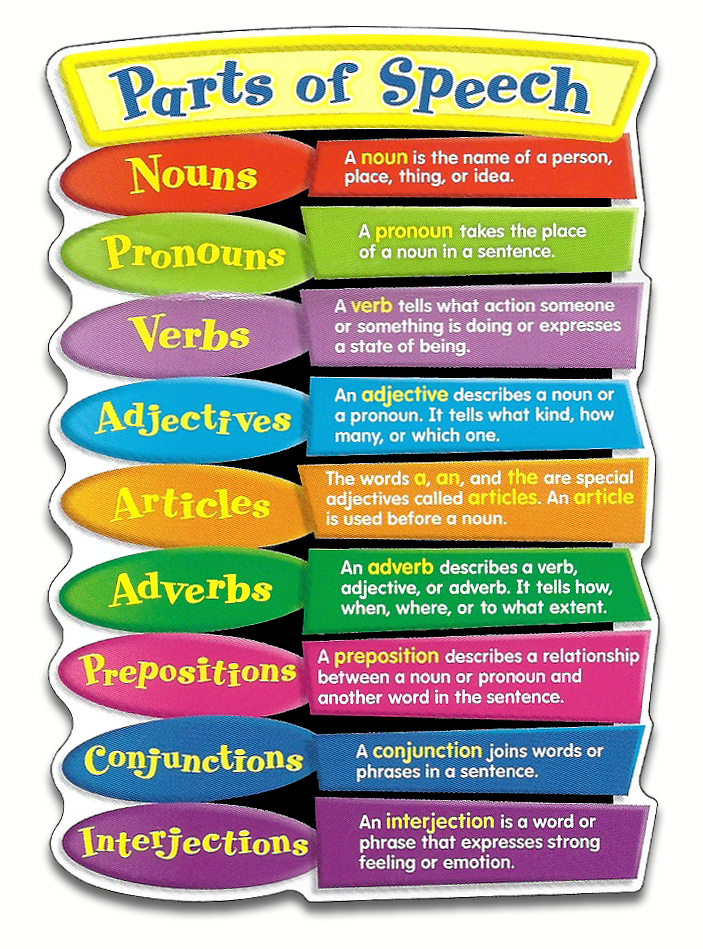
Content words vs. function words: Content words (nouns, verbs, adjectives, adverbs) are the ones that most commonly shift between classes. Function words (pronouns, prepositions, conjunctions) are more fixed in their roles, though occasional overlap exists (e.g., "before" as a preposition, conjunction, or adverb).
Examples of Word Class Flexibility
Here are some of the most common patterns of functional shift:
- Noun → Verb: "Google" (a company name) → "to google something." "Butter" (a food) → "butter the toast."
- Verb → Noun: "Break" (an action) → "take a break" (a pause). "Drink" (an action) → "have a drink."
- Adjective → Noun: "The elderly" uses an adjective to refer to a group of people. "The poor," "the rich," and "the young" work the same way.
- Adjective → Verb: "Clean" (describing something) → "clean the kitchen" (an action).
Some words belong to three or more classes:
- "Light": noun (the light in the room), adjective (a light bag), verb (light the candle)
- "Fast": adjective (a fast car), adverb (she drove fast), noun (a religious fast), verb (to fast for a day)
Notice that with "fast," the adjective and adverb forms look identical. That's another kind of multi-class membership: the word doesn't change form even when it shifts from modifying a noun to modifying a verb.
Factors in Word Class Changes
Why does English allow so many of these shifts? Several forces are at work:
Language evolution and technology. New situations create pressure for new words, and it's often easier to repurpose an existing word than to invent one. "Tweet" was a noun describing a bird's call long before it became a verb meaning to post on social media. "Swipe" shifted from a physical action to a touchscreen gesture.
Word-formation patterns. English lost most of its word endings (inflections) over the centuries. In Old English, nouns and verbs often had distinct endings that kept them in separate classes. Without those endings, it became much easier for words to slide between categories.
Communicative efficiency. Speakers naturally look for the quickest way to express an idea. Saying "email me" is faster than "send me an electronic mail message." This drive toward economy encourages functional shifts.
Cultural contact. English has borrowed heavily from French, Latin, Norse, and many other languages. These borrowed words sometimes arrived already flexible, or they developed new uses once English speakers adopted them.
Contextual Interpretation of Words
Since the same word can belong to multiple classes, how do you figure out which role it's playing? Use these strategies:
-
Check syntactic position. Where does the word sit in the sentence? A word after "the" or "a" is likely functioning as a noun. A word before a noun is likely an adjective. A word that follows a subject and carries tense is likely a verb.
-
Look at surrounding words. In "a daily run," the article "a" signals that "run" is a noun. In "I run daily," the subject "I" and the adverb "daily" signal that "run" is a verb.
-
Consider meaning in context. "She had a light dinner" uses "light" as an adjective (meaning small or not heavy). "She saw a bright light" uses it as a noun. The rest of the sentence guides you.
-
Test with substitution. If you can replace the word with a clear noun (like "thing"), it's probably functioning as a noun. If you can replace it with a clear verb (like "went"), it's probably a verb. This quick test resolves most ambiguities.
The key takeaway: a word's part of speech is determined by its function in a specific sentence, not by the word itself. Always look at context before labeling.
See Fiveable more often in Google
Mark Fiveable as a preferred source and Google is more likely to show you our guides in Top Stories, with a "preferred" badge in AI Mode and AI Overviews.