1.3 Prescriptive vs. descriptive approaches to grammar

🏆Intro to English Grammar Unit 1 Review
1.3 Prescriptive vs. descriptive approaches to grammar
🏆 Intro to English Grammar
Approaches to Grammar
Grammar isn't just about right and wrong. It's a complex field with different approaches. Prescriptive grammar sets rules for "correct" usage, while descriptive grammar observes how people actually speak and write.
Both approaches have their place. Prescriptive grammar helps maintain standards, especially in formal writing. Descriptive grammar recognizes language diversity and evolution. Understanding both makes you a more effective communicator because you can adapt your language to different situations.
Prescriptive vs. Descriptive Grammar
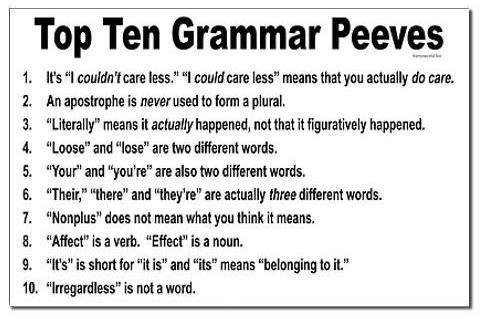
The prescriptive approach focuses on how language should be used. It dictates rules for "correct" grammar based on traditional or formal standards. You've probably encountered prescriptive rules already: don't split infinitives, don't end sentences with prepositions, don't start sentences with "and." These rules show up in style guides, textbooks, and red ink on your essays. The goal is to maintain standardization so that everyone is on the same page.
The descriptive approach takes a different angle. Instead of judging language use, it observes and analyzes how people actually communicate in real-world contexts. Descriptive linguists document patterns as they naturally occur across different communities and regions. They also track how language changes over time. Words like "ain't" and "y'all" aren't errors from a descriptive perspective; they're features of specific dialects with their own consistent rules.
The key distinction: prescriptive grammar asks "Is this correct?" while descriptive grammar asks "Is this what people actually say?"
Advantages and Limitations of Each Approach
Prescriptive Approach
Advantages:
- Provides clear guidelines for formal writing, ensuring consistency in professional and academic contexts
- Helps maintain a standardized form of language, which makes communication across diverse groups easier
- Useful for teaching standard forms to language learners and non-native speakers, who benefit from having concrete rules to follow
Limitations:
- May not reflect natural language evolution, ignoring how people actually communicate day to day
- Can be inflexible toward regional variations or dialects, leading to linguistic discrimination
- May stigmatize non-standard dialects, potentially marginalizing communities whose speech patterns differ from the "standard"
Descriptive Approach
Advantages:
- Captures the reality of language use as it exists across various social and cultural contexts
- Recognizes linguistic diversity, acknowledging that multiple forms of expression can be equally valid
- Allows for a more inclusive view of language, which matters in diverse classrooms and workplaces
Limitations:
- Can make it harder to establish standards for formal writing or language education
- May complicate language instruction when multiple variations are treated as equally valid
- Creates potential for miscommunication in formal contexts where standard forms are expected

Impact on Language Use and Teaching
How prescriptive grammar shapes things:
In language use, the prescriptive approach influences formal writing and speech by setting standards for professional and academic communication. It also shapes educational curricula and testing, often determining what counts as "correct." One downside is that it can create linguistic insecurity, where speakers feel their natural way of talking is somehow "wrong."
In teaching, the prescriptive approach emphasizes grammar rules and error correction. Lessons tend to be structured around formal rules and their exceptions (irregular verbs, subject-verb agreement). This can lead to a narrow view of language proficiency that overlooks whether a student can actually communicate effectively.
How descriptive grammar shapes things:
In language use, the descriptive approach validates diverse forms of expression and recognizes different dialects and registers as legitimate. It encourages linguistic creativity and treats language change as a natural, ongoing process rather than a sign of decline.
In teaching, descriptive grammar fosters awareness of language variation by exploring different dialects and sociolinguistic factors. It encourages students to think critically about why and how language is used in different contexts, and it supports a more inclusive classroom that values diverse linguistic backgrounds.
Role of Language Authorities
Several types of institutions shape what counts as "standard" grammar:
- Dictionaries (Oxford, Merriam-Webster) compile and define words while tracking how usage changes over time. Most modern dictionaries actually take a descriptive approach, recording how words are used rather than prescribing how they should be.
- Government language academies regulate official language use in some countries. The Académie Française in France, for example, actively tries to preserve French by ruling on acceptable vocabulary.
- Academic institutions conduct research and publish findings on language trends, influencing how grammar is understood and taught.
Style guides are where prescriptive grammar is most visible:
- The Associated Press (AP) Stylebook sets standards for journalism and media writing
- The Chicago Manual of Style provides comprehensive guidelines for academic and professional writing
- The MLA Handbook outlines formatting and citation rules for academic papers in the humanities
These authorities establish conventions for written communication and provide reference points for editors and writers. They also shape expectations in professional and academic contexts, influencing everything from grading practices to hiring decisions.
That said, language authorities have real limitations. They often lag behind current usage, not reflecting rapid changes in spoken language. They can perpetuate outdated or biased norms. And they often represent a specific cultural or regional perspective, potentially overlooking global language variations.
The digital age is shifting this landscape. Online resources and user-generated content are challenging traditional authorities. Social media accelerates the spread of new terms and usage patterns. And wider access to language information means more people participate in conversations about what "correct" language even means.
See Fiveable more often in Google
Mark Fiveable as a preferred source and Google is more likely to show you our guides in Top Stories, with a "preferred" badge in AI Mode and AI Overviews.