AP European History Unit 4 Cheatsheet: Scientific, Philosophical, and Political Developments

AP European History Unit 4 Cheatsheet: Scientific, Philosophical, and Political Developments

Start with the first 4 sections of the Unit 4 one-page cheatsheet below. The full sheet is a PDF you can print.

Scientific Revolution: Methods & Challenge

Core shift: Observation, experimentation, and mathematics replaced reliance on classical authority alone.

  • Views of cosmos, nature, human body challenged by empirical evidence
  • Existing traditions persisted alongside new ideas—not a clean break
  • Ancient Greek and Roman works reinterpreted through new methods

Key distinction: Revolutionary method (observation) vs. revolutionary conclusions (which took time to dominate).
Enlightenment Core Concepts

Five pillars:

  • Empiricism—knowledge from sensory experience
  • Skepticism—questioning received wisdom
  • Human reason—rational analysis as tool
  • Rationalism—logic and mathematics as guides
  • Classical sources—ancient texts reinterpreted

These challenged social order, government institutions, and faith's public role.

Critical point: Enlightenment applied Scientific Revolution methods to society and politics, not just nature.

Political Theory: Rights & Social Contract

John Locke:

  • Society = self-interested individuals
  • State originates in consent of the governed, not divine right
  • Government is a contract, revocable

Jean-Jacques Rousseau:

  • Also used social contract framework
  • Argued for exclusion of women from political life
  • Challenged by Wollstonecraft and Condorcet

Test strategy: Identify which thinker's ideas appear in a source; note gender exclusions despite equality rhetoric.

Economic Theory & Religious Rationalization

Economic challenge to absolutism:

  • Old: Mercantilism—state control, bullion accumulation, monopolies
  • New: Adam Smith, Physiocrats (Quesnay, Turgot)—free trade, free markets, self-interest drives efficiency

Religious rationalization:

  • Deism—belief in a creator known through reason rather than revelation (Voltaire, Paine)
  • Skepticism & atheism (Hume, Baron d'Holbach)
  • Natural religion—universal morals from reason
  • Religion viewed as private, not state mandate

By 1800: Most western/central European governments extended toleration to Christian minorities; some granted civil equality to Jews.

The rest of the Unit 4 sheet

6 more sections are on the one-page PDF:

  • Dissemination: Venues & Print Media

  • Demographic & Agricultural Revolution

  • Family, Childhood & Private Life

  • Urbanization & Social Transformation

  • Arts & Culture: Baroque to Neoclassicism

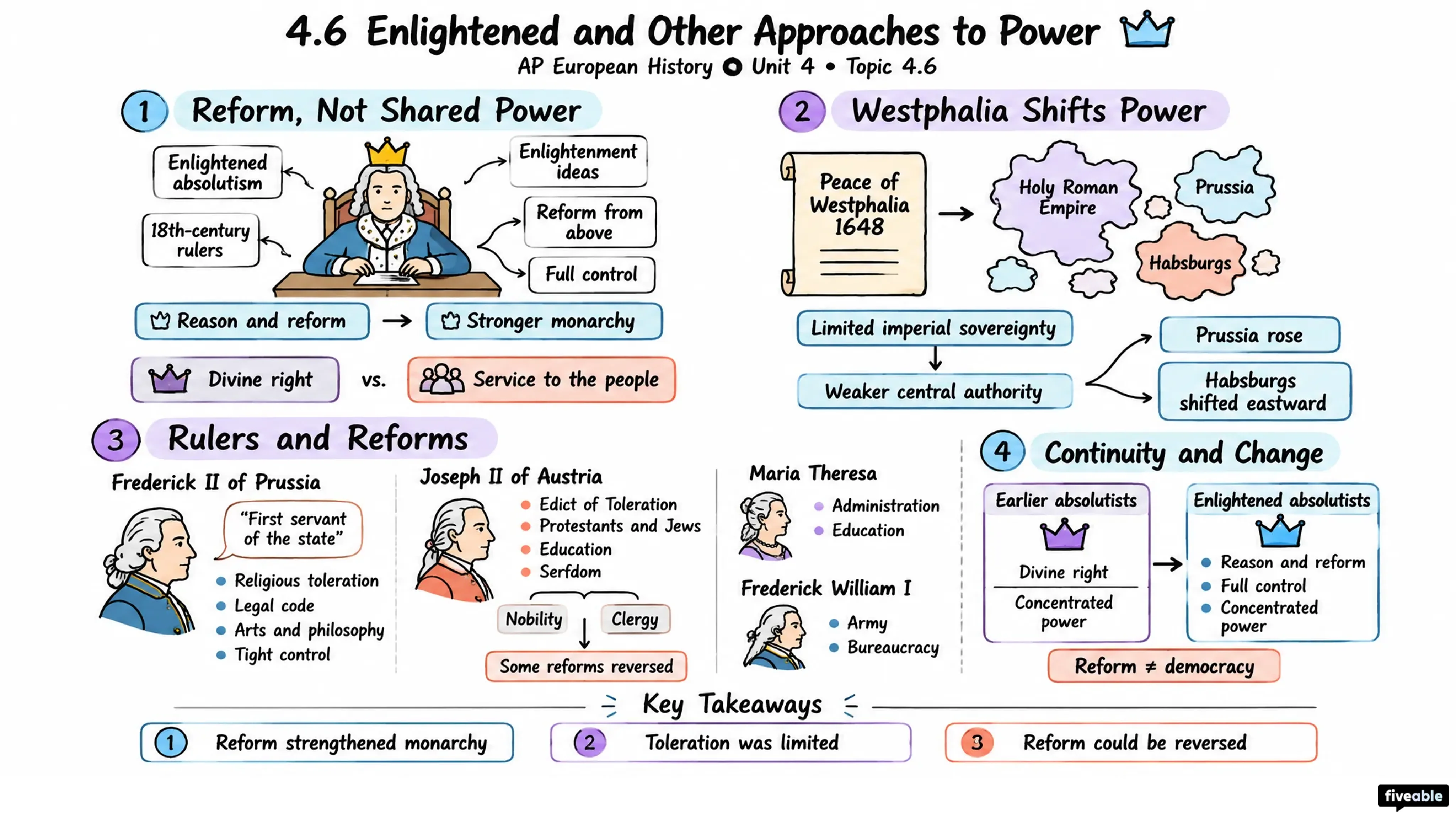
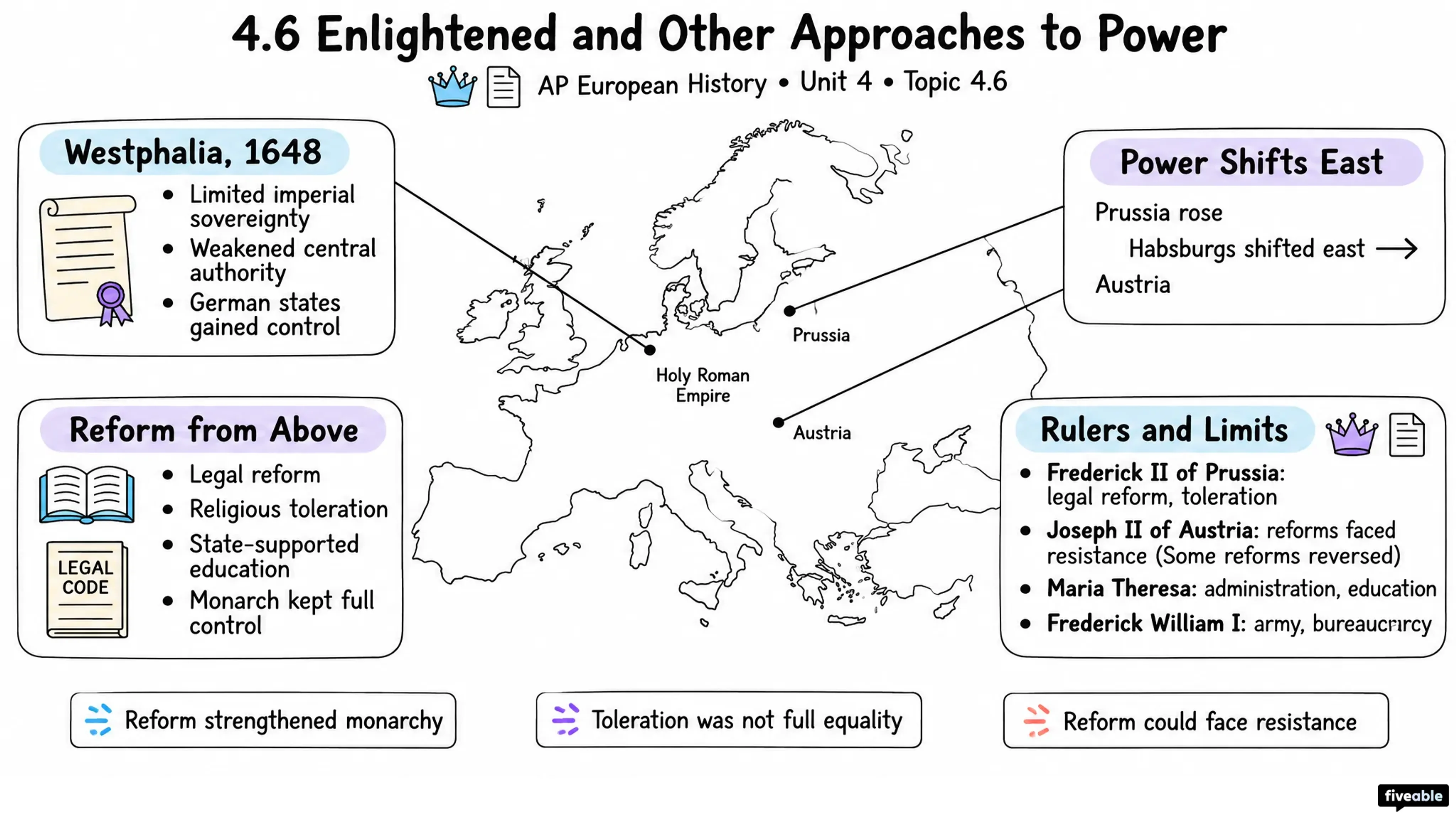
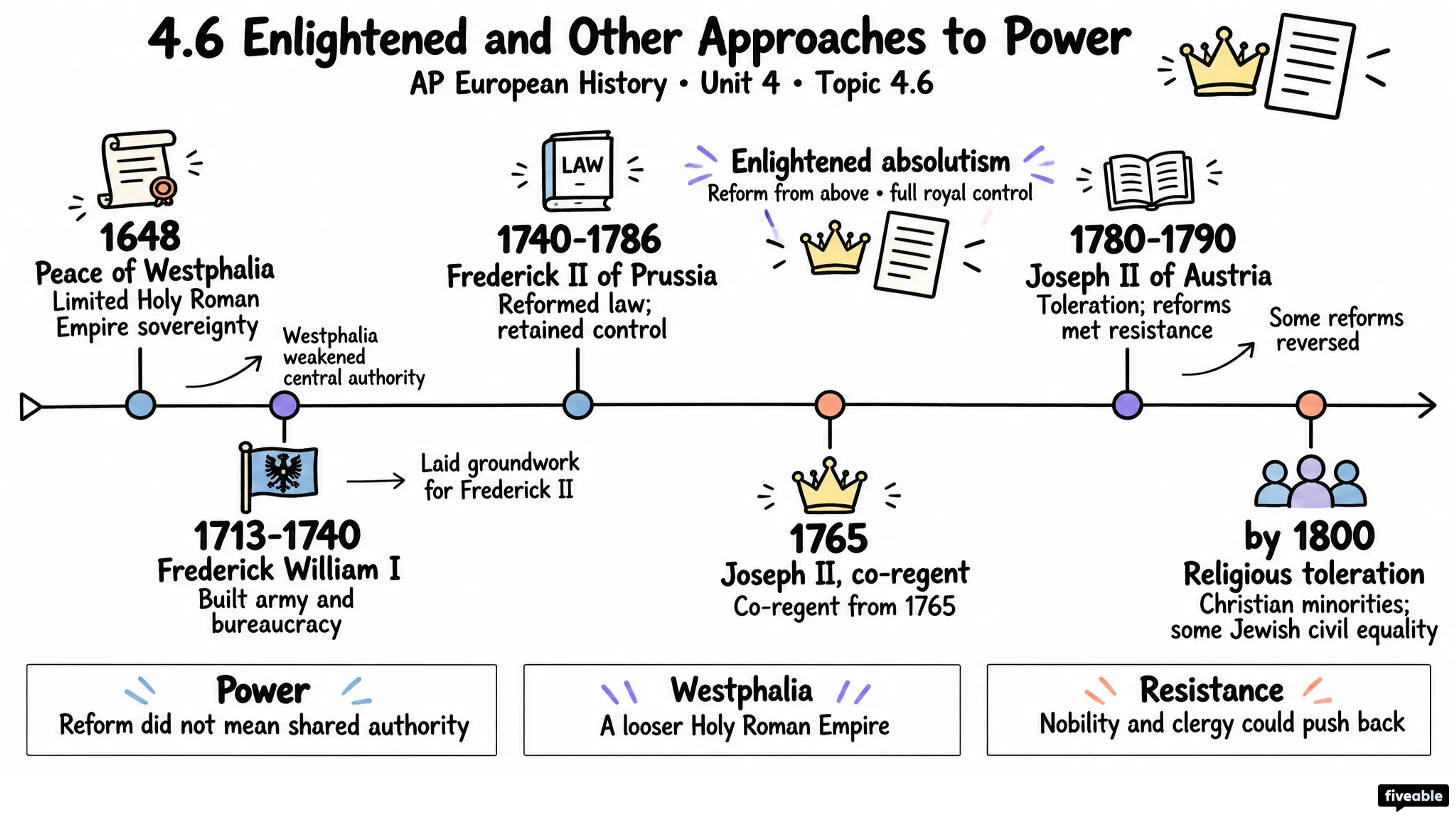
  • Enlightened Absolutism & Geopolitical Shift

Made by Fiveable

Text-Based Cheatsheet

Unit 4: Scientific, Philosophical, and Political Developments on one page, aligned to the 2026-2027 course. Made and checked by the Fiveable Content Team.

Or get the whole course

Made by you

Visual Cheatsheets

Pick a Unit 4 topic and a format: flowchart, comparison chart, vocab sheet, Cornell notes and more. Ready in about a minute.

Printable PDF · from the Fiveable shop

AP European History Unit 4 Cheatsheet

1 page · Scientific, Philosophical, and Political Developments · PDF

Visual Cheatsheets

One topic, the format you pick, ready in about a minute

Format

Topic

Takes 30–60 seconds

Preview: Standard

Unit 4: Scientific, Philosophical, and Political Developments, topic by topic

Each topic has a full study guide. See the whole unit.