5.3 The Green Revolution

♻️AP Environmental Science Unit 5 Review
5.3 The Green Revolution
♻️ AP Environmental Science
5.0
Required Environmental Legislation
5.1
The Tragedy of the Commons
5.2
Clearcutting
5.3
The Green Revolution
5.4
Impacts of Agricultural Practices
5.5
Irrigation Methods
5.6
Pest Control Methods
5.7
Meat Production Methods
5.8
Impacts of Overfishing
5.9
Impacts of Mining
5.10
Impacts of Urbanization
5.11
Ecological Footprints
5.12
Intro to Sustainability
5.13
Methods to Reduce Urban Runoff
5.14
Integrated Pest Management
5.15
Sustainable Agriculture
5.16
Aquaculture
5.17
Sustainable Forestry
The Green Revolution was a shift to farming strategies that produced more food through mechanization, high-yield crop varieties bred through selective breeding, synthetic fertilizers, expanded irrigation, and pesticides. In AP Environmental Science, you should pair those food-production benefits with environmental and social costs like fossil fuel reliance, runoff, and harm to non-target species.
The Green Revolution Summary
The Green Revolution increased food production by changing agricultural practices. Farmers used more mechanization, GMOs, synthetic fertilizers, irrigation, and pesticides to produce higher yields and more reliable harvests.
For AP Environmental Science, the important move is to pair each benefit with a cost. Mechanization can improve efficiency and farm profits, but it also increases fossil fuel reliance. Fertilizers and pesticides can raise crop output, but they can also create water pollution and ecological harm.
Mechanization is a frequent focus in free-response questions because it ties directly to fossil fuel use, which connects to later units on energy and pollution.
Green Revolution Gains and Their Costs
- The Green Revolution introduced new agricultural strategies to increase food production, with both positive and negative results.
- Major practices include mechanization, GMOs, fertilization, irrigation, and pesticide use.
- Mechanization raises farm profits and efficiency but increases reliance on fossil fuels.
- Higher food production can help with food security and lower costs.
- Drawbacks include pollution, harm to non-target wildlife, and dependence on fuel and chemical inputs.
- Be ready to pair each benefit with a specific environmental or social cost.
The Big Idea: More Food, New Trade-Offs
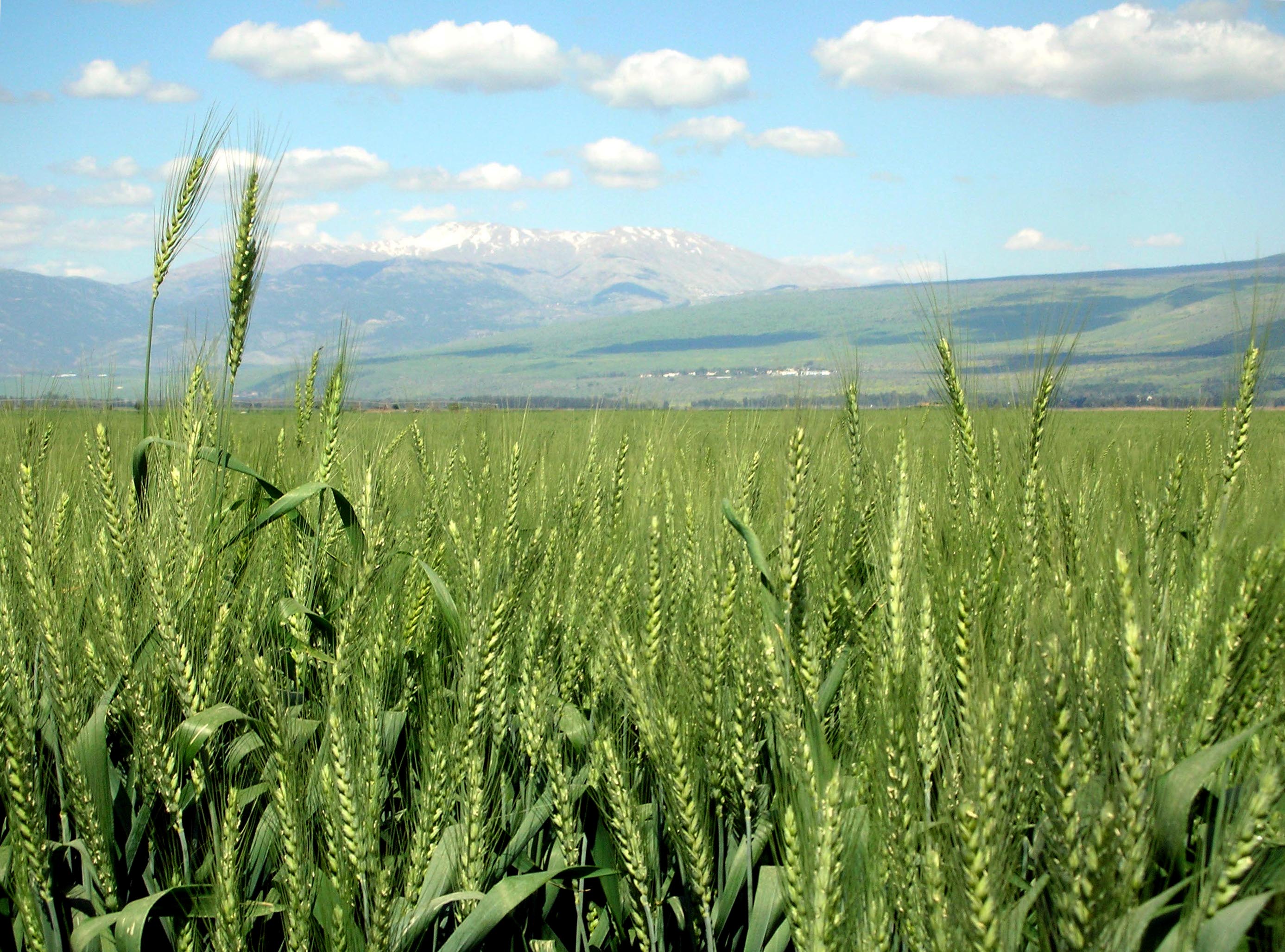
As human population grew quickly, food production methods needed to become more efficient. The Green Revolution, which gained momentum in the 1960s, focused on increasing agricultural output so more food could be produced for less money. That can ease hunger and lower food prices, but the new methods came with environmental and social costs.
Norman Borlaug is often called the "Father of the Green Revolution" and won the Nobel Peace Prize in 1970 for developing high-yielding varieties of wheat through conventional crossbreeding. (His work is a useful real-world example of the movement, not a required AP term.)
Key Practices of the Green Revolution
The Green Revolution shifted farming toward several new strategies. These are the ones to know:
- Mechanization: Using machines like tractors and harvesters instead of manual labor. This increases profits and efficiency but increases reliance on fossil fuels.
- Genetically modified organisms (GMOs): Crops whose DNA has been altered to improve traits like yield, durability, or resistance to certain problems.
- Fertilization: Adding synthetic fertilizers to boost crop growth.
- Irrigation: Expanding water delivery to crops so more land can be farmed more intensively.
- Pesticides: Chemicals used to reduce crop damage from pests.
Each of these raised food output, but each also introduced a downside, which is exactly the kind of pairing the exam tests.
Benefits and Drawbacks
| Practice | Benefit | Drawback |
|---|---|---|
| Mechanization | More profit and efficiency | Greater reliance on fossil fuels |
| GMOs | Higher yields and better crop traits | Concerns about reduced crop genetic diversity |
| Fertilization | Faster, larger crop growth | Runoff can pollute water |
| Irrigation | Supports intensive farming | Can deplete water supplies over time |
| Pesticides | Less crop loss to pests | Can harm helpful insects and other wildlife |
A repeating theme: practices that increase yield often increase pollution, resource use, or fossil fuel dependence. Pesticides, for example, can reduce pest damage while also harming beneficial insects and other non-target wildlife.
Matching Green Revolution Practices to Trade-Offs
Free Response: When a prompt asks you to describe a change in agricultural practices, name a specific Green Revolution strategy and explain how it increases food production. Then connect it to a concrete consequence. For mechanization, the clearest link is increased fossil fuel use, which leads to more greenhouse gas emissions.
Use AP verbs precisely. "Describe" means give a clear feature or step. "Explain" means connect a cause to an effect. If a question asks for a benefit and a drawback, make sure your two answers actually pair with each other.
MCQ: Multiple-choice questions often test whether you can match a practice to its trade-off. If you see "mechanization," expect fossil fuels or efficiency as the right link. If you see "pesticides," look for resistance or harm to non-target organisms. Watch for answer choices that list only benefits or only costs when the question wants the trade-off.
Common Trap: Do not treat the Green Revolution as purely good or purely bad. The exam rewards the balanced view that it increased food production while also creating environmental and social problems.
Common Misconceptions
- Misconception: GMOs are the whole Green Revolution.Actually: GMOs are not the whole Green Revolution. GMOs are one strategy among several, including mechanization, fertilization, irrigation, and pesticides.
- Misconception: More food means no problems.Actually: More food does not mean no problems. Higher yields can come with water depletion, pollution, and fossil fuel dependence.
- Misconception: Mechanization is just "using machines."Actually: Mechanization is not just "using machines." For the exam, the key point is that it raises efficiency and profit but increases reliance on fossil fuels.
- Misconception: Pesticides only affect pests.Actually: Pesticides do not only affect pests. They can harm beneficial insects and other wildlife, which is why pest control has wider ecological effects.
- Misconception: The Green Revolution is a single invention.Actually: The Green Revolution is not a single invention. It is a broad shift in agricultural strategies, not one product or machine.
Related AP Environmental Science Guides
Practice Questions for 5.3
1 of 10
Bt corn produces its own insecticide. Ecologists hypothesized that planting Bt corn would reduce synthetic pesticide application per hectare while maintaining crop yields compared with conventional corn. They monitored 20 farms over five years. The figure shows mean crop yield and mean pesticide application for both corn varieties.
Which conclusion about the hypothesis is best supported by the data?
A.
The data partially support the hypothesis because pesticide application decreases but crop yield drops sharply.
B.
The data are inconclusive because overlapping yield error bars prevent any interpretation of the results.
C.
The data refute the hypothesis because Bt corn requires significantly more synthetic pesticide than conventional corn.
D.
The data support the hypothesis because yields are statistically similar while pesticide application is lower for Bt corn.
Vocabulary
The following words are mentioned explicitly in the AP® course framework for this topic.Term | Definition |
|---|---|
fertilization | The application of nutrients to soil to enhance plant growth and crop productivity. |
fossil fuels | Non-renewable energy sources formed from ancient organic matter, including coal, oil, and natural gas, that release carbon dioxide when burned. |
genetically modified organisms (GMOs) | Organisms whose genetic material has been altered to enhance desired traits, such as crop yield or pest resistance. |
Green Revolution | A shift to new agricultural strategies and practices designed to increase food production, beginning in the mid-20th century. |
irrigation | The artificial application of water to land to support agricultural production. |
mechanization | The use of machines and mechanical equipment in farming to increase efficiency and profits. |
pesticides | Chemical substances used to reduce or control pests, which can pose risks to wildlife, water supplies, and human health. |
See Fiveable more often in Google
Mark Fiveable as a preferred source and Google is more likely to show you our guides in Top Stories, with a "preferred" badge in AI Mode and AI Overviews.