Made by Fiveable
Text-Based Cheatsheets
The whole AP Art History course on one page, plus one page per unit, reviewed every year. Made and checked by the Fiveable Content Team.
Download the text-based cheatsheet we write and review every year, or make a visual cheatsheet for any topic in the format you study best with.
What each unit's one-page cheatsheet covers. Open a unit to read the start of its sheet.
Unit 1: Global Prehistory, 30,000-500 bce
Prehistoric Periods & Environmental Context · Artistic Themes & Iconography · Analysis Beyond the Image Set & Interpretation · Global Distribution & Early Chronology · Art & Survival: Function & Meaning · Interpreting Prehistoric Art: Methods & Evidence · Materials & Media Across Regions · Identify & Describe: Core Skills · Context & Influence: Analytical Skills
Unit 2: Ancient Mediterranean, 3500 bce-300 ce
Ancient Near East: Powers & Religion (3500–330 bce) · Dynastic Egypt: Permanence & Eternity (3000–30 bce) · Visual Analysis & Artistic Decisions · Egyptian Architecture & Materials · Etruscan & Roman: Eclecticism & Power (c. 700 bce–337 ce) · Cross-Cultural Exchange & Influence · Ancient Greece: Ideals & Periods (600 bce–100 ce) · Purpose & Patronage: Royal, Divine, Funerary · Evidence & Interpretation Methods
Unit 3: Early Europe and Colonial Americas, 200-1750 CE
Medieval Art Traditions & Characteristics · Medieval Cultural Exchanges · Age of Exploration & Global Networks · th–17th Century European Developments · Patronage, Function & Display · Materials, Techniques & Naturalism · Interpreting Medieval & Early Modern Art
Unit 4: Later Europe and Americas, 1750-1980 CE
Historical Context & Philosophical Shifts · Major Art Movements & Styles · Patronage & Audience Shift · Materials, Processes & Technology · Cultural Interaction & Colonialism · Theories & Interpretations · Visual Analysis Framework · Contextual Analysis Framework · Continuity & Change Analysis · Common Test Patterns
Unit 5: Indigenous Americas, 1000 BCE-1980 CE
Mesoamerica: Olmec, Maya, Mexica · Overarching Artistic Traits & Purpose · Central Andes: Chavín & Inka · Evidence, Interpretation & Cultural Change · Native North America: Regions & Values · Materials, Hierarchy & Techniques
African Art: Materials, Media & Specialists · Early African Art: 77,000 Years Ago · Authority, Identity & Education Through Art · African Art & Belief Systems · Collecting & Interpretation Problems · Theories & Interpretations: Visual Analysis & Evidence · Human Migration & Cosmopolitan Interaction · Purpose & Audience: Active Art · Urbanization & Monumental Sites
Unit 7: West and Central Asia, 500 BCE-1980 CE
Key Materials & Techniques · Islamic Architecture & Function · Patrons & Audiences · Two-Dimensional Design Principles · Silk Route & Cultural Exchange · Visual Analysis & Attribution Strategy · Religious Traditions & Pilgrimage · Figural Imagery: Sacred vs. Secular · Interpreting Figural Art in Context
Made by Fiveable
The whole AP Art History course on one page, plus one page per unit, reviewed every year. Made and checked by the Fiveable Content Team.
Made by you
Pick any topic and a format: flowchart, comparison chart, vocab sheet, Cornell notes and more. Ready in about a minute.
Made by Fiveable, one page per unit, aligned to the 2026-2027 course
Printable PDF · from the Fiveable shop
12 pages · Subject + 10 unit cheatsheets · PDF
One topic, the format you pick, ready in about a minute
Format
Topic
Takes 30–60 seconds
Preview: Standard
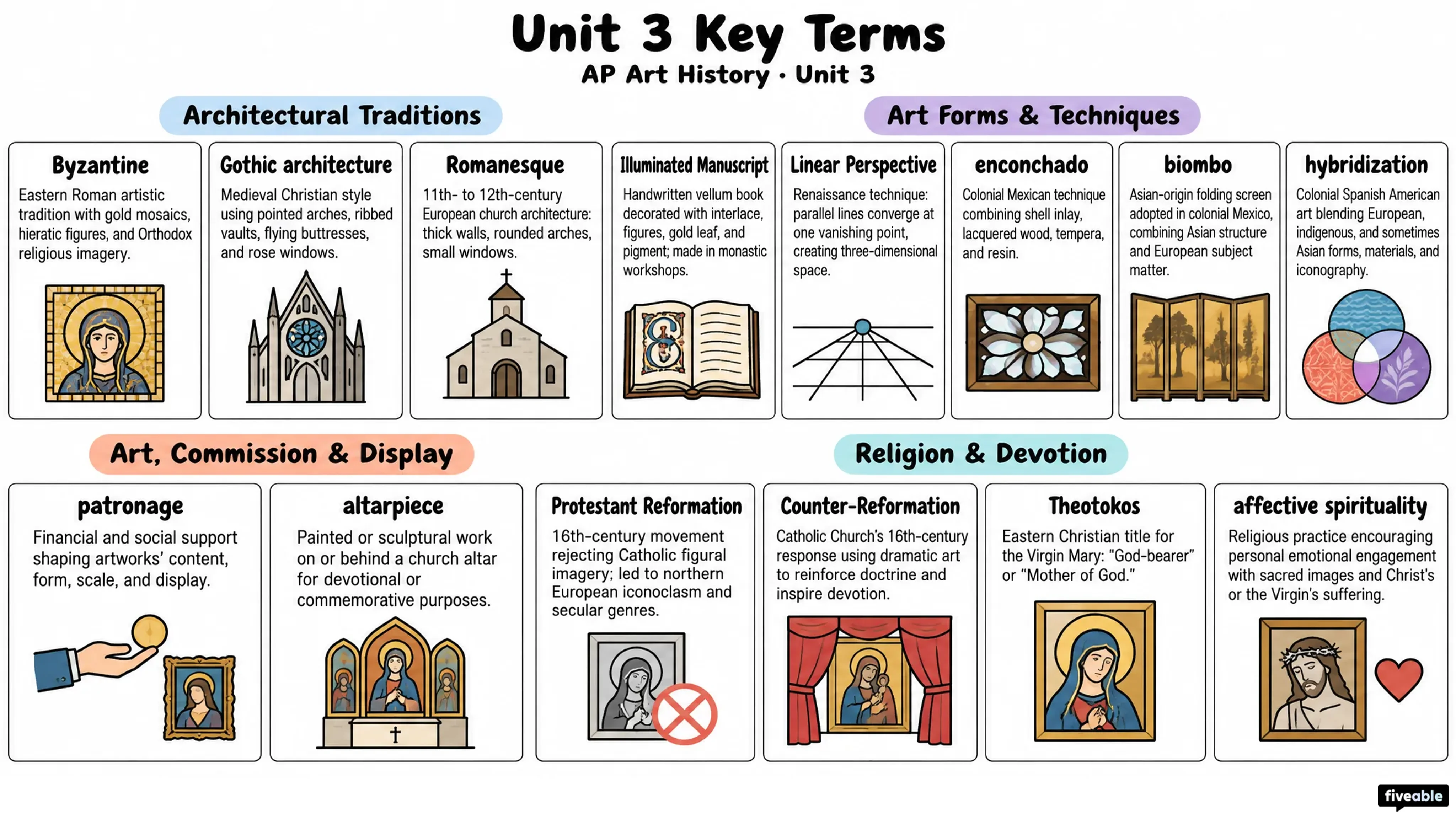
AP Art History Unit 3 Key Terms
Vocab sheet
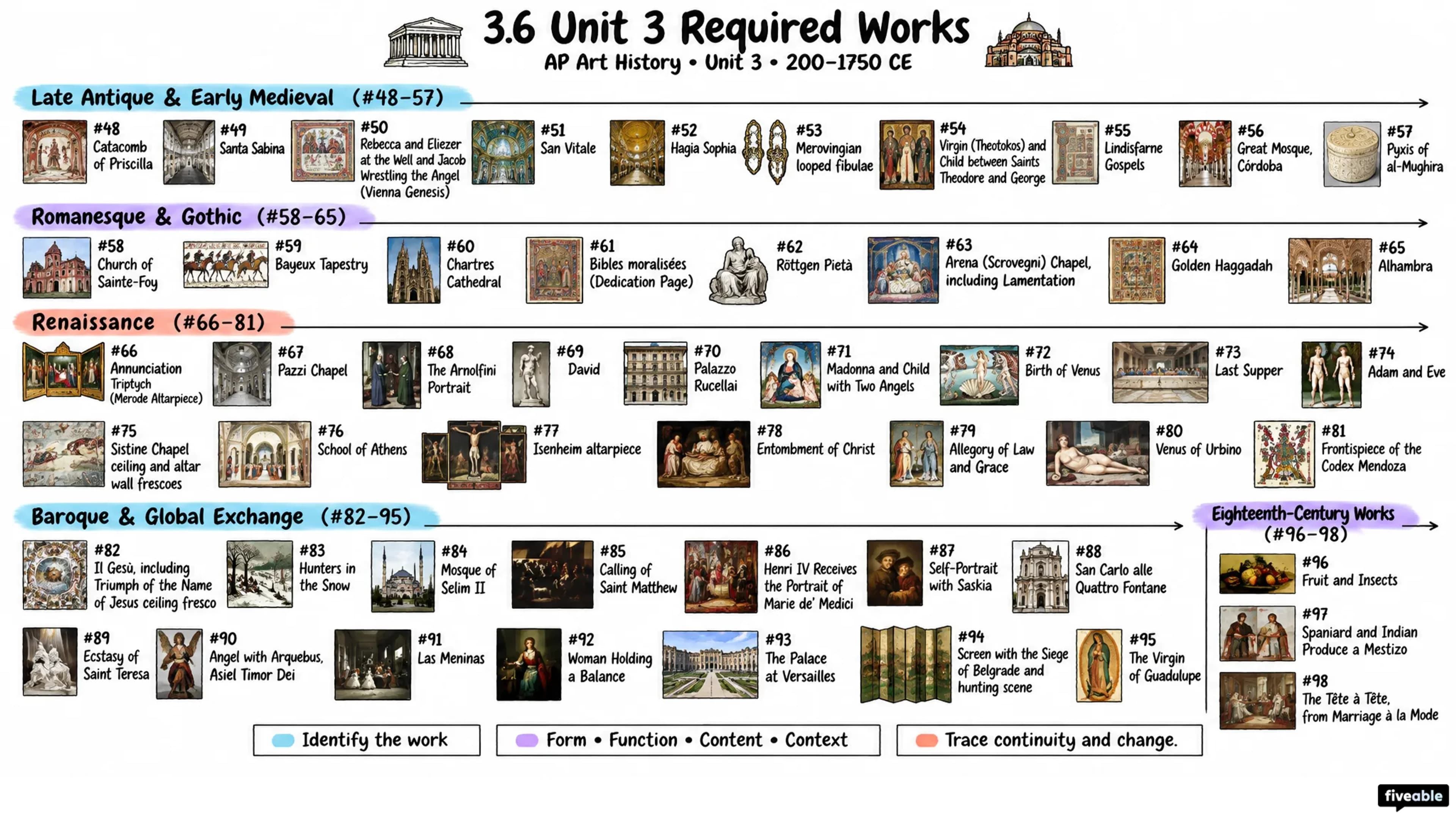
3.6 Unit 3 Required Works
Standard
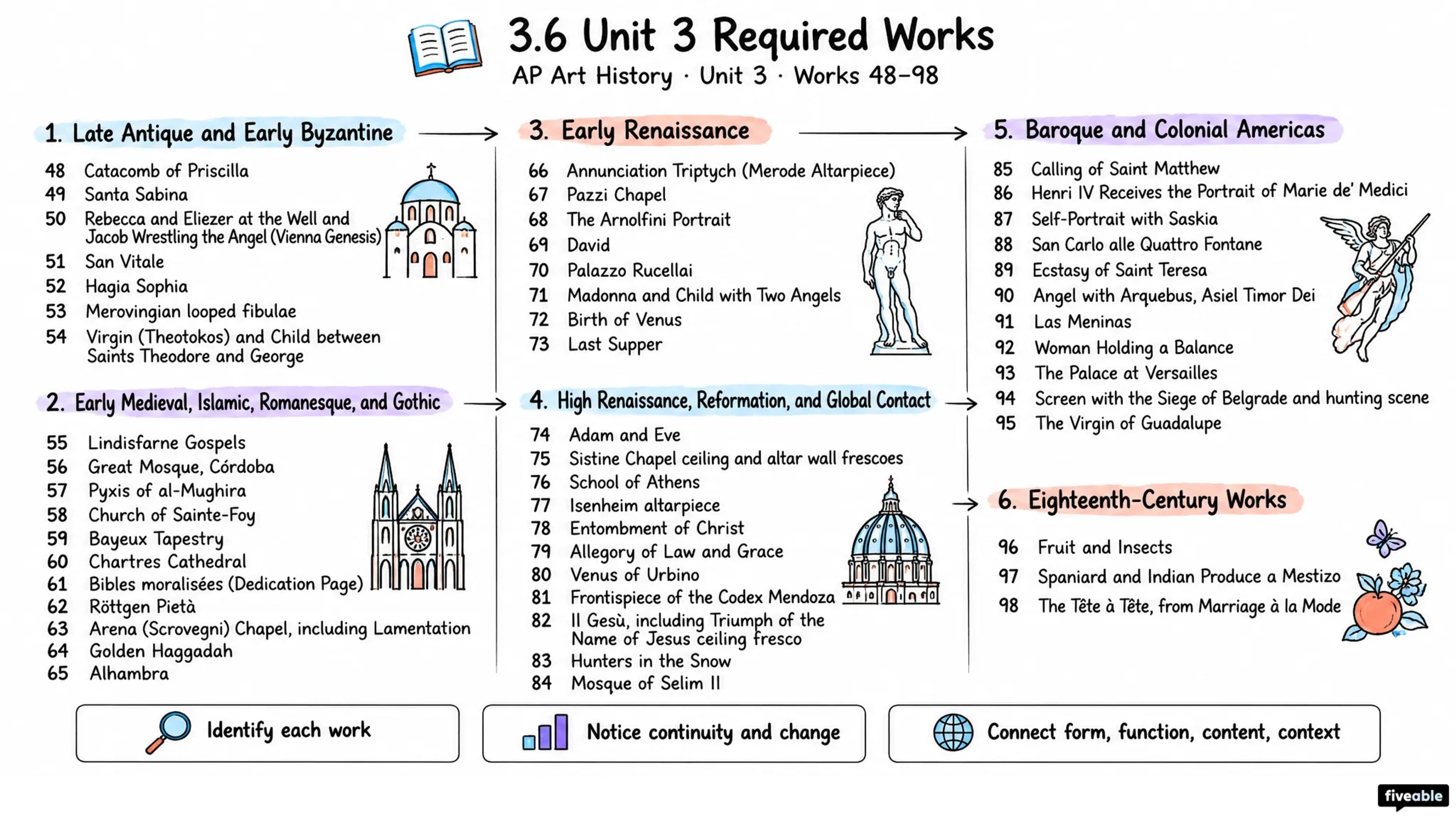
3.6 Unit 3 Required Works
Standard
A cheatsheet condenses a whole course into the facts you actually need on exam day. The AP Art History cheatsheets on this page summarize the key formulas, concepts, and definitions from each unit so you can review the entire course at a glance.
They work best as a final review: skim the one-page summary, spot the units you want to strengthen, then go deeper with the AP Art History study guides. The visual cheatsheets in the gallery are organized by unit, and you can generate your own for any topic you want a quick refresher on.