AP Art History Unit 1 Cheatsheet: Global Prehistory, 30,000-500 bce

AP Art History Unit 1 Cheatsheet: Global Prehistory, 30,000-500 bce

Start with the first 3 sections of the Unit 1 one-page cheatsheet below. The full sheet is a PDF you can print.

Prehistoric Periods & Environmental Context

Three Stone Ages (Lithic Periods):

  • Paleolithic (Old Stone Age): earliest period; hunter-gatherers; small groups; survival paramount
  • Mesolithic (Middle Stone Age): transitional period
  • Neolithic (New Stone Age): emergence of agriculture, settlement, animal husbandry

Environmental Shifts:

  • European ice ages (glacial periods)
  • Saharan grassland → desert
  • Lower glacial sea levels exposed Southeast Asian land bridges, facilitating migration toward Sahul (Australia and New Guinea) by about 45,000 years ago.

Key Principle: Human behavior and artistic expression were shaped by changing environments and survival strategies.
Artistic Themes & Iconography

Recurring Subjects:

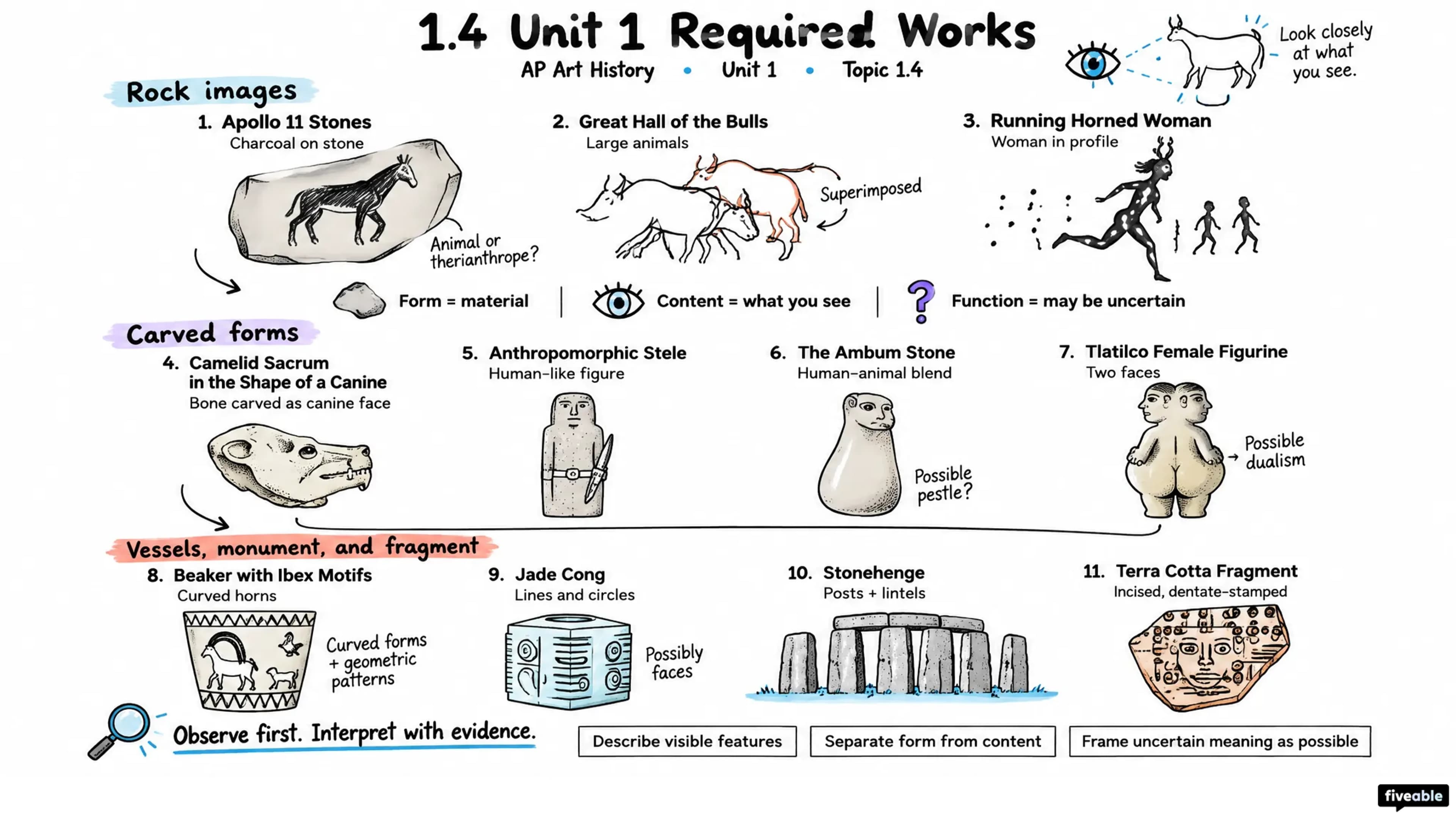
  • Animal imagery (dominant in cave paintings across Asia, Europe, Americas)
  • Human figures, especially female figurines
  • Fecund (fertile) females suggesting fertility symbolism
  • Transformational animal-human iconography (shamanic)
  • Supernatural or unusual characteristics in human figures

Formal Strategies:

  • Dynamic interplay of naturalism and abstraction
  • Adaptation of animal images to natural contours of materials
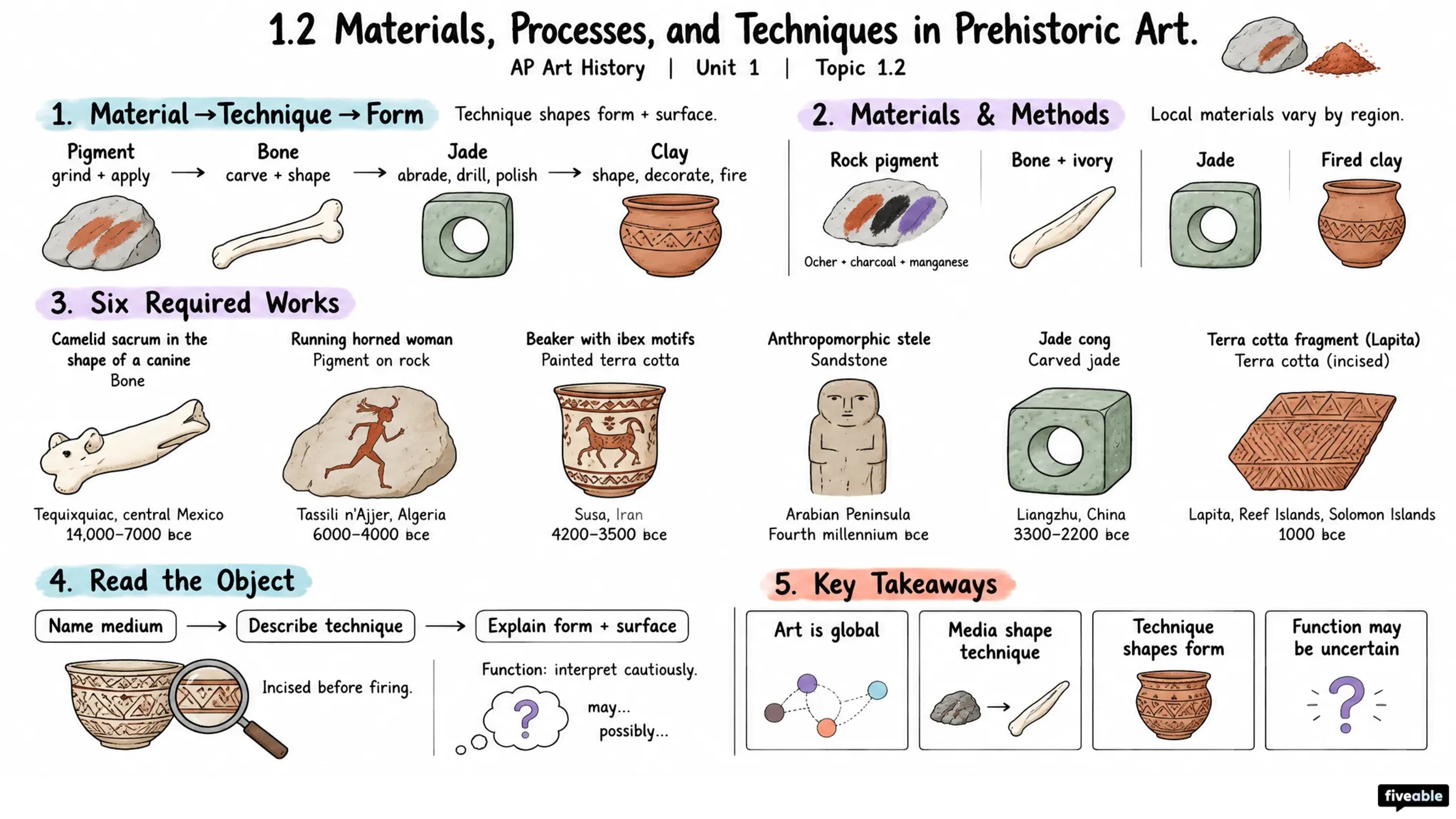
  • Geometric and representational designs (Lapita pottery)

Spiritual Dimensions:

  • Shamanic religion (earliest, most persistent worldwide spiritual approach)
  • Ritual life and cosmic integration (~15,000 BCE in Europe)
  • Promotion of human and animal fertility

Analysis Beyond the Image Set & Interpretation

Skill 5.A & 5.B – Analyze unfamiliar works: Describe visual elements and explain artistic decisions in works not in the standard curriculum image set. Requires visual analysis skills applicable across periods and cultures.

Skill 6.A & 6.B – Attribution: Identify or justify attribution of a work to a specific artist, culture, style, or object type by comparing visual features with known works.

Skill 7.A & 7.B – Interpret meaning: Describe and explain art-historically valid interpretations of a work, its reception, or meaning. Derive interpretations from analysis of form, style, materials, content, function, context, and reception.

Test Strategy: Use visual analysis (form, materials, technique) to support contextual claims (function, meaning, cultural practice). Combine multiple skills in single response.

The rest of the Unit 1 sheet

6 more sections are on the one-page PDF:

  • Global Distribution & Early Chronology

  • Art & Survival: Function & Meaning

  • Interpreting Prehistoric Art: Methods & Evidence

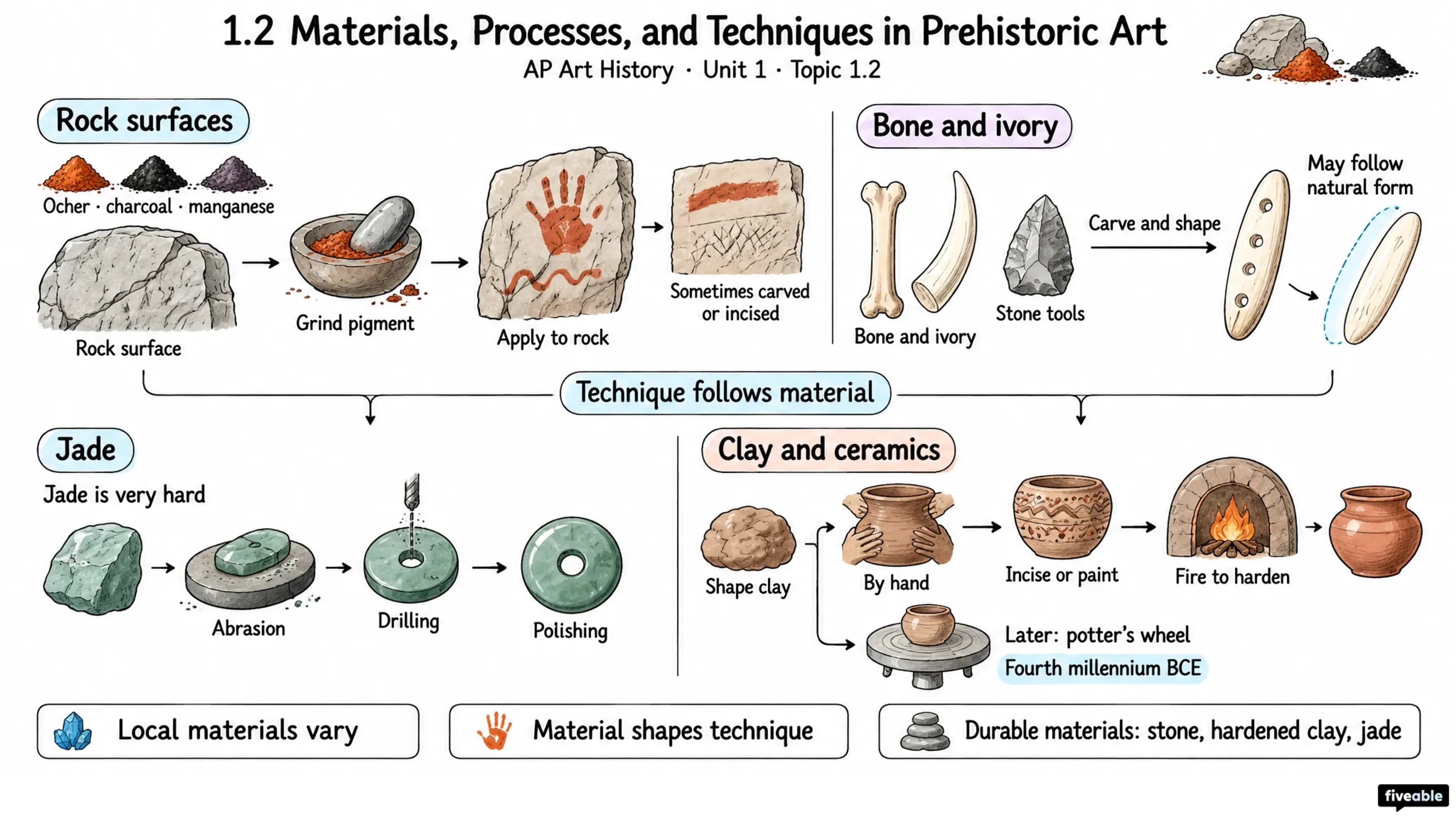
  • Materials & Media Across Regions

  • Identify & Describe: Core Skills

  • Context & Influence: Analytical Skills

Made by you

Visual Cheatsheets

Pick a Unit 1 topic and a format: flowchart, comparison chart, vocab sheet, Cornell notes and more. Ready in about a minute.

Printable PDF · from the Fiveable shop

AP Art History Unit 1 Cheatsheet

1 page · Global Prehistory, 30,000-500 bce · PDF

Visual Cheatsheets

One topic, the format you pick, ready in about a minute

Format

Topic

Takes 30–60 seconds

Preview: Standard

Unit 1: Global Prehistoric Art, 30,000–500 BCE, topic by topic

Each topic has a full study guide. See the whole unit.