AP Art History Unit 2 Cheatsheet: Ancient Mediterranean, 3500 bce-300 ce

AP Art History Unit 2 Cheatsheet: Ancient Mediterranean, 3500 bce-300 ce

Start with the first 3 sections of the Unit 2 one-page cheatsheet below. The full sheet is a PDF you can print.

Ancient Near East: Powers & Religion (3500–330 bce)

Successive Cultures: Sumerian, Akkadian, Neo-Sumerian, Babylonian, Assyrian, Neo-Babylonian, Persian.

  • Religion central to art and architecture
  • Cosmology guides representation of deities and kings
  • Kings assume divine attributes
  • Ziggurats: monumental settings for worship of many deities
  • Heavily fortified palaces proclaim ruler power and authority

Key Work: Code of Hammurabi—legal and cultural record.
Dynastic Egypt: Permanence & Eternity (3000–30 bce)

Core Purpose: Art created for eternity; focused on preserving cycle of rebirth.

  • Periods: Predynastic, Old, Middle, New Kingdoms; Amarna period (cultural reform, stylistic revolution)
  • Mythological and religious symbolism centered on sun cult
  • Hierarchical proportion: pharaoh (deified) vs. lower classes
  • Idealization vs. naturalism based on rank
  • Strict artistic canon followed for centuries; short-lived experiments only

Funerary Focus: Ka statues house the spirit after death; elaborate tomb furnishings and decorations.

Key Works: Mortuary temple of Hatshepsut; Tutankhamun's tomb, innermost coffin.

Visual Analysis & Artistic Decisions

Form & Style: Describe idealized proportions, composite views combining profile and frontal elements, hierarchical scale, and register divisions.

Materials & Technique: Stone construction (pyramids, temples), bronze and marble sculpture, architectural innovation (clerestory, pylon, vault).

Content & Symbolism: Mythological and religious imagery; sun cult; divine kingship; epic narratives; civic and imperial propaganda.

Function & Reception: Ritual, commemorative, funerary, civic, palatial purposes shape meaning and audience response. Artistic choices about form, materials, and content elicit specific responses and shape how works are received across time.

Continuity & Change: Explain how works demonstrate continuity with established conventions (Egyptian canon, Greek ideals) or represent innovations (Amarna period, Hellenistic naturalism, Roman eclecticism).

The rest of the Unit 2 sheet

6 more sections are on the one-page PDF:

  • Egyptian Architecture & Materials

  • Etruscan & Roman: Eclecticism & Power (c. 700 bce–337 ce)

  • Cross-Cultural Exchange & Influence

  • Ancient Greece: Ideals & Periods (600 bce–100 ce)

  • Purpose & Patronage: Royal, Divine, Funerary

  • Evidence & Interpretation Methods

Made by you

Visual Cheatsheets

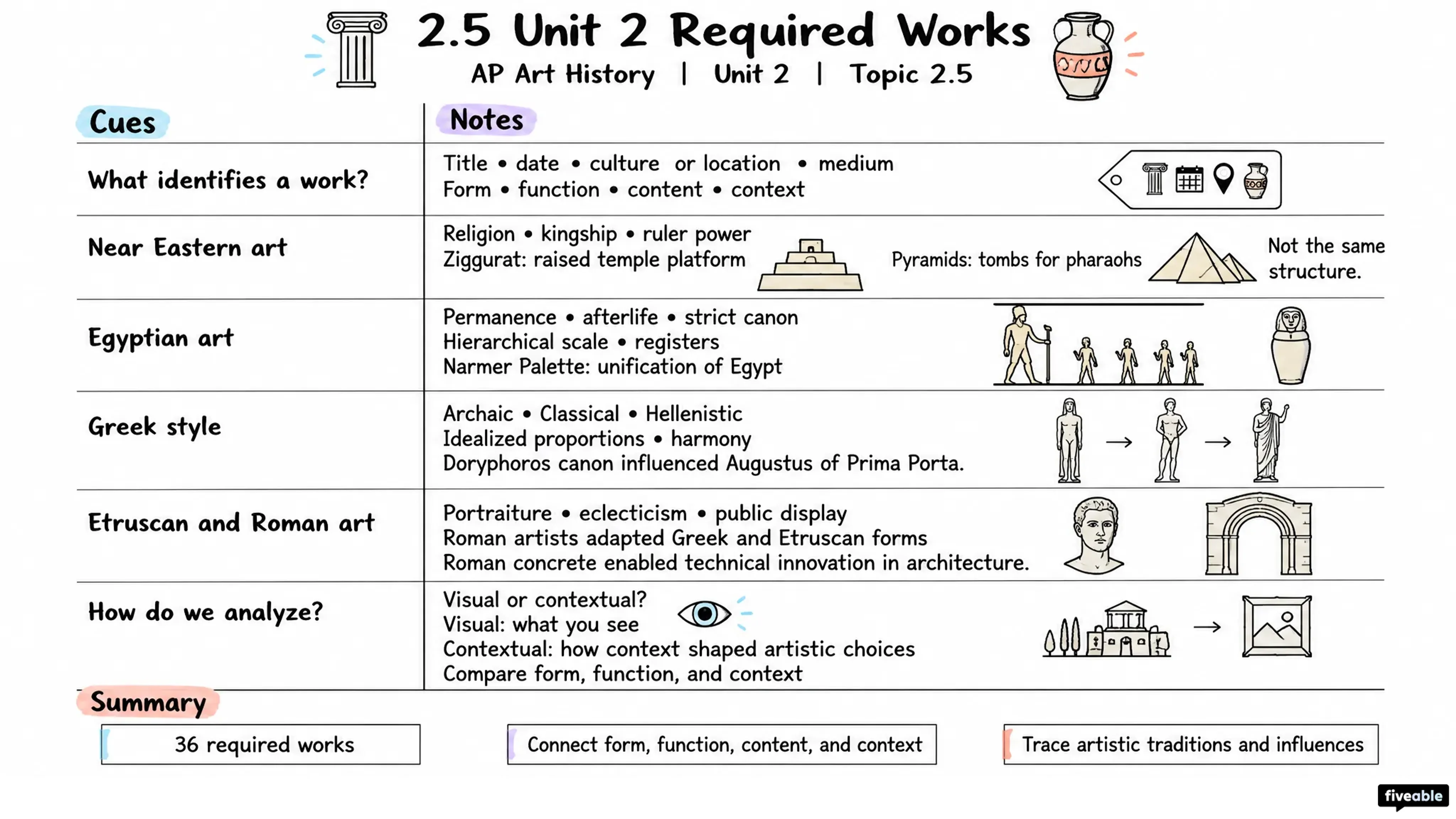
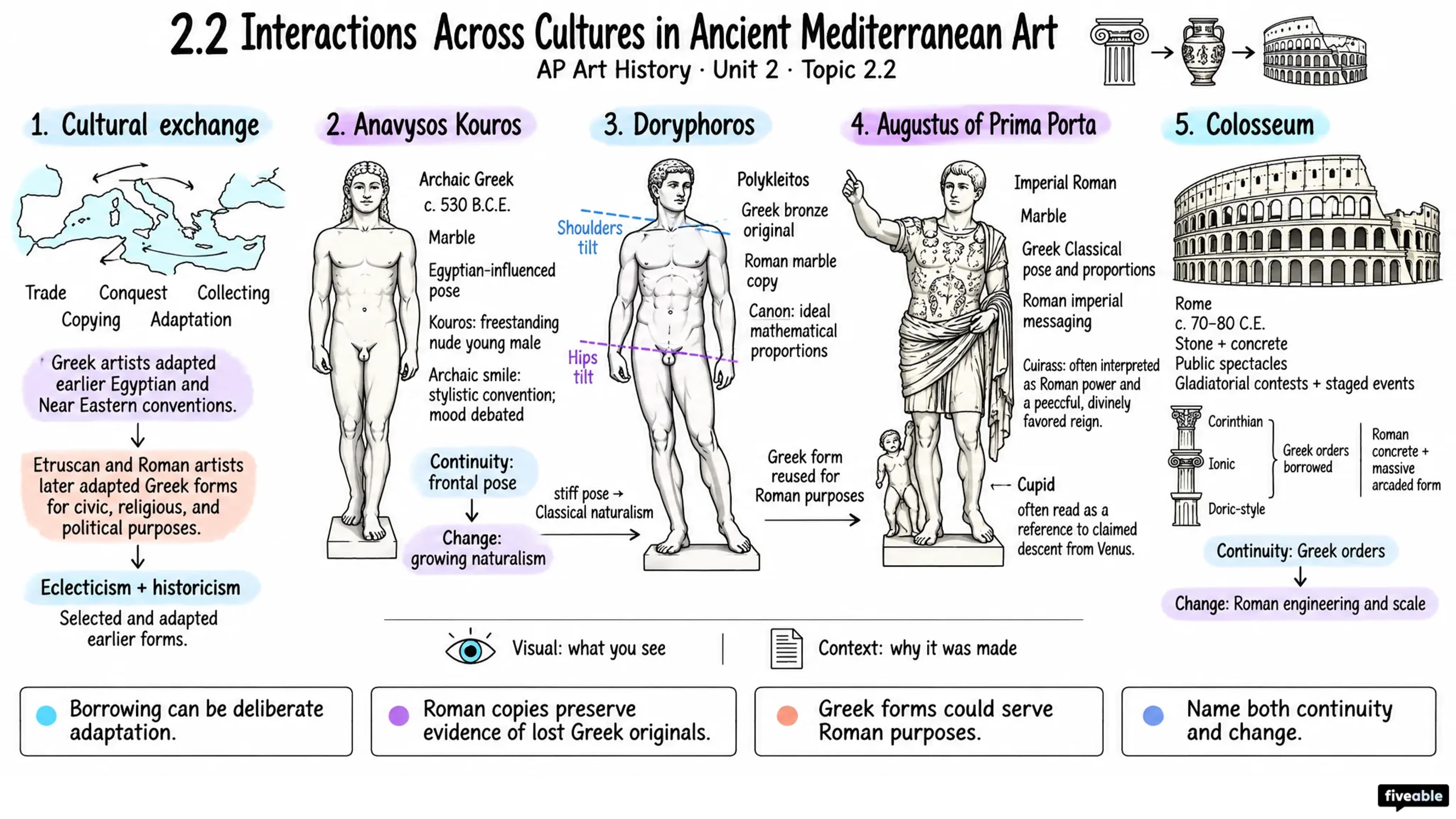
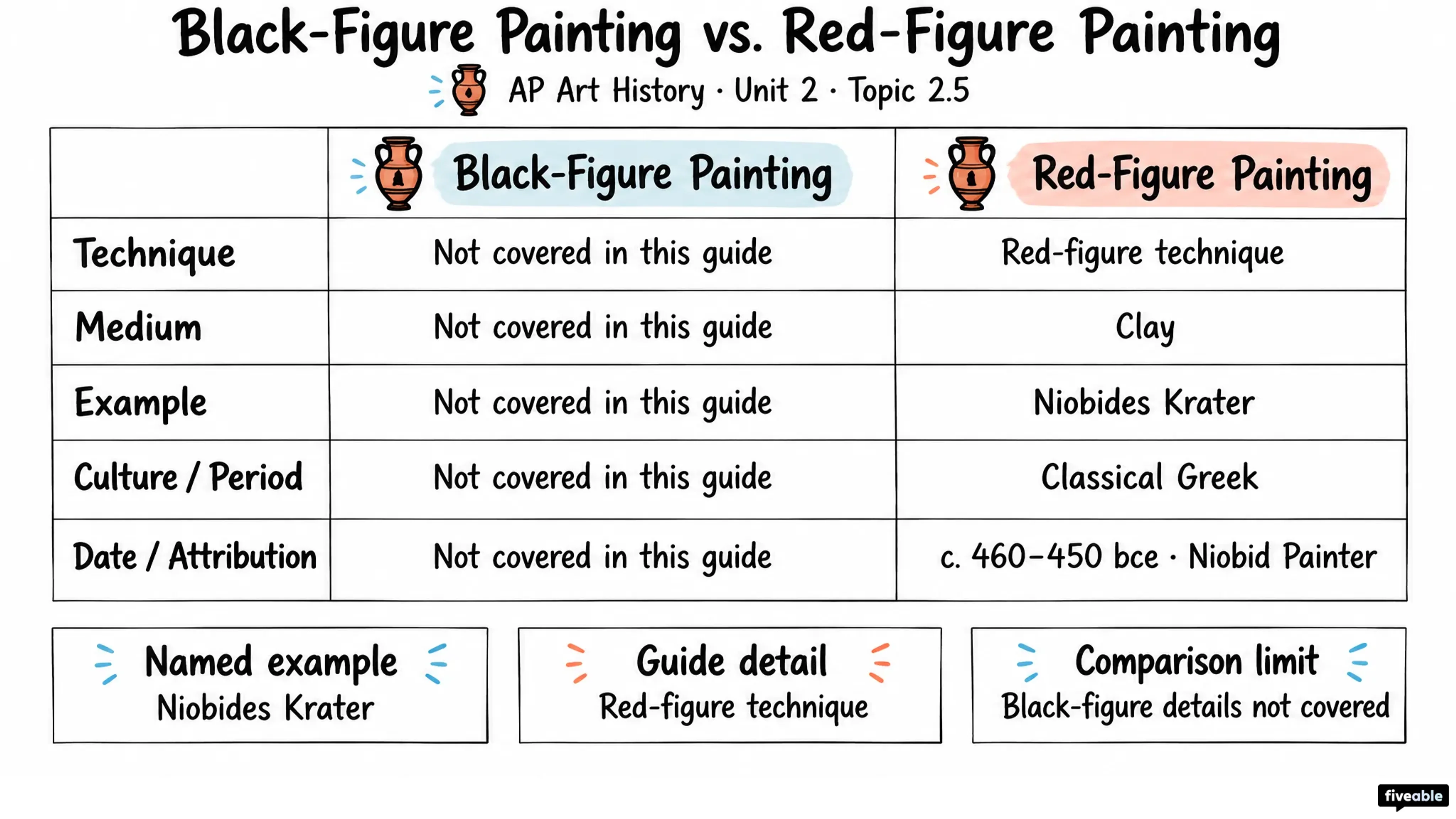
Pick a Unit 2 topic and a format: flowchart, comparison chart, vocab sheet, Cornell notes and more. Ready in about a minute.

Printable PDF · from the Fiveable shop

AP Art History Unit 2 Cheatsheet

1 page · Ancient Mediterranean, 3500 bce-300 ce · PDF

Visual Cheatsheets

One topic, the format you pick, ready in about a minute

Format

Topic

Takes 30–60 seconds

Preview: Standard

Unit 2: Ancient Mediterranean Art, 3500 BCE–300 CE, topic by topic

Each topic has a full study guide. See the whole unit.