AP Art History Unit 7 Cheatsheet: West and Central Asia, 500 BCE-1980 CE

AP Art History Unit 7 Cheatsheet: West and Central Asia, 500 BCE-1980 CE

Start with the first 3 sections of the Unit 7 one-page cheatsheet below. The full sheet is a PDF you can print.

Key Materials & Techniques

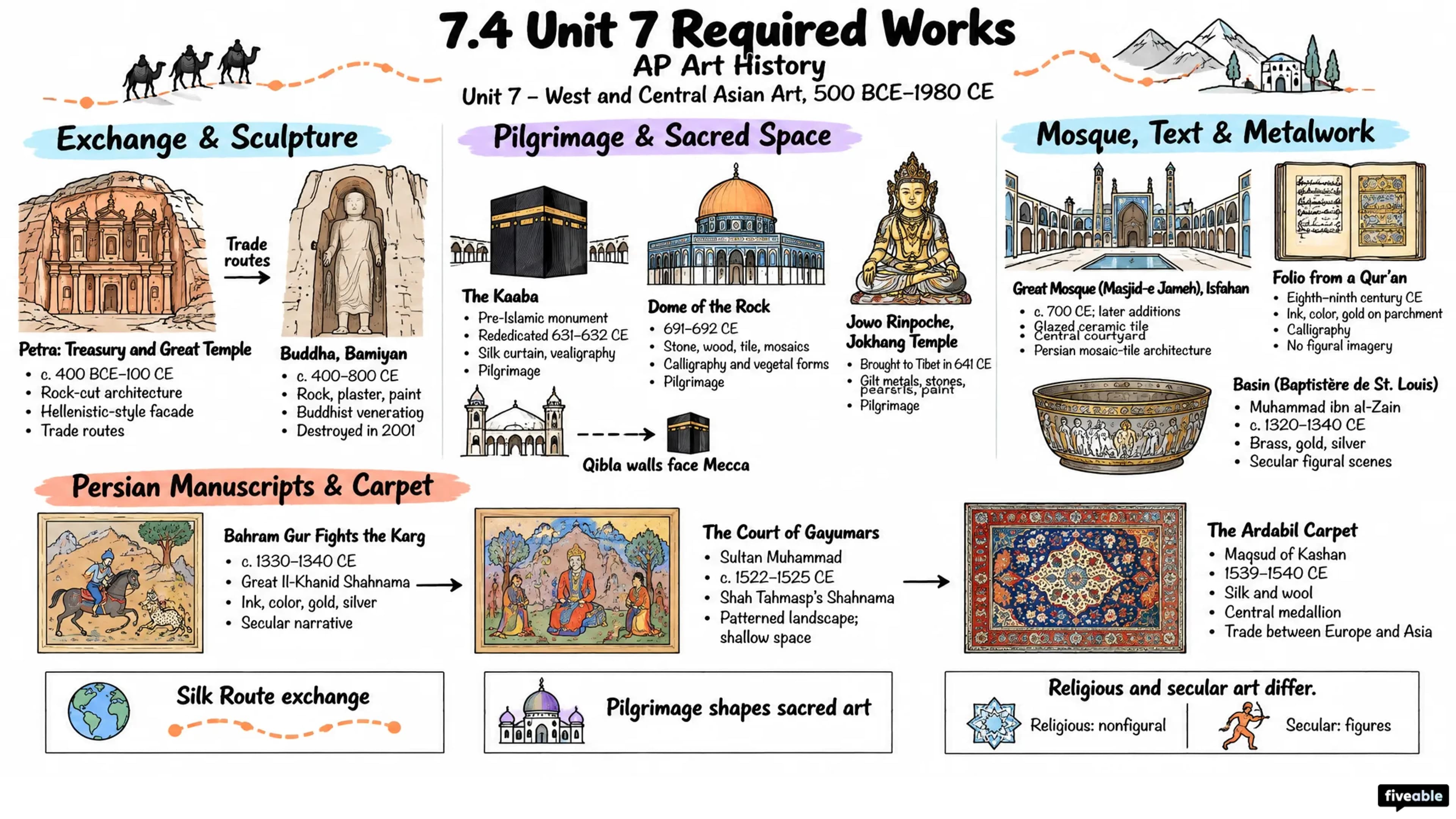
Ceramics: Lusterware and cobalt-on-white slip painting developed in West Asia. Used for utilitarian vessels and glazed-tile architectural decoration (Seljuk through Safavid dynasties; Great Mosque of Isfahan tile mosaic; Ottoman underglaze-painted Iznik tiles).

Metalwork: Casting, beating, chasing, inlaying, embossing. Created plaques, vessels, arms, armor, sculpture. Buddhist metalwork in bronze, copper, brass, silver with gilding, inlay, paint.

Textiles: Silk-tapestry weaving, silk velvets, wool and silk carpets—dominant trade items between Europe and Asia.

Painting & Calligraphy: Wall painting, manuscript painting, thangkas (Buddhist cloth paintings). Calligraphy prominent in Islamic art for sacred texts; appears on architecture, ceramics, manuscripts.
Islamic Architecture & Function

Mosque components:

  • Qibla wall—faces Mecca
  • Mihrab—empty niche for prayer
  • Minbar—pulpit for imam
  • Minaret—call to prayer
  • Central courtyard—accommodates practitioners

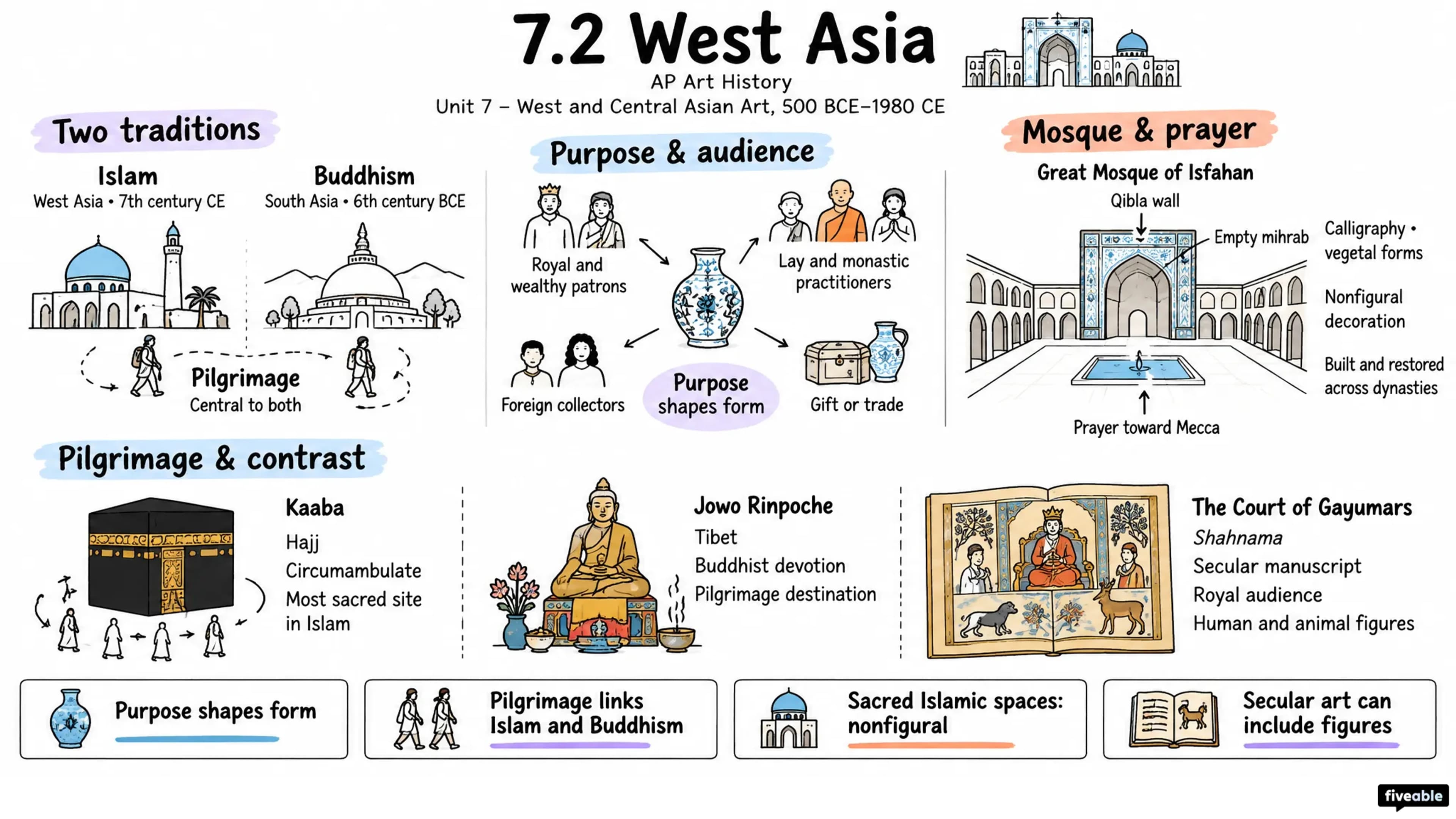
Decoration: Typically nonfigural in mosques and Qur'ans—calligraphy, vegetal (arabesque), and geometric forms; figural imagery is common in secular/courtly art such as illustrated Shahnama folios and metalwork like the Basin (Baptistère de St. Louis).

Other Islamic religious architecture: Sacred shrines (Kaaba, Dome of the Rock), tomb architecture.

Buddhist architecture: Cave temples with relief carving, sculpture, wall painting; stupas and monastic architecture in Tibet.

Patrons & Audiences

Works created for and acquired by:

  • Royal and wealthy patrons
  • Lay and monastic religious practitioners
  • Foreign collectors (gift or trade)

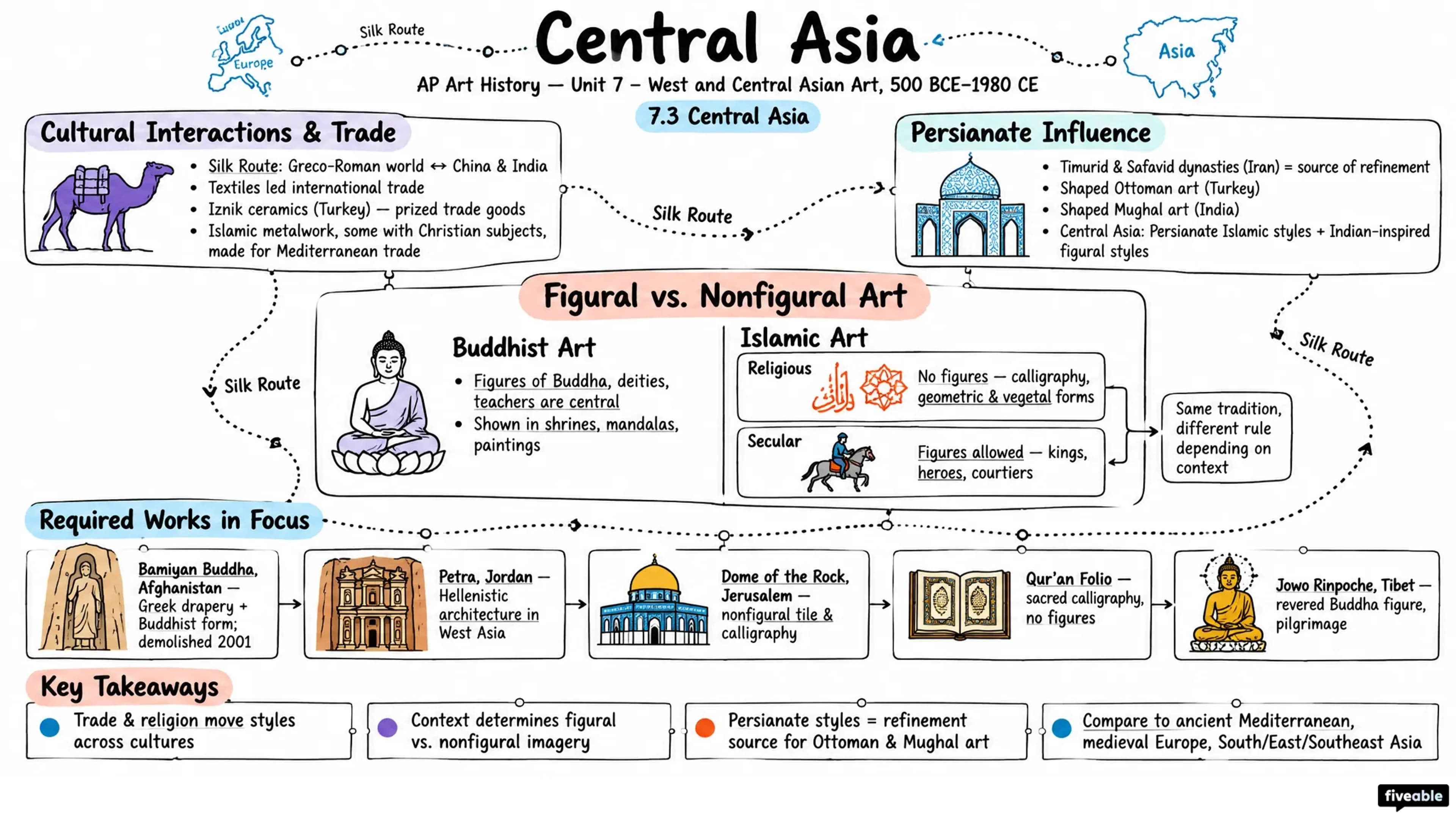
Trade impact: Textiles dominated Europe-Asia trade. Islamic metalworks (including Christian subjects) traded in Mediterranean regions. Iznik ceramics exported widely.

Persianate influence: Timurid and Safavid dynasties (Iran) refined and exported styles that influenced Ottoman (Turkey) and Mughal (India) arts.

The rest of the Unit 7 sheet

6 more sections are on the one-page PDF:

  • Two-Dimensional Design Principles

  • Silk Route & Cultural Exchange

  • Visual Analysis & Attribution Strategy

  • Religious Traditions & Pilgrimage

  • Figural Imagery: Sacred vs. Secular

  • Interpreting Figural Art in Context

Made by you

Visual Cheatsheets

Pick a Unit 7 topic and a format: flowchart, comparison chart, vocab sheet, Cornell notes and more. Ready in about a minute.

Printable PDF · from the Fiveable shop

AP Art History Unit 7 Cheatsheet

1 page · West and Central Asia, 500 BCE-1980 CE · PDF

Visual Cheatsheets

One topic, the format you pick, ready in about a minute

Format

Topic

Takes 30–60 seconds

Preview: Standard

Unit 7: West and Central Asian Art, 500 BCE–1980 CE, topic by topic

Each topic has a full study guide. See the whole unit.