AP Art History Unit 6 Cheatsheet: Africa, 1100-1980 CE

AP Art History Unit 6 Cheatsheet: Africa, 1100-1980 CE

Start with the first 3 sections of the Unit 6 one-page cheatsheet below. The full sheet is a PDF you can print.

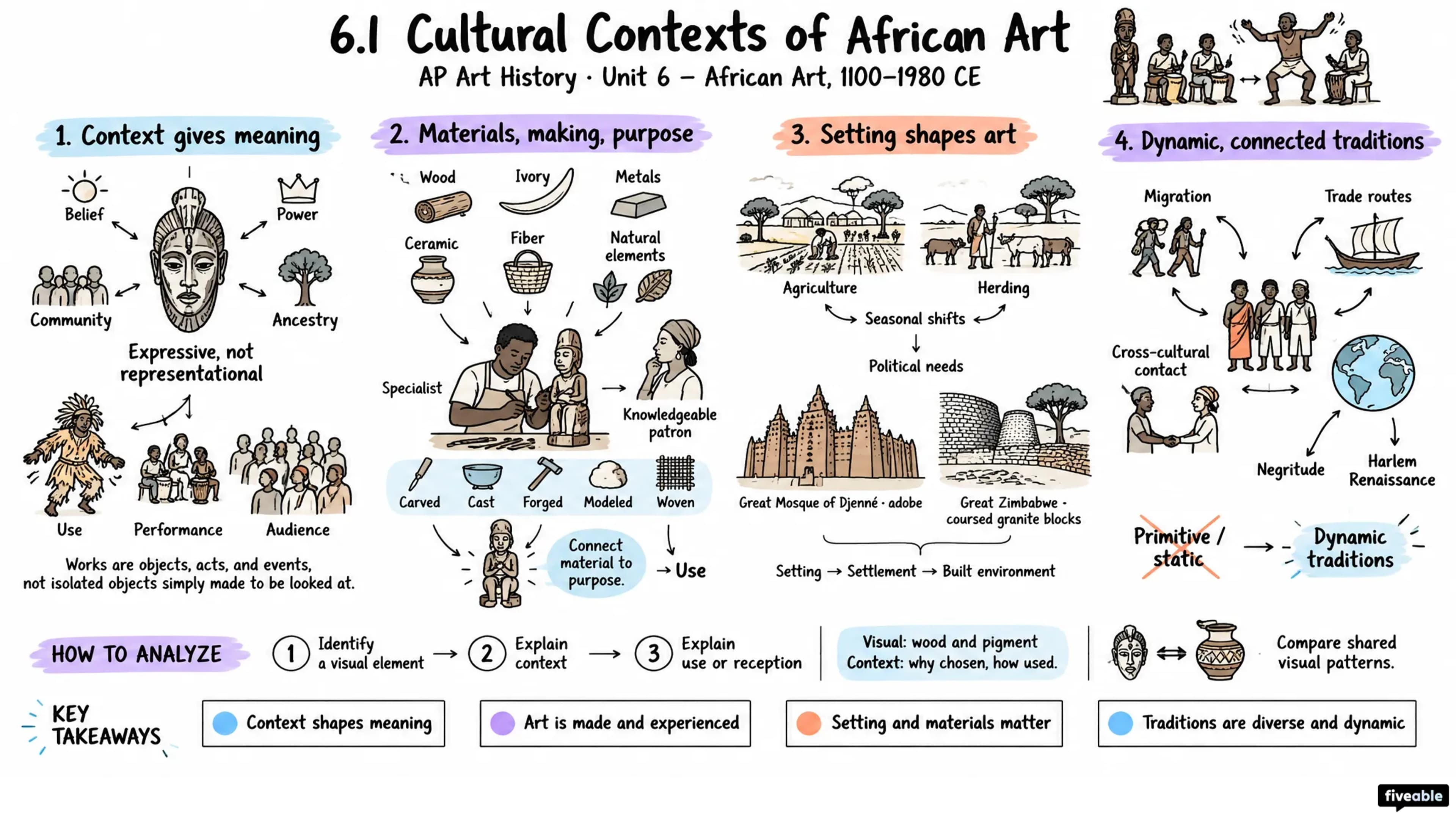
African Art: Materials, Media & Specialists

What African art is:

  • Objects, acts, and events in multiple media (vocal, aural, visual)
  • Materials: wood, ivory, metals, ceramic, fiber, natural elements
  • Processes: carved, cast, forged, modeled, woven, combined
  • Created by recognized specialists for knowledgeable patrons

Key distinction: African art is expressive rather than representational—it presents a known world, not necessarily what is seen or available to everyone.

Requires: Specialized or supernaturally ordained capabilities for creation, use, and interpretation.
Early African Art: 77,000 Years Ago

Earliest surviving evidence: engraved ochre and shell beads from southern African caves; surviving rock art in the Sahara and southern Africa is later.

Depicted subjects:

  • Animals of each region
  • Human pursuits: herding, combat, dance, regularized behavior
  • Contact among different groups
  • Technologies: horses, chariots

Historical context: The Sahara was once grassland and was an early center of agriculture and animal husbandry in Africa. As desert grew, it stretched toward the Nile valley and pharaonic Egypt.

Authority, Identity & Education Through Art

Arts of authority: Legitimate traditional leadership (achieved and inherited status).

Leadership roles: Histories and accomplishments entrusted to historians, bards, and elders.

Personal and social functions:

  • Personal identity, social status, relationships delineated by aesthetic choices
  • Common ancestors link leaders, sanction behavior, define social order
  • Education and incorporation into adulthood marked by art creation, manipulation, interpretation

African histories: Sung or recited by specialists. Much African art is performative—sung, danced, or masqueraded in holistic experiences for designated audiences—created for specific purposes to produce expected results, though other works (architecture, royal portraits and regalia, commemorative plaques) function in different ways.

The rest of the Unit 6 sheet

6 more sections are on the one-page PDF:

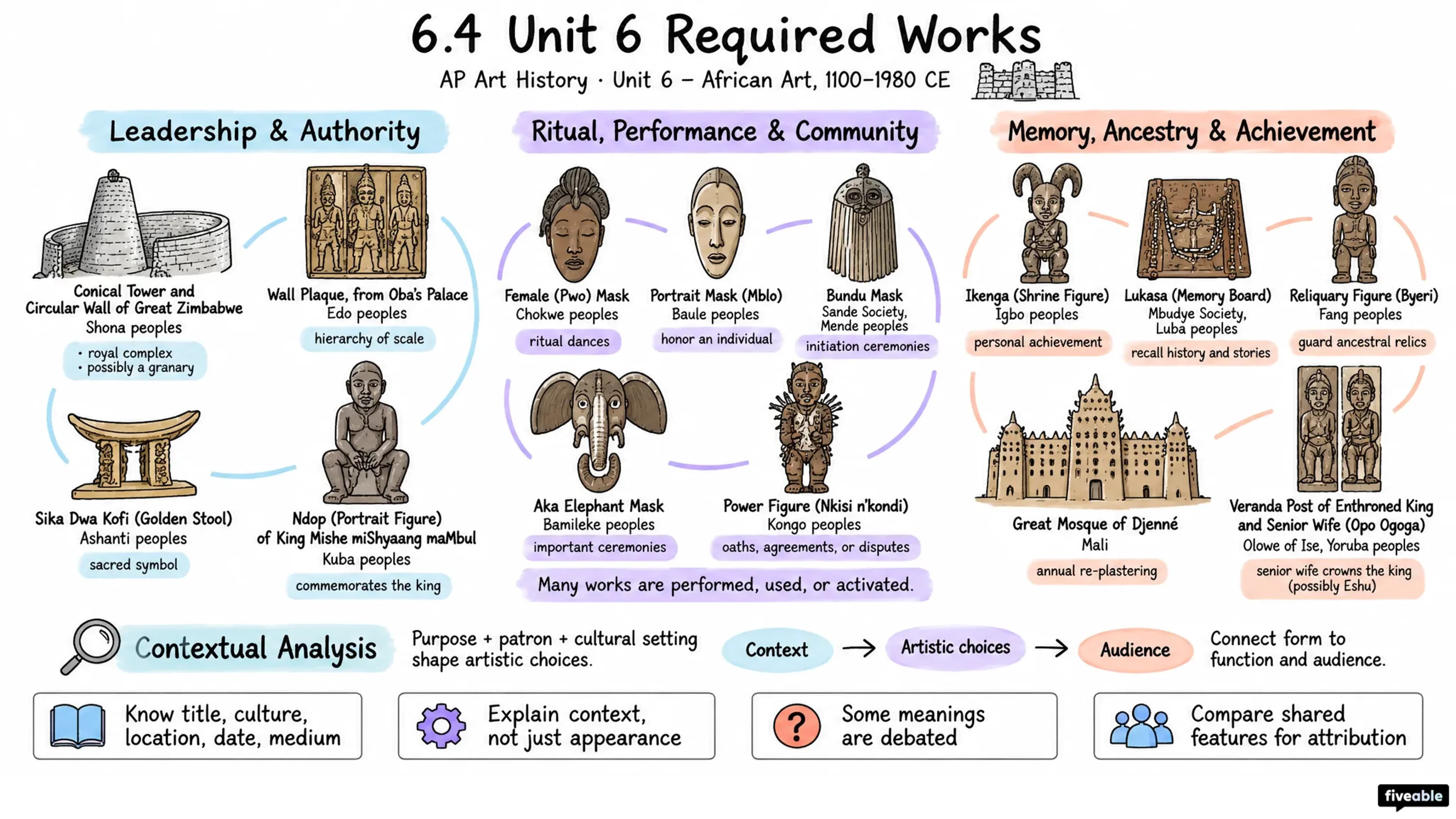
  • African Art & Belief Systems

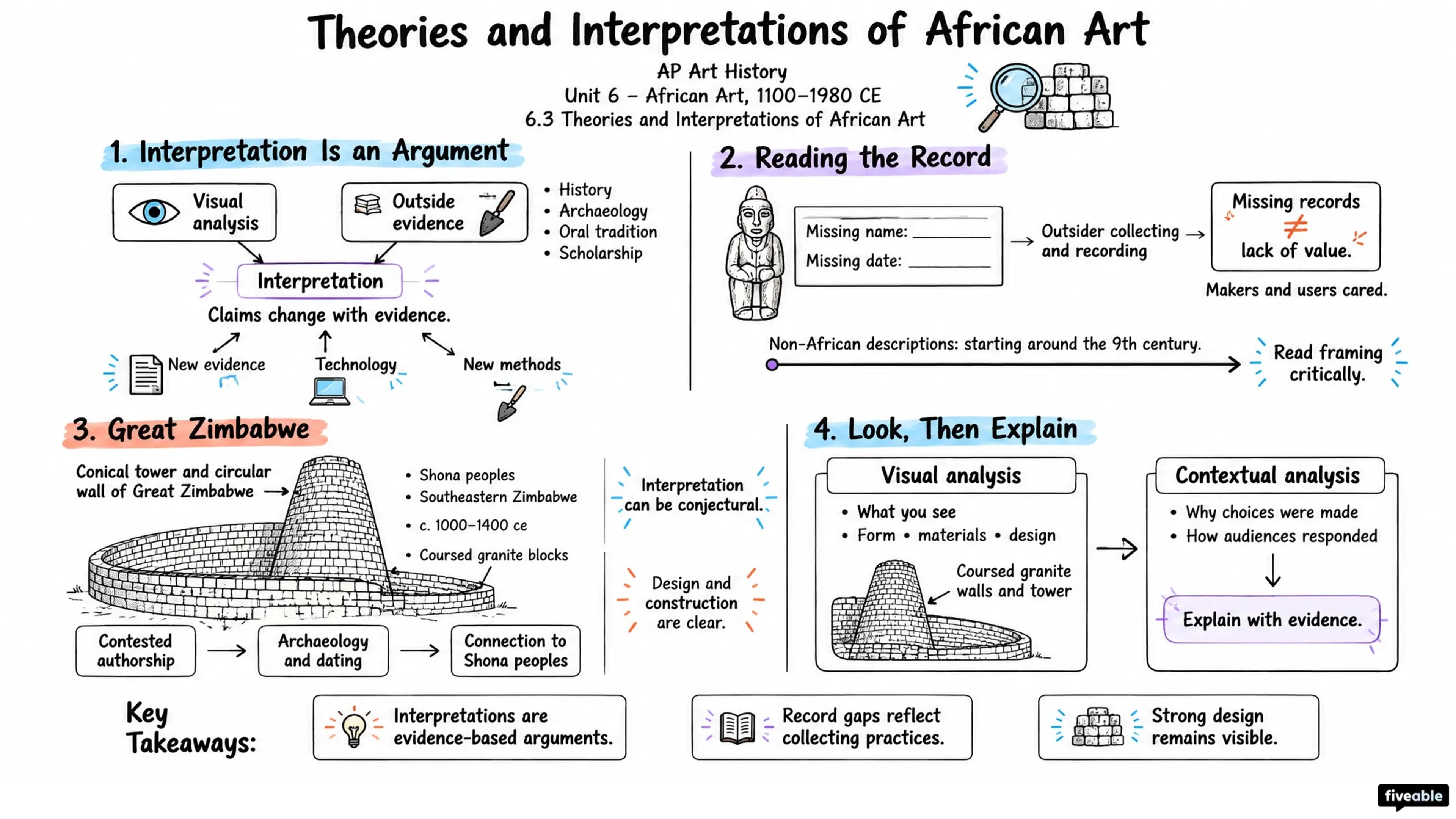
  • Collecting & Interpretation Problems

  • Theories & Interpretations: Visual Analysis & Evidence

  • Human Migration & Cosmopolitan Interaction

  • Purpose & Audience: Active Art

  • Urbanization & Monumental Sites

Made by you

Visual Cheatsheets

Pick a Unit 6 topic and a format: flowchart, comparison chart, vocab sheet, Cornell notes and more. Ready in about a minute.

Printable PDF · from the Fiveable shop

AP Art History Unit 6 Cheatsheet

1 page · Africa, 1100-1980 CE · PDF

Visual Cheatsheets

One topic, the format you pick, ready in about a minute

Format

Topic

Takes 30–60 seconds

Preview: Standard

Unit 6: African Art, 1100–1980 CE, topic by topic

Each topic has a full study guide. See the whole unit.