7.3 Functions of Matrices and Powers of Matrices

🧚🏽♀️Abstract Linear Algebra I Unit 7 Review
7.3 Functions of Matrices and Powers of Matrices
🧚🏽♀️ Abstract Linear Algebra I
Functions of matrices and powers of matrices are powerful tools in linear algebra. They allow us to extend scalar operations to matrices, opening up new ways to solve complex problems. These concepts are crucial for understanding how matrices behave under various operations.
Diagonalization is key to efficiently computing matrix functions and powers. By breaking down a matrix into simpler components, we can perform calculations more easily and gain insights into the matrix's properties. This connects directly to the broader applications of diagonalization in linear algebra.
Matrix functions through diagonalization

Top images from around the web for Definition and properties of matrix functions
DiagonalizeMatrix | Wolfram Function Repository View original
Is this image relevant?

DiagonalizeMatrix | Wolfram Function Repository View original
Is this image relevant?
Matrix (mathematics) - Wikipedia View original
Is this image relevant?
DiagonalizeMatrix | Wolfram Function Repository View original
Is this image relevant?
DiagonalizeMatrix | Wolfram Function Repository View original
Is this image relevant?
Definition and properties of matrix functions
- A matrix function is defined for a diagonalizable matrix as , where is the diagonalization of and is the diagonal matrix obtained by applying to each diagonal entry of
- The diagonalization approach allows matrix functions to be computed efficiently and simplifies their properties
- Common matrix functions include the exponential , logarithm , and trigonometric functions
- Properties of matrix functions include:
- for commuting matrices and (e.g., if )
- (e.g., )
- for invertible (e.g., )
Applications of matrix functions
- Matrix functions have applications in various fields, such as:
- Solving systems of linear differential equations (e.g., has solution )
- Markov processes and stochastic matrices (e.g., the transition matrix after steps is given by )
- Control theory and state-space models (e.g., the state transition matrix is )
- Examples of matrix functions in action:
- The matrix exponential of a skew-symmetric matrix (i.e., ) is an orthogonal matrix (i.e., )
- The matrix logarithm can be used to interpolate between two positive definite matrices and using the geodesic path
Efficient power calculations for matrices
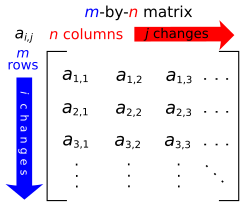
Diagonalization for computing matrix powers
- For a diagonalizable matrix , the -th power of can be computed as , where is obtained by raising each diagonal entry of to the -th power
- This method is more efficient than directly multiplying by itself times, especially for large matrices or high powers
- Negative integer powers can be computed using the inverse:
- Fractional powers can be computed by taking the appropriate roots of the diagonal entries:
Examples and applications of matrix powers
- Computing the -th Fibonacci number using the matrix power method:
- Define , then , where is the -th Fibonacci number
- Diagonalization of allows for efficient computation of and, consequently,
- Analyzing the long-term behavior of a Markov chain:
- The steady-state distribution of a regular Markov chain with transition matrix is given by the normalized left eigenvector of corresponding to the eigenvalue 1
- Powers of converge to a matrix with identical rows equal to the steady-state distribution
Diagonalization for matrix exponentials and logarithms
Computing matrix exponentials and logarithms
- The matrix exponential is defined as , where is the diagonal matrix obtained by applying the scalar exponential function to each diagonal entry of
- The matrix logarithm is the inverse function of the matrix exponential: if , then . It is defined only for invertible matrices with no negative real eigenvalues
- Properties of matrix exponentials include:
- for commuting matrices and
- for invertible
Applications of matrix exponentials and logarithms
- Matrix exponentials and logarithms have applications in solving systems of linear differential equations, Markov processes, and control theory
- Examples of matrix exponentials and logarithms in action:
- The solution to the first-order linear differential equation with initial condition is given by
- The matrix logarithm can be used to compute the principal logarithm of a complex number using the matrix identity
Solving matrix equations with functions
Techniques for solving matrix equations involving functions
- Matrix equations involving functions of matrices, such as or , can often be solved using diagonalization
- If and are diagonalizable with eigenvalue matrices and , respectively, the equation can be transformed into , where . This transformed equation can be solved for , and then can be obtained by reversing the transformation
- Similarly, for the equation , diagonalization can be used to transform it into , where . Solve for and then obtain and, subsequently,
- In some cases, additional techniques such as vectorization or the Kronecker product may be needed to solve the transformed equations
Examples of solving matrix equations with functions
- Solving the matrix equation :
- Diagonalize and
- Transform the equation to , where
- Solve the transformed equation for by equating corresponding entries
- Obtain the solution
- Solving the matrix equation :
- Diagonalize and
- Transform the equation to , where
- Solve the transformed equation for by equating corresponding entries
- Obtain and then compute
See Fiveable more often in Google
Mark Fiveable as a preferred source and Google is more likely to show you our guides in Top Stories, with a "preferred" badge in AI Mode and AI Overviews.