9.3 Vertical integration

📺Television Studies Unit 9 Review
9.3 Vertical integration
📺 Television Studies
Definition of vertical integration
Vertical integration in the television industry means a single company controls multiple stages of the production-to-distribution pipeline. Instead of separate companies handling content creation, distribution, and delivery, one parent company owns businesses at each of these levels. This shapes how content gets made, how it reaches audiences, and what viewers ultimately have access to.

Top images from around the web for Types of vertical integration
Determinants of Vertical Integration: Investment Efficiency, Product Differentiation and Firm Size View original
Is this image relevant?
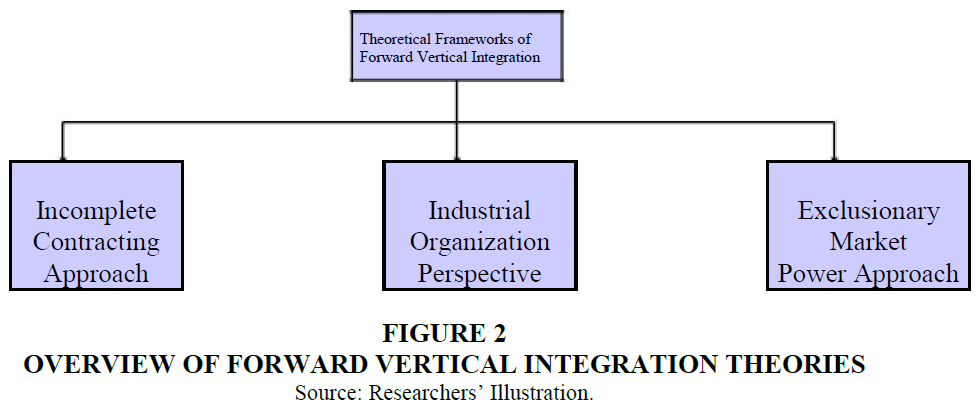
Effect of Forward Integration Strategy on Organizational Growth: Evidence from Selected ... View original
Is this image relevant?
Effect of Forward Integration Strategy on Organizational Growth: Evidence from Selected ... View original
Is this image relevant?
Determinants of Vertical Integration: Investment Efficiency, Product Differentiation and Firm Size View original
Is this image relevant?
Effect of Forward Integration Strategy on Organizational Growth: Evidence from Selected ... View original
Is this image relevant?
Types of vertical integration
- Forward integration expands control downstream, closer to the consumer. A production company acquiring a streaming platform is a classic example.
- Backward integration extends control upstream, toward suppliers. A broadcaster purchasing a production studio fits here.
- Balanced integration combines both directions, creating a fully integrated media ecosystem where one company handles everything from script to screen.
- Conglomerate integration involves acquiring businesses outside the core industry to diversify revenue. Think of a media company buying theme parks or consumer products divisions.
Vertical integration vs. horizontal integration
These two strategies are easy to confuse, so keep the distinction clear:
- Vertical integration means controlling different stages of the supply chain within the same industry (e.g., a network owning its own production studios).
- Horizontal integration means acquiring or merging with competitors at the same stage of the supply chain (e.g., one network buying another network).
Vertical integration aims to reduce costs and increase efficiency by keeping more of the process in-house. Horizontal integration aims to expand market share by absorbing competitors.
History in television industry
Vertical integration has shaped television since the medium's earliest days. The strategy has evolved alongside new technologies and shifting regulations, and that history directly explains why the industry looks the way it does now.
Early examples of integration
- Major film studios owned their own theater chains in the 1920s and 1930s. Paramount Pictures was a prime example of this studio-to-screen control.
- Radio networks like NBC and CBS expanded into television broadcasting in the 1940s and 1950s, leveraging their existing infrastructure and audiences.
- Television networks created in-house production studios to control content creation. Desilu Productions, which made I Love Lucy, is a notable early case.
- Media conglomerates began forming through mergers. The 1990 merger of Time Inc. with Warner Communications signaled a new era of consolidated entertainment empires.
Regulatory challenges
Regulation has repeatedly pushed back against vertical integration:
- The Paramount Decree of 1948 forced movie studios to sell off their theater chains, breaking up vertical control in the film industry.
- The Financial Interest and Syndication Rules (Fin-Syn) of 1970 restricted TV networks from owning and syndicating the programming they aired, keeping production and distribution separate.
- The Telecommunications Act of 1996 relaxed ownership restrictions significantly, triggering a wave of media consolidation that continues to shape the industry.
- Ongoing debates over net neutrality raise questions about whether vertically integrated internet service providers can unfairly advantage their own content over competitors'.
Benefits of vertical integration
Understanding why companies pursue vertical integration comes down to the concrete advantages it offers across operations, market positioning, and the content lifecycle.
Cost reduction strategies
- Cutting out intermediaries lowers transaction costs between production and distribution stages.
- Shared resources and infrastructure across business units create economies of scale. A company that owns both a studio and a network doesn't need to negotiate facility rentals.
- Studios can coordinate production schedules directly with network needs, improving efficiency.
- Cross-promotion across owned platforms reduces marketing expenses. A network can advertise its new show during its own programming at no additional cost.
Control over production chain
Owning multiple stages of the pipeline gives companies the ability to align content creation with distribution strategies and audience data. Decision-making gets streamlined: greenlighting or canceling a show doesn't require negotiations between separate companies. Quality control improves because one organization oversees the entire process. And production schedules and budgets can be adjusted based on the company's broader priorities.
Synergy opportunities
- Cross-promotion across owned platforms turns one piece of intellectual property into revenue across TV shows, theme parks, and merchandise.
- A single IP can be leveraged across books, movies, TV series, and video games, maximizing its value.
- Data sharing between business units informs both content creation and marketing decisions.
- Bundling of services (cable TV, internet, and streaming packages together) creates consumer offerings that are hard for competitors to match.
Drawbacks of vertical integration
The strategy carries real risks, both for the companies pursuing it and for the broader industry.
Reduced flexibility
Large, vertically integrated companies can struggle to adapt when technology shifts or consumer preferences change quickly. There's a tendency to rely on in-house resources, which can limit access to outside talent and fresh ideas. Divesting an underperforming unit is difficult when it's deeply woven into the company structure. And an internal focus on synergies can come at the expense of responding to what the market actually wants.

Potential for monopolization
- Market power concentrates in a few large companies, raising barriers to entry for newcomers.
- Vertically integrated companies may favor their own content over third-party productions, squeezing out competitors.
- Consolidated ownership can reduce the diversity of content and viewpoints available to audiences.
Regulatory scrutiny
Antitrust regulators pay close attention to vertically integrated media companies. Compliance costs rise as companies navigate complex rules across different jurisdictions. There's always the risk of forced divestitures or restrictions on future acquisitions. And public perception of market dominance can create its own PR challenges.
Major vertically integrated media companies
A few dominant conglomerates illustrate how vertical integration works in practice.
Comcast NBCUniversal case study
Comcast's 2011 acquisition of NBCUniversal merged a major cable provider with a content creator, forming one of the most fully integrated media companies in the world. The combined entity owns cable networks, broadcast television (NBC), film studios (Universal Pictures), and theme parks. In 2020, it launched the Peacock streaming service, drawing on its existing content library and distribution reach. A persistent challenge for Comcast NBCUniversal is balancing content licensing to third parties against keeping exclusives for its own platforms.
Disney's integrated model
Disney's 2019 acquisition of 21st Century Fox dramatically expanded an already vertically integrated structure. Disney now controls content creation through Walt Disney Studios, Pixar, Marvel, and Lucasfilm, alongside distribution through ABC, Disney Channel, ESPN, and Hulu. The launch of Disney+ in 2019 demonstrated the power of owning a massive content library and using it to fuel a direct-to-consumer platform. Disney also exemplifies cross-platform synergy: its Star Wars and Marvel properties generate revenue through films, TV series, theme park attractions (Star Wars: Galaxy's Edge), and merchandise simultaneously.
Impact on content creation
Vertical integration doesn't just affect business strategy. It directly shapes what gets made and how.
In-house production advantages
- Projects can be greenlit faster because fewer parties need to approve them.
- Companies may be more willing to take risks on niche or experimental content if they control the distribution platform and can play a long game with audience building.
- Using company-owned facilities, equipment, and talent reduces production costs.
- Content can be tailored specifically for an owned platform's audience and brand identity.
Creative control considerations
Producing for an in-house platform can mean greater creative freedom, since the same company controls both creation and distribution. But there's a flip side: corporate mandates and brand consistency requirements can push content toward homogenization. Independent producers face a tougher market when vertically integrated companies prioritize their own projects. Whether this dynamic helps or hurts overall content diversity and quality remains one of the most debated questions in the industry.
Distribution strategies
How content reaches audiences is fundamentally shaped by vertical integration. Companies with control over both content and delivery have options that standalone producers and distributors simply don't.
Owned platforms vs. third-party
Vertically integrated companies naturally prioritize their own channels and streaming services. They license content to third parties selectively, weighing revenue from licensing deals against the competitive advantage of exclusivity. This tension has disrupted traditional syndication models, as companies increasingly pull content back from outside platforms to keep it in-house. The tradeoff is always between maximum exposure (broad distribution) and maximum platform value (exclusivity).
Streaming service integration
The late 2010s and early 2020s saw every major media conglomerate launch a direct-to-consumer streaming platform: Disney+, HBO Max (now Max), Peacock, and Paramount+. Each leveraged existing content libraries and production capabilities to populate their service from day one. These streaming operations sit alongside traditional cable and broadcast divisions, creating a balancing act. The core challenge is cannibalization: streaming growth can come at the expense of traditional revenue streams like cable subscriptions and advertising.

Financial implications
Vertical integration carries significant financial consequences that drive investment decisions and revenue models across the industry.
Revenue stream diversification
- Companies earn income at multiple stages: production, distribution, licensing, and merchandising.
- Value gets captured across different platforms and markets, from domestic TV to international sales.
- Direct-to-consumer subscription models reduce dependence on advertising revenue.
- Cross-selling and bundling services increase average revenue per user (ARPU), a key metric for these companies.
Investment and risk factors
Acquiring and maintaining a vertically integrated structure requires enormous upfront capital. The bet is that economies of scale and scope will offset that investment over time. But integration also means increased exposure to market fluctuations across multiple segments simultaneously. And accurately valuing integrated assets or measuring the performance of individual business units within a conglomerate is notoriously difficult.
Vertical integration in the digital age
Digital technology has reshaped what vertical integration looks like and what it takes to compete.
Streaming wars impact
Competition among vertically integrated companies has intensified as each launches its own streaming platform. The industry's center of gravity has shifted from traditional linear television to on-demand, direct-to-consumer models. Exclusive content and deep libraries have become the primary tools for attracting and retaining subscribers. Profitability remains elusive for many services, though, because content production costs and technology infrastructure investments are staggeringly high.
Tech companies entering media
Amazon, Apple, and Google have entered content production and distribution by leveraging their existing tech platforms. Amazon bundles Prime Video with its Prime membership, making content a feature of a broader ecosystem rather than a standalone product. These companies use data analytics and AI to inform content decisions and personalize user experiences at a scale traditional media companies struggle to match. Their entry has disrupted established business models and forced legacy media companies to compete on technology as well as content.
Future trends
The trajectory of vertical integration will continue shaping the television industry in the years ahead.
Potential industry consolidation
- Further mergers and acquisitions are likely as companies seek the scale needed to compete globally.
- Some analysts predict the emergence of "super verticals" controlling vast content libraries and distribution networks.
- Partnerships and joint ventures between traditional media companies and tech firms are increasing.
- International expansion and cross-border integrations could create truly global media powerhouses.
Regulatory environment changes
- Antitrust policies are evolving in response to growing concerns about media concentration.
- New regulations may specifically address digital platforms and streaming services, which don't fit neatly into older regulatory frameworks.
- International efforts to harmonize media ownership rules and content distribution regulations are underway.
- Net neutrality debates continue to raise questions about whether vertically integrated ISPs can tilt the playing field.
Criticism and controversies
Vertical integration generates ongoing debate about market power, content diversity, and consumer choice.
Antitrust concerns
Critics worry about monopolistic practices and reduced competition in both content creation and distribution. The central question is how much market concentration is too much. Vertically integrated companies can favor their own content over independent productions, and their data collection practices raise additional concerns about competitive fairness.
Impact on independent producers
Independent content creators face real obstacles in a vertically integrated landscape. Major platforms increasingly prioritize in-house content, narrowing distribution opportunities for outside producers. This can lead to content homogenization as fewer, larger companies control what gets made. The role of independent voices in maintaining innovation and diversity in television remains a critical point of tension in industry debates.
See Fiveable more often in Google
Mark Fiveable as a preferred source and Google is more likely to show you our guides in Top Stories, with a "preferred" badge in AI Mode and AI Overviews.