5.1 Person Perception and First Impressions

🎠Social Psychology Unit 5 Review
5.1 Person Perception and First Impressions
🎠 Social Psychology
First impressions shape how we see others, often based on quick judgments and limited information. We use mental shortcuts like the primacy effect and halo effect to form opinions, but these can lead to biased or inaccurate views of people.
Our brains are wired to make snap decisions about others, influenced by factors like physical attractiveness and stereotypes. Understanding these processes helps you recognize your own biases and make more balanced judgments in social situations.
Cognitive Biases in Impression Formation
Primacy and Halo Effects
The primacy effect is the tendency to give more weight to the first information you learn about someone. If you meet a person and they seem rude in the first thirty seconds, that impression sticks, even if they're perfectly friendly for the rest of the conversation. This happens because we form quick judgments and then resist updating them. It shows up everywhere: job interviews, first dates, even meeting a new classmate.
What makes the primacy effect so powerful is that once you've formed an initial impression, you tend to interpret later information through that lens. Contradictory evidence gets downplayed or explained away.
The halo effect works differently. It's when a positive quality in one area spills over into unrelated judgments. For example, if someone is charismatic and well-spoken, you might also assume they're honest, intelligent, or a good leader, even though those traits aren't logically connected. The halo effect often starts with easily observable traits like physical appearance or confidence, and it can distort evaluations in real-world settings like performance reviews and social interactions.
Physical Attractiveness and Stereotyping
The physical attractiveness bias (sometimes called the "what is beautiful is good" stereotype) is the tendency to attribute positive qualities to attractive people. Research consistently shows that attractive individuals are perceived as more competent, more socially skilled, and more likely to succeed. This bias affects hiring decisions, jury verdicts, and romantic partner selection. It has roots in both evolutionary psychology and culturally shaped beauty standards.
Stereotyping is the process of applying generalized beliefs about a group to an individual member of that group. Stereotypes are typically based on visible characteristics like race, gender, or age, or on social categories like occupation or nationality. The problem is that stereotypes oversimplify. They lead you to expect certain behaviors or traits from a person based on group membership rather than who they actually are.
Stereotyping can result in discrimination across many contexts: the workplace, education, healthcare, and everyday social interactions. Reducing reliance on stereotypes requires conscious effort, such as deliberate exposure to individuals who don't fit the stereotype and a willingness to update your assumptions.
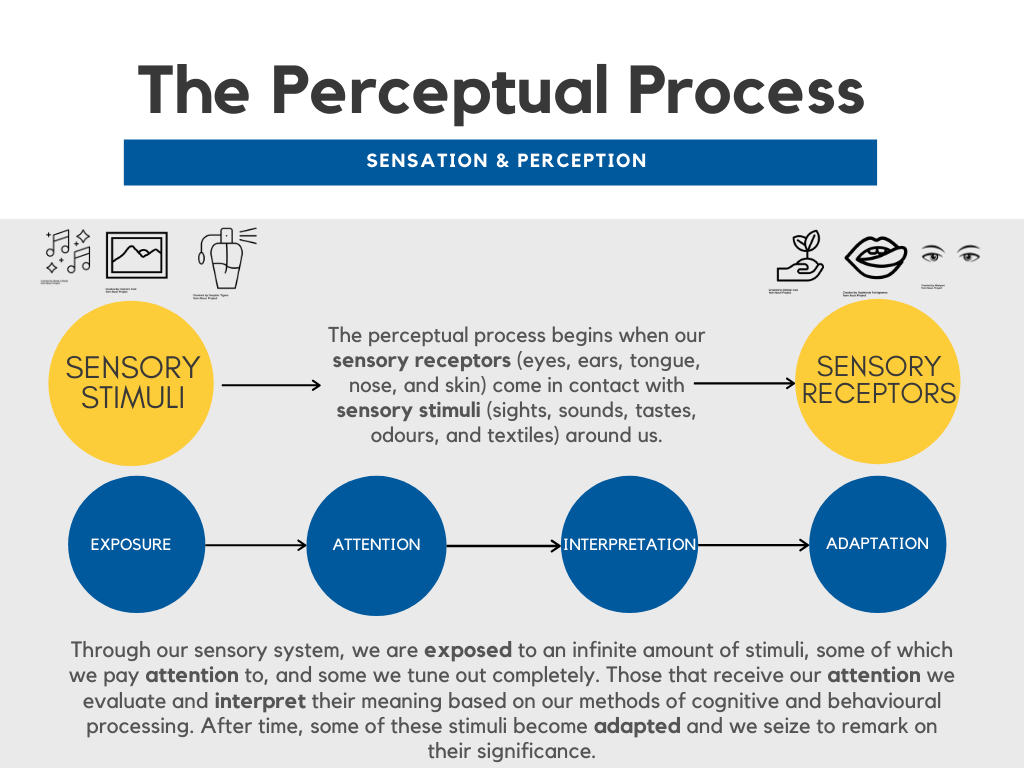
Impression Formation Processes
Implicit Personality Theory and Thin-Slicing
Implicit personality theory describes the informal assumptions people make about which personality traits go together. If you learn that someone is "warm," you might automatically assume they're also generous and trustworthy. These assumptions come from personal experience, cultural norms, and the mental frameworks (schemas) you've built over time. Sometimes these inferences are accurate, but they can also lead you astray when the underlying assumptions don't hold.
Thin-slicing is the ability to form judgments from very brief exposures to someone. Ambady and Rosenthal's classic research showed that people watching just 30 seconds of a professor teaching could predict end-of-semester student evaluations with surprising accuracy. Thin-slicing works because we rapidly process verbal and nonverbal cues using intuitive pattern recognition. However, it's also susceptible to bias, especially when you lack context or when stereotypes influence what cues you pick up on.

Impression Formation Models
When you form an impression of someone, you're integrating multiple pieces of information into a coherent picture. This happens through both automatic processes (fast, unconscious) and controlled processes (deliberate, effortful), and it's shaped by your motivation, available cognitive resources, and the situation.
Two major models explain how this integration works:
- Asch's central trait theory argues that certain traits carry disproportionate weight. In his classic study, Asch found that changing a single word in a trait list from "warm" to "cold" dramatically shifted participants' overall impressions. Central traits like warm/cold act as organizing anchors, while peripheral traits (e.g., polite, blunt) have less influence. This shows that impression formation isn't just adding up traits; some traits reshape the meaning of everything else.
- Anderson's weighted average model proposes that you form impressions by averaging the traits you observe, with each trait weighted by how important it seems. A single very negative trait can pull down an otherwise positive impression, and vice versa. This model helps explain how people reconcile conflicting information about someone and why negative information often has an outsized impact on overall judgments.
Consequences of First Impressions
Self-Fulfilling Prophecy and Behavioral Confirmation
A self-fulfilling prophecy occurs when your expectations about someone actually cause them to behave in ways that confirm those expectations. The process works like this:
- You form an initial impression of someone (e.g., "this student is gifted").
- You treat them in ways consistent with that impression (e.g., giving them more attention, harder questions, more encouragement).
- The person responds to your treatment by behaving in ways that match your expectation (e.g., performing better).
- You see their behavior as proof that your original impression was correct.
Rosenthal and Jacobson demonstrated this with the Pygmalion effect: teachers who were told (falsely) that certain students were "intellectual bloomers" treated those students differently, and those students actually showed greater IQ gains by the end of the year.
Behavioral confirmation is the closely related process where perceivers unknowingly elicit expectation-consistent behavior from others during social interaction. This can maintain inaccurate impressions over time and highlights how social perception and behavior feed into each other.
Long-Term Impact of First Impressions
First impressions can shape relationships and outcomes well beyond the initial encounter. They influence job prospects, romantic relationships, and friendships. Once formed, they're hard to change because of confirmation bias: you tend to notice and remember information that fits your existing impression while overlooking information that contradicts it.
Over time, this creates self-reinforcing cycles. Your impression shapes how you act toward someone, which shapes how they act toward you, which reinforces your impression.
Strategies for counteracting these effects include:
- Building awareness of your own biases and how they shape your judgments
- Actively seeking out information that challenges your initial impression
- Practicing perspective-taking to understand others on their own terms
- Staying open to revising your view as you gather more information about a person
See Fiveable more often in Google
Mark Fiveable as a preferred source and Google is more likely to show you our guides in Top Stories, with a "preferred" badge in AI Mode and AI Overviews.