
Object-oriented programming (OOP) is a coding paradigm that organizes code into objects, which are instances of classes. OOP fundamentals include instance variables and methods, which define an object's state and behavior respectively.
Access specifiers control the visibility of variables and methods, promoting encapsulation. Method invocation allows objects to interact, executing code and manipulating data. These concepts form the foundation for building complex, modular software systems.
Object-Oriented Programming Fundamentals
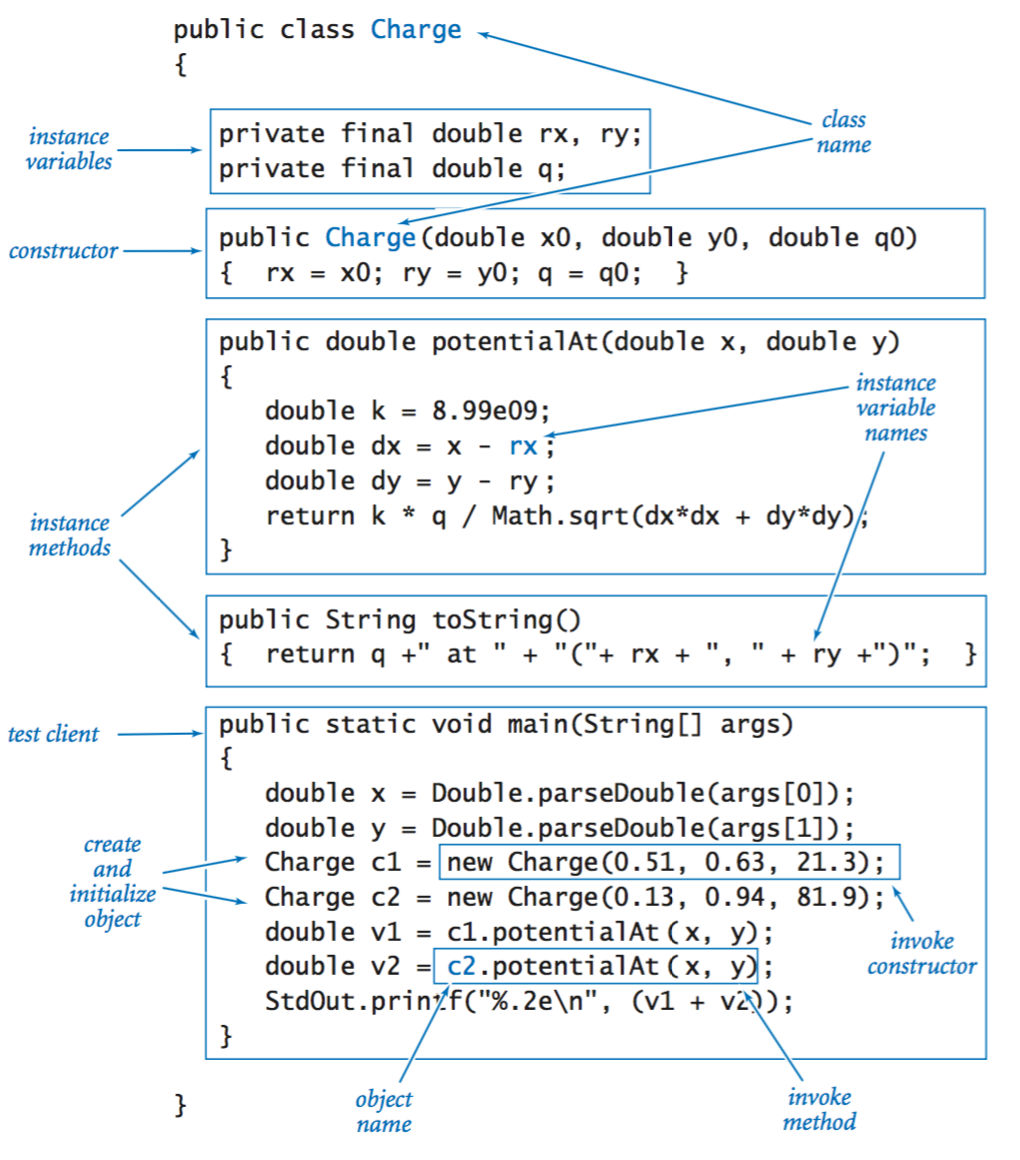
Instance variables for object state
- Instance variables belong to individual objects storing object-specific data (name, age)
- Declaration syntax includes access modifier, data type, and variable name (private int age)
- Initialized in constructors or with default values (0 for int, null for objects)
- Encapsulation keeps instance variables private promoting data hiding
- Memory allocation creates separate copy for each object instance

Instance methods for data operations
- Instance methods associated with objects manipulate state and perform actions (calculateSalary(), printDetails())
- Method signature comprises access modifier, return type, name, and parameters (public void setName(String name))
- Method body contains logic executed when method is called
- this keyword refers to current object instance, useful for disambiguating (this.name = name)
- Method overloading allows multiple methods with same name, different parameters (print(String), print(int))
Access specifiers for variables
- public accessible from any class
- private accessible only within same class
- protected accessible within same package and subclasses
- default (package-private) accessible within same package
- Getter methods retrieve values of private instance variables (getName())
- Setter methods modify values of private instance variables (setAge(int age))
- Encapsulation benefits include data hiding and control over access and modification
Method invocation on objects
- Object creation uses 'new' keyword and calls constructor (Person p = new Person())
- Dot notation invokes methods on objects (p.setName("John"))
- Method invocation allocates memory, passes parameters, executes method body
- Return values handled from methods (int age = p.getAge())
- Method chaining calls multiple methods in sequence (p.setName("John").setAge(30))
- Polymorphism invokes overridden methods in subclasses dynamically