
Switch-case statements streamline decision-making in programming. They efficiently handle multiple conditional branches, improving code readability for complex logic. This powerful tool allows developers to evaluate expressions against a set of constant values.
Using switch-case, you can group related cases, optimize performance, and enhance maintainability. It offers better performance than if-else for multiple discrete conditions. However, it's limited to specific value types and can't handle range comparisons like if-else statements can.
Switch-Case Statements
Purpose and syntax of switch-case
- Efficiently handle multiple conditional branches streamlining decision-making process
- Improve code readability for multiple condition checks making complex logic easier to follow
- switch keyword followed by parentheses containing expression to evaluate (variable or expression)
- Opening curly brace begins switch block containing case statements
- case keyword followed by constant expression and colon (case 1:)
- Code block for each case executes when matching condition is met
- Optional default case handles unmatched conditions, acts as catch-all
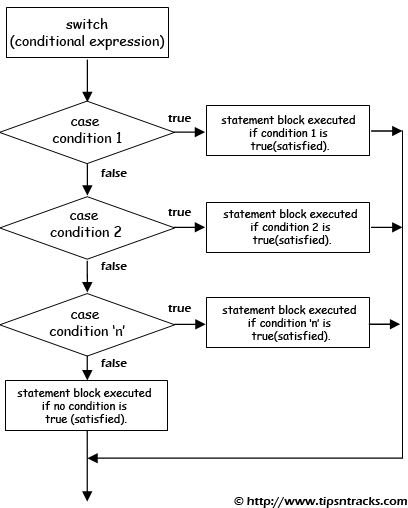
Efficient handling with switch-case
- Group related cases together improving organization and readability
- Use fall-through for cases sharing same code block reducing redundancy
- Order cases from most to least frequent optimizing performance
- Use enums or constants for case values enhancing code maintainability
- Handle multiple conditions in single case with comma-separated list (case 1, 2, 3:)

Break statements in switch-case
- Terminate execution of current case preventing unintended fall-through
- Place at end of each case block before next case or default statement
- Intentional fall-through achieved by omitting break statements allowing execution of multiple cases
- Proper use of break prevents unexpected behavior and logical errors
Switch-case vs if-else statements
- Switch-case offers better performance for multiple conditions with discrete values
- Improved readability when comparing single variable against multiple values
- Suited for evaluating variable against known set of constant values (menu options, state machines)
- Limited to discrete values (integers, characters, enums) cannot handle range comparisons
- If-else preferred for dealing with ranges, intervals, or complex boolean expressions
- If-else better for small number of conditions or when flexibility is needed