
H-infinity control is a powerful method for designing robust controllers in nonlinear systems. It minimizes the worst-case impact of disturbances on outputs, making it ideal for handling uncertainties and external disturbances in control systems.
Linear Matrix Inequalities (LMIs) are key tools in solving H-infinity control problems. They allow complex control design specifications to be formulated as convex optimization problems, which can be efficiently solved using modern optimization techniques and software tools.
H-infinity Optimization for Nonlinear Control
Formulating Nonlinear Control Problems as H-infinity Optimization
- H-infinity control minimizes the worst-case gain from disturbances to outputs in the presence of model uncertainties and external disturbances, providing a robust control technique
- The H-infinity norm of a transfer function represents the worst-case gain from disturbances to outputs, defined as the maximum singular value of the transfer function matrix over all frequencies
- Formulate nonlinear control problems as H-infinity optimization problems by defining the system dynamics, performance objectives, and uncertainty descriptions in the frequency domain
- The standard H-infinity control problem involves finding a controller that:
- Stabilizes the closed-loop system
- Minimizes the H-infinity norm of the transfer function from disturbances to outputs
- The generalized H-infinity control problem includes additional constraints on the closed-loop system:
- Robust stability
- Robust performance
- Mixed sensitivity specifications (weighted sensitivity and complementary sensitivity functions)
Frequency-Domain Representation and Uncertainty Modeling
- Represent nonlinear systems in the frequency domain using transfer functions or frequency response data obtained from linearization or system identification techniques
- Model uncertainties in the frequency domain using:
- Additive uncertainty (unmodeled dynamics)
- Multiplicative uncertainty (parameter variations)
- Coprime factor uncertainty (structured uncertainty in the plant model)
- Specify performance objectives in the frequency domain using weighting functions that shape the desired closed-loop behavior (bandwidth, disturbance rejection, robustness margins)
- Formulate the H-infinity control problem as a minimization of the weighted sensitivity and complementary sensitivity functions subject to the uncertainty and performance constraints
LMI-based Solutions for H-infinity Control
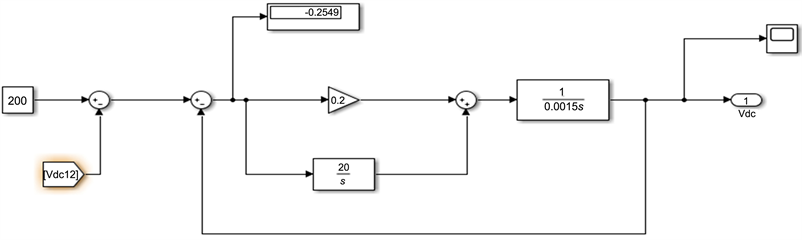
Linear Matrix Inequalities (LMIs) for Convex Optimization
- Linear matrix inequalities (LMIs) allow the formulation of control design specifications as convex optimization problems, providing a powerful tool for solving H-infinity control problems
- An LMI is an inequality of the form , where:
- is a symmetric matrix that depends affinely on the decision variables
- The inequality means that is positive definite
- H-infinity control problems can be transformed into equivalent LMI problems using the bounded real lemma, which relates the H-infinity norm of a transfer function to the solution of an LMI
- Convex optimization techniques efficiently solve LMI problems and obtain the optimal controller parameters:
- Interior-point methods
- Semidefinite programming (SDP)
Software Tools for LMI-based H-infinity Control Design
- MATLAB's Robust Control Toolbox provides built-in functions for formulating and solving H-infinity control problems using LMIs and convex optimization:
hinfstructfor structured H-infinity synthesismixsynfor mixed-sensitivity H-infinity synthesis
- CVX optimization package is a MATLAB-based modeling system for convex optimization that supports LMI-based control design:
- Allows the specification of LMIs using a high-level programming language
- Interfaces with various convex optimization solvers (SeDuMi, SDPT3)
- Other software tools for LMI-based control design include:
- YALMIP (MATLAB toolbox for optimization modeling)
- LMI Lab (MATLAB toolbox for LMI-based control design)
- Python-Control (Python package for control system analysis and design)
Robust Nonlinear Control for Disturbance Minimization
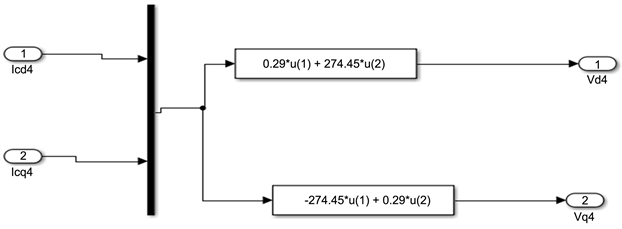
Weighting Function Selection for Performance and Robustness
- Select appropriate weighting functions to shape the frequency response of the closed-loop system and specify the desired performance and robustness requirements for robust nonlinear controllers based on H-infinity optimization
- Choose weighting functions to reflect:
- Relative importance of different frequency ranges
- Expected magnitude of disturbances
- Acceptable level of control effort
- Weighting functions can be designed as:
- Low-pass filters to emphasize low-frequency performance (tracking, disturbance rejection)
- High-pass filters to emphasize high-frequency robustness (noise attenuation, uncertainty suppression)
- Bandpass filters to specify frequency-dependent performance and robustness trade-offs
Controller Implementation and State Estimation
- The resulting H-infinity optimal controller is typically a dynamic state-feedback controller that depends on the system states and the weighting functions
- Implement the controller using observer-based techniques to estimate the system states from noisy measurements:
- Kalman filter for optimal state estimation in the presence of Gaussian noise
- H-infinity filter for robust state estimation in the presence of bounded disturbances
- Design the observer to have a faster response than the controller to ensure accurate state estimation and closed-loop stability
- Consider the computational complexity and real-time implementation aspects when selecting the observer and controller order
H-infinity Control Applications for Practical Systems
Application Process and Linearization Techniques
- Apply H-infinity control to a wide range of practical nonlinear systems:
- Aerospace systems (aircraft, satellites, missiles)
- Robotics (manipulators, mobile robots, humanoids)
- Power systems (generators, converters, microgrids)
- Process control (chemical reactors, heat exchangers, distillation columns)
- Model the nonlinear system dynamics, identify the sources of uncertainties and disturbances, and formulate the control design specifications as an H-infinity optimization problem
- Use linearization techniques to obtain a linear approximation of the nonlinear system around an operating point for H-infinity controller design:
- Jacobian linearization (first-order Taylor series expansion)
- Feedback linearization (exact input-output linearization using nonlinear feedback)
Validation and Practical Considerations
- Validate the designed H-infinity controller through simulations and experimental testing to assess its performance and robustness under various operating conditions and disturbance scenarios
- Consider practical aspects when implementing the H-infinity controller on a real-world system:
- Actuator saturation and rate limits
- Sensor noise and quantization effects
- Computational complexity and real-time implementation constraints
- Implement anti-windup techniques (integrator clamping, conditional integration) to handle actuator saturation and maintain closed-loop stability
- Use gain scheduling or adaptive control techniques to extend the operating range of the H-infinity controller and accommodate system nonlinearities and parameter variations