7.1 Mesopotamian flood myths

📚Myth and Literature Unit 7 Review
7.1 Mesopotamian flood myths
📚 Myth and Literature
Origins of flood narratives
Mesopotamian flood myths rank among the oldest surviving stories in world literature. They emerged from a region where the Tigris and Euphrates rivers could shift from life-sustaining irrigation sources to devastating, unpredictable forces of destruction. These stories did more than record natural disasters; they became frameworks for thinking about why the gods act, what humans owe them, and how civilizations begin again after catastrophe.

Top images from around the web for Sumerian flood stories
Literatura sumeria - Wikipedia, la enciclopedia libre View original
Is this image relevant?
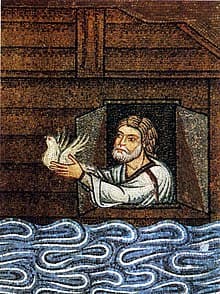
Ziusudra - Viquipèdia, l'enciclopèdia lliure View original
Is this image relevant?
Ziusudra - Wikipedia View original
Is this image relevant?
Literatura sumeria - Wikipedia, la enciclopedia libre View original
Is this image relevant?
Ziusudra - Viquipèdia, l'enciclopèdia lliure View original
Is this image relevant?
Sumerian flood stories
The earliest flood narratives come from Sumer in southern Mesopotamia, dating to the 3rd millennium BCE. In these stories, the gods collectively decide to destroy humanity through a great flood. The hero is Ziusudra, a pious king whom the god Enki (god of wisdom and fresh water) secretly warns about the coming deluge. Ziusudra builds a vessel and survives, then offers sacrifices to the gods afterward.
The Sumerian versions emphasize divine retribution: humans have done something to offend the gods, and the flood is their punishment. But they also raise a question that runs through all later versions: if the gods made humans, why destroy them?
Akkadian flood accounts
As the Akkadian Empire absorbed Sumerian culture, these flood stories were adapted and expanded. The most significant Akkadian version is the Atrahasis epic, which adds a crucial backstory. In this telling, the gods created humans to do the labor the lesser gods refused to perform. But humans multiplied so rapidly and became so noisy that the chief god Enlil couldn't sleep. He sent plague, famine, and finally a flood to reduce their numbers.
This version introduces a theme absent from the Sumerian original: overpopulation as the trigger for divine destruction. The hero Atrahasis, warned by Enki, builds a boat and preserves life. After the flood, the gods establish new limits on human reproduction, including infant mortality and celibate priestesses, to prevent the problem from recurring.
Biblical connections
The story of Noah in Genesis shares striking parallels with these Mesopotamian accounts: a single righteous man warned by a deity, a boat built to specific dimensions, animals brought aboard, birds sent out to find dry land, and a sacrifice offered after the waters recede. These similarities are too specific to be coincidental and point to direct literary influence, likely transmitted through centuries of cultural contact across the ancient Near East.
The key difference is theological. The Mesopotamian versions feature quarreling gods with mixed motives, while Genesis presents a single God acting out of moral judgment against human wickedness. Noah's story also introduces the concept of a covenant, a binding promise from God never to flood the earth again, which has no real equivalent in the Mesopotamian texts.
Key Mesopotamian flood myths
Three major texts preserve Mesopotamian flood traditions. Each places the flood story in a different narrative context and emphasizes different concerns.
Epic of Gilgamesh
The most famous version appears in Tablet XI of the Epic of Gilgamesh, composed in its standard form around the 12th century BCE but drawing on much older material. Gilgamesh, king of Uruk, has watched his friend Enkidu die and is desperate to escape death himself. He travels to the ends of the earth to find Utnapishtim, the one mortal the gods granted eternal life.
Utnapishtim tells Gilgamesh the flood story to explain how he gained immortality. The god Ea (the Akkadian name for Enki) warned him by speaking to the wall of his reed hut, technically not breaking the gods' oath of secrecy. Utnapishtim built a massive cube-shaped boat, loaded it with his family, craftsmen, and animals, and survived the storm that terrified even the gods themselves. Afterward, Enlil granted him immortality.
The flood story here serves a specific narrative purpose: it shows Gilgamesh that immortality was a one-time gift, not something he can replicate. The epic's real lesson is about accepting mortality.
Atrahasis epic
Dated to roughly the 17th century BCE, the Atrahasis epic is the most complete Mesopotamian flood narrative because it places the deluge within a full arc of human history. It moves through three phases:
- Creation: The gods create humans from clay mixed with the blood of a slain god to take over the labor of the lesser deities
- Crisis: Humans multiply and become too noisy; Enlil sends plague, drought, and famine, but Enki helps Atrahasis thwart each attempt
- Flood and resolution: Enlil finally sends the flood; Atrahasis survives in a boat; the gods establish population controls afterward
This structure makes the Atrahasis epic uniquely important for understanding how Mesopotamians connected creation, civilization, and catastrophe into a single story.
Eridu Genesis
The oldest known flood narrative, originating from Eridu (one of the first Sumerian cities, considered the oldest city in the world by Sumerian tradition). This fragmentary text combines a creation account with the flood story. It describes the gods establishing kingship, founding cities, and then sending the flood.
Ziusudra is the hero here. After the waters recede, he prostrates himself before the sun god Utu and is granted eternal life in the paradise of Dilmun. The text is badly damaged, so many details are lost, but its significance lies in being the earliest known written flood account, predating both Atrahasis and Gilgamesh.
Themes in flood myths
Divine punishment
In every Mesopotamian flood story, the gods decide to destroy humanity. But their reasons vary, and this is worth paying attention to. In the Atrahasis epic, the trigger is noise and overpopulation, not moral failure. In the Eridu Genesis, the reason is unclear due to damaged tablets. Only in later biblical adaptation does the flood become explicitly about human sinfulness.
This matters because it reveals something about Mesopotamian theology: the gods are powerful but not always just. They can destroy humanity for reasons that seem petty or arbitrary. The god who saves humanity (Enki/Ea) does so partly out of cleverness and partly because he values his creation, not because the hero has earned salvation through moral perfection.
Human survival
The flood heroes survive not through their own strength but through divine favoritism and obedience. Enki chooses them, gives them precise instructions, and they follow those instructions exactly. The heroes are wise enough to listen and skilled enough to build, but the initiative comes from the gods.
Still, there's a tension here. Enki defies the will of the divine assembly by warning the hero. This means human survival depends on disagreement among the gods, a very different framework from the biblical version where a single God both judges and saves.
Rebirth and renewal
The flood is never just an ending in these myths. It's a reset. After the waters recede, sacrifices are offered, the gods gather around the smoke (in Gilgamesh, "like flies"), and a new arrangement between gods and humans is established. The world that emerges is changed: in Atrahasis, new limits on human life are imposed; in Gilgamesh, Utnapishtim receives immortality as a unique exception.
This pattern of destruction-followed-by-renewal mirrors the actual experience of Mesopotamian agriculture, where seasonal flooding of the Tigris and Euphrates deposited fertile silt that made farming possible. Catastrophe and abundance were linked in the landscape itself.

Flood heroes and archetypes
Utnapishtim in Gilgamesh
Utnapishtim functions less as an action hero and more as a wise old man archetype. By the time Gilgamesh meets him, the flood is ancient history. Utnapishtim is calm, detached, and somewhat unsympathetic to Gilgamesh's desperation. He tells the flood story not to boast but to demonstrate that his immortality was a singular event that cannot be repeated.
He also tests Gilgamesh (the sleep test, the plant of youth) and watches him fail. Utnapishtim embodies the idea that wisdom means accepting limits, the very thing Gilgamesh struggles with throughout the epic.
Ziusudra in Sumerian myth
Ziusudra is described as a pious, god-fearing king. In Sumerian culture, the king served as an intermediary between gods and people, so Ziusudra's role as flood survivor reinforces the idea that kingship itself is divinely sanctioned. His survival isn't just personal; it preserves the institution of kingship and, by extension, civilization.
Noah vs. Mesopotamian counterparts
The parallels are extensive: all three heroes receive divine warning, build a boat, preserve animal life, send out birds, and offer sacrifice afterward. But the differences reveal how each culture adapted the story to its own values.
- Theological context: Noah deals with one God; Mesopotamian heroes navigate conflicts among many gods
- Reason for selection: Noah is chosen for his righteousness; Mesopotamian heroes are chosen because a sympathetic god favors them
- Aftermath: Noah receives a covenant (the rainbow promise); Mesopotamian heroes receive personal immortality
- Moral framework: Genesis makes the flood a response to human evil; Mesopotamian versions are more ambiguous about blame
Symbolism and motifs
Water as destruction
Water in Mesopotamian cosmology represented primordial chaos. The creation epic Enuma Elish begins with the mingling of fresh and salt waters (Apsu and Tiamat) before the ordered world exists. A flood, then, isn't just a natural disaster; it's a return to the formless state before creation. The gods are essentially uncreating the world.
This dual nature of water, both the source of life through irrigation and the agent of annihilation through flooding, was a lived reality in Mesopotamia, not just a literary symbol.
Boat as salvation
The boat functions as a microcosm, a miniature version of the entire world floating on the waters of chaos. It contains humans, animals, craftsmen (in some versions), and the seeds of civilization. Building the boat is itself an act of civilization: it requires technical knowledge, planning, and resources.
In the Gilgamesh version, the boat is described as roughly cube-shaped and enormous. In 2014, scholar Irving Finkel translated a Babylonian tablet (the "Ark Tablet") describing a round, coracle-style vessel, suggesting different traditions imagined the boat differently.
Animals in flood stories
Animals serve multiple symbolic roles in these narratives. They're passengers on the boat, representing the fullness of creation that must be preserved. After the flood, specific birds are sent out as scouts: the dove, the swallow, and the raven in Gilgamesh. The dove and swallow return (finding no dry land), but the raven stays away, signaling that the waters have receded.
Animals also appear as sacrificial offerings after the flood. The sacrifice is what draws the gods back and reopens communication between divine and human realms.
Cultural significance
Agricultural importance
The Tigris and Euphrates rivers flooded unpredictably, unlike the Nile's more regular cycle. When flooding was moderate, it deposited rich silt for farming. When it was severe, it could destroy entire settlements. Flood myths gave this unpredictability a narrative shape: the gods control the waters, and human survival depends on maintaining a right relationship with them.
Archaeological evidence from sites like Ur and Shuruppak shows layers of flood deposits, confirming that major floods did occur in the region, though no single event matches the scale described in the myths.
Religious interpretations
These myths shaped how Mesopotamians understood the relationship between gods and humans. The flood demonstrated that the gods had the power and willingness to destroy humanity, which reinforced the importance of temple worship, offerings, and ritual. If the gods could flood the world once, they could do it again, and only proper devotion might prevent it.
The stories also raised theological problems that Mesopotamian thinkers grappled with: if the gods need human labor (as in Atrahasis), destroying humans is self-defeating. This tension between divine power and divine dependence on humanity runs through much of Mesopotamian religious literature.

Historical flood theories
In the 1920s, archaeologist Leonard Woolley discovered a thick layer of water-deposited clay at Ur and famously declared he had found evidence of "the Flood." Later excavations showed that flood layers at different Mesopotamian sites dated to different periods, meaning there was no single catastrophic flood but rather multiple regional events over centuries.
Current scholarly consensus holds that the myths likely reflect a cultural memory of severe flooding events, amplified and theologized over generations of retelling, rather than a single historical deluge.
Literary analysis
Narrative structure
The Gilgamesh flood story uses a frame narrative: Utnapishtim tells the flood story to Gilgamesh, embedding it within the larger quest narrative. This structure means the flood isn't presented as straightforward history but as a story told for a purpose, to teach Gilgamesh (and the reader) about the limits of human ambition.
The Atrahasis epic uses an escalating structure: the gods try plague, then famine, then flood, with each attempt more severe than the last. This builds dramatic tension and also characterizes Enlil as increasingly frustrated and Enki as increasingly resourceful in his countermeasures.
Character development
The gods in these stories are not abstract forces; they have personalities. Enlil is authoritarian and easily angered. Enki is clever and sympathetic to humans. The goddess Ishtar (in Gilgamesh) weeps over the destruction she helped cause. After the flood, the gods are described as hungry because no one is left to offer them sacrifices, a detail that humanizes them and undercuts their authority.
The human heroes, by contrast, are relatively passive. They receive instructions and follow them. Their "heroism" lies in obedience and trust, not in defiance or innovation.
Moral lessons
The moral framework of these myths is more complex than simple "obey the gods or be punished." The Atrahasis epic suggests that the gods themselves made a mistake in creating too many humans without planning for the consequences. The flood is as much a failure of divine planning as it is a punishment for human behavior.
This ambiguity is one of the most distinctive features of Mesopotamian flood myths compared to their biblical counterpart. There's no single clear moral; instead, the stories explore the messy, sometimes contradictory relationship between powerful gods and the humans who depend on them.
Comparative mythology
Near Eastern flood parallels
Flood stories appear across the ancient Near East. The Hittites of Anatolia had flood traditions, and fragments of flood narratives have been found at sites throughout the Levant. These parallels reflect both shared environmental concerns (the entire region is prone to catastrophic flooding) and direct literary borrowing, as cuneiform texts circulated widely through trade and diplomacy.
Global flood myth similarities
Flood myths appear in cultures worldwide: the Greek story of Deucalion, the Hindu account of Manu, the Maya Popol Vuh, and many others. Whether these reflect independent responses to local flooding, distant cultural transmission, or some deeper pattern in human storytelling remains debated.
What's consistent across most traditions is the basic structure: divine anger, warning to a chosen survivor, a vessel, destruction, and renewal. This pattern may say less about a shared historical event and more about how human cultures universally process the experience of catastrophic loss and recovery.
Unique Mesopotamian elements
Several features distinguish Mesopotamian flood myths from other traditions:
- Polytheistic conflict: The flood results from disagreement among gods, not the decision of a single deity
- Noise as trigger: The Atrahasis version's complaint about human noise is unique and may reflect anxieties about urbanization
- Divine regret: The gods themselves are horrified by the flood's devastation, a detail that complicates simple readings of divine punishment
- Practical aftermath: Rather than a moral covenant, the resolution involves practical measures (population control) to prevent the problem from recurring
Legacy and influence
Impact on later literature
The Mesopotamian flood tradition is the direct ancestor of the biblical flood story, which in turn influenced the Quran's account of Nuh (Noah). Through these religious texts, Mesopotamian narrative patterns reached billions of people who have never heard of Utnapishtim or Atrahasis.
The discovery of the Gilgamesh flood tablet in 1872 by George Smith at the British Museum caused a sensation because it demonstrated that the biblical flood story had a much older Mesopotamian predecessor. This finding transformed the study of both biblical literature and ancient Near Eastern culture.
Artistic representations
Cylinder seals from ancient Mesopotamia depict boat scenes that may reference flood traditions, though direct visual representations of the flood myth are rare in surviving Mesopotamian art. The story's visual legacy is far richer in later traditions: medieval European manuscripts, Renaissance paintings, and Islamic miniatures all depict the flood, drawing ultimately on a narrative tradition that began in Sumer.
Modern interpretations
These myths continue to generate scholarly and popular interest. Psychologist Carl Jung saw flood myths as expressions of the collective unconscious. Environmental historians read them as evidence of ancient climate events. Literary scholars study them as early examples of narrative sophistication.
In popular culture, the flood narrative pattern appears in disaster films, climate fiction, and post-apocalyptic stories. The basic structure, a world destroyed and rebuilt by survivors, remains one of the most powerful templates in storytelling.
See Fiveable more often in Google
Mark Fiveable as a preferred source and Google is more likely to show you our guides in Top Stories, with a "preferred" badge in AI Mode and AI Overviews.