7.5 Mesoamerican flood legends

📚Myth and Literature Unit 7 Review
7.5 Mesoamerican flood legends
📚 Myth and Literature
Mesoamerican flood legends blend creation stories with cosmic cycles, reflecting the region's deep and complex relationship with water. These myths are foundational to pre-Columbian worldviews, shaping everything from religious practice to political authority. Aztec and Maya cultures each developed distinct flood narratives tied to their concepts of cyclical time and multiple world ages, while sharing common themes of divine punishment, chosen survivors, and the rebirth of civilization.
Origins of Mesoamerican Floods
Flood myths sit at the center of Mesoamerican cosmology. Unlike traditions where a single flood marks a one-time divine intervention, Mesoamerican floods are woven into repeating cycles of creation and destruction. Understanding these legends opens a window into how pre-Columbian societies explained the cosmos and organized their communities around those explanations.

Top images from around the web for Pre-Columbian flood narratives
Pre-Columbian era - Wikipedia View original
Is this image relevant?
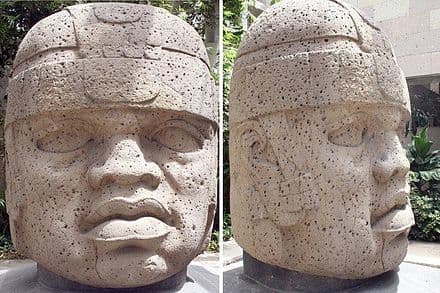
Pre-Columbian Mexico - Wikipedia View original
Is this image relevant?
Olmechi - VitAntica View original
Is this image relevant?
Pre-Columbian era - Wikipedia View original
Is this image relevant?
Pre-Columbian Mexico - Wikipedia View original
Is this image relevant?
Pre-Columbian Flood Narratives
These stories originated in oral traditions passed down for generations before European contact. They varied across cultures (Aztec, Maya, Olmec) but consistently shared core motifs: the world is destroyed by water, a remnant survives, and civilization begins again.
- Often linked directly to creation myths, describing the end of one world age and the start of the next
- Incorporated local geography, such as highland lakes, seasonal rivers, and hurricane-prone coastlines, giving each culture's version a distinct regional flavor
- Oral transmission meant that versions shifted over time, but the structural pattern remained remarkably stable
Cultural Significance of Water
Water held a dual identity in Mesoamerican thought: it was both the source of life and a force of annihilation.
- Agriculture depended on predictable rainfall, so water shaped settlement patterns and social development from the earliest periods
- Major deities governed water. Tlaloc controlled rain and storms for the Aztecs; Chaac served the same role for the Maya. These weren't minor figures but central gods who demanded regular ritual attention.
- Ceremonies and offerings aimed at maintaining cosmic balance, ensuring the rains came without becoming catastrophic floods
Common Flood Myth Elements
Mesoamerican flood myths share recurring motifs that parallel flood stories from other world traditions. Recognizing these patterns is useful for comparative mythology and for understanding what made Mesoamerican versions distinctive.
Divine Punishment Themes
Floods are almost always portrayed as divine retribution. The gods destroy humanity not arbitrarily but because people have transgressed in some way.
- Specific offenses vary between cultures: disrespect toward the gods, neglect of rituals, or general moral corruption
- The punishment serves cosmic balance. Destruction isn't just anger; it's a necessary reset
- This framing ties the flood to a moral logic: the world should be destroyed when it becomes corrupt, because that's how renewal works
Survival of Chosen Individuals
In most versions, select humans or divine beings survive to carry civilization forward.
- Survivors are chosen for their virtue, wisdom, or devotion to the gods
- Methods of survival differ: some hide in hollow logs, others take refuge on mountaintops, and some undergo supernatural transformation
- The survivors carry a responsibility. They're tasked with preserving knowledge and reestablishing proper relationships with the divine.
Rebirth of Civilization
The post-flood world is depicted as a genuine new beginning, not just a recovery.
- Survivors rebuild society, often with direct divine guidance
- A new world order is established, typically reflecting idealized cultural values
- The cycle of destruction and renewal reinforces the Mesoamerican view that no world age is permanent
Aztec Flood Legends
Aztec mythology features multiple flood accounts woven into a complex cosmology of successive world ages. Flood stories intertwine with the concept of multiple "suns," each representing a distinct era of creation.
Tlaloc's Great Deluge
In one prominent account, Tlaloc, the rain god, unleashes a devastating flood to punish human wickedness.
- The flood destroys the Fourth Sun, ending an entire cosmic era
- Only two humans survive by hiding inside a hollow log, chosen for their purity and devotion
- These survivors are charged with repopulating the earth and founding a morally upright civilization
- The story underscores a recurring Aztec theme: maintaining a proper relationship with the gods is not optional but existentially necessary
Four Suns Myth
The broader Aztec creation myth describes five world ages, each called a "sun," and each ending in a different catastrophe.
- The Fourth Sun, known as 4 Water (Nahui Atl), concludes specifically with a great flood
- Chalchiuhtlicue, goddess of rivers and lakes, presides over this destruction. Humans are transformed into fish.
- Each sun's destruction clears the way for a new, supposedly improved creation
- This structure illustrates the Aztec commitment to cyclical time: the current Fifth Sun is not the first world, and there's no guarantee it will be the last
Maya Flood Stories
Maya flood myths share structural similarities with other Mesoamerican accounts but incorporate distinct cultural elements, particularly their emphasis on failed creations and the gods' ongoing refinement of humanity.
Popol Vuh Flood Account
The Popol Vuh, the sacred narrative of the K'iche' Maya, contains the most detailed Maya flood story.
- The Heart of Sky initiates the flood to destroy the "wooden people," an earlier, imperfect attempt at creating humans
- These wooden people could speak and multiply but lacked consciousness and gratitude toward their creators
- The flood transforms them into monkeys, which is why the Maya saw monkeys as remnants of a prior, failed humanity
- The destruction is not the end but a transition. It clears the way for the gods to create true humans from maize dough, the final and successful creation.

Dresden Codex Flood References
The Dresden Codex, one of the few surviving pre-Columbian Maya manuscripts, contains visual and textual references to catastrophic flooding.
- A key image shows the goddess Chak Chel (also called Ix Chel in some sources) pouring water from an overturned jar, symbolizing world-ending floods
- These flood images are associated with the end of calendar cycles and cosmic transitions
- The codex connects flood events to astronomical knowledge, linking destruction to specific celestial alignments
- This material shows that flood myths weren't just oral stories but were integrated into Maya scientific and calendrical systems
Comparison with Other Cultures
Comparing Mesoamerican flood myths with other traditions reveals both universal patterns and features that are uniquely Mesoamerican.
Mesoamerican vs. Mesopotamian Floods
- Both traditions use divine punishment as the central reason for flooding
- Mesopotamian floods, like the one in the Epic of Gilgamesh, tend to describe a single, localized event. Mesoamerican floods are cosmic in scale, destroying entire world ages.
- Survival methods differ sharply: Mesopotamian heroes build boats (Utnapishtim's ark), while Mesoamerican survivors are often divinely selected or supernaturally transformed
- Mesoamerican myths place much greater emphasis on cyclical renewal. The Mesopotamian flood is a singular crisis; the Mesoamerican flood is one episode in a repeating pattern.
Similarities to Biblical Narratives
- Both traditions share the motif of divine displeasure with humanity as the flood's cause
- Chosen survivors appear in both: Noah in Genesis, various figures in Mesoamerican accounts
- Post-flood renewal and a re-established relationship between gods and humans feature in both
- A key structural difference: the biblical account is linear and singular (one flood, one covenant, one rainbow). Mesoamerican floods are cyclical, with multiple destructions and rebirths.
- Mesoamerican myths lack the specific covenant symbolism (the rainbow as a divine promise) found in Genesis
Symbolic Interpretations
Beyond their narrative content, Mesoamerican flood myths carry layered symbolic meanings that reflect fundamental beliefs about existence and cosmic order.
Cleansing and Renewal Motifs
- Floods symbolize purification. Water washes away corruption and imperfection, making space for something better.
- This cleansing motif extends beyond cosmology into social and political life. Shifts in power or societal reform could be framed as necessary "renewals" echoing the mythic pattern.
- The connection to agriculture is direct: just as seasonal rains renew the fields, cosmic floods renew the world
Cyclical Nature of Time
- Flood myths reinforce the Mesoamerican concept of non-linear, cyclical time
- Each flood marks the boundary between one world age and the next
- These cycles mirror observable natural phenomena: seasons, astronomical cycles, agricultural rhythms
- This worldview shaped Mesoamerican calendar systems, which tracked long-term cosmic cycles with remarkable precision
- The current world age is understood as temporary, carrying the implicit expectation of future transformation
Archaeological Evidence
Archaeological and geological findings help ground these mythological accounts in historical and environmental context.
Geological Flood Indicators
- Sediment layers in Mesoamerican regions show evidence of significant past flooding events
- Sea level changes and coastal flooding patterns in some cases correlate with mythological timelines
- Volcanic activity and earthquakes, common in the region, may have triggered floods that fed into oral traditions
- Paleoclimatology studies using ice cores and tree rings reveal periods of dramatically increased rainfall, offering a possible environmental basis for flood narratives
Cultural Artifacts and Flood Myths
- Pottery, murals, and stone carvings depict flood-related scenes and water deities
- Temple architecture incorporates flood symbolism, particularly in ceremonial centers
- Written records in codices and stelae inscriptions provide textual evidence of flood narratives
- The spread of similar flood imagery across trade networks shows how these myths traveled and adapted between Mesoamerican cultures
Literary Adaptations
Mesoamerican flood myths have inspired literature from the colonial period through the present, reflecting the enduring cultural power of these narratives.

Modern Retellings of Legends
- Contemporary authors incorporate Mesoamerican flood myths into novels and short stories, often blending traditional elements with modern themes
- The magical realism genre draws heavily on Mesoamerican cosmology, and flood imagery appears frequently in works by Latin American writers
- Children's literature and poetry adapt these stories for new audiences, helping preserve cultural heritage across generations
Influence on Mesoamerican Literature
- Colonial-era texts like the Popol Vuh and the Books of Chilam Balam preserve and reinterpret indigenous flood stories, filtered through the context of Spanish colonization
- Modern Mesoamerican and Latin American authors use flood myths as metaphors for cultural identity, resilience, and continuity
- Some contemporary works juxtapose ancient flood narratives with present-day environmental concerns, drawing a line between mythic warnings and ecological realities
Flood Myths in Ritual Practices
Mesoamerican cultures didn't just tell flood stories; they enacted them. Rituals kept these narratives alive and socially relevant.
Water Ceremonies and Festivals
- Annual ceremonies honored water deities like Tlaloc and Chaac through offerings, sacrifices, and prayers
- Festivals marked calendar dates tied to mythological flood events
- Purification rites using water directly reflected the cleansing symbolism of flood myths
- Community-wide participation reinforced social cohesion and shared cultural identity
Flood Reenactments in Rituals
- Dramatic performances retold flood myths during religious and civic celebrations
- Some rituals involved the symbolic flooding of temple precincts, representing cosmic destruction and renewal
- Priest-kings sometimes assumed the roles of mythical flood survivors in ceremonial reenactments, reinforcing their authority
- Initiation rites incorporated symbolic drowning and rebirth, echoing the flood cycle's themes of death and regeneration
Impact on Mesoamerican Worldview
Flood myths weren't just stories. They shaped how Mesoamerican societies understood time, authority, and their place in the cosmos.
Concept of Cosmic Cycles
- Flood myths reinforced the belief that creation and destruction recur in predictable patterns
- This belief drove the development of sophisticated calendar systems designed to track long-term cosmic cycles
- It shaped expectations about the future: the current world age would eventually end, just as previous ones had
- History was understood as cyclical rather than as linear progress, which influenced how events were recorded and interpreted
Influence on Societal Structures
- Ruling dynasties claimed descent from flood survivors, legitimizing their authority through mythological lineage
- Social hierarchies were justified by reference to mythological roles in flood narratives
- Urban planning and architecture incorporated flood symbolism, particularly in temple complexes
- Agricultural practices and water management strategies were informed by the same cosmological framework that produced flood myths
Contemporary Relevance
These ancient narratives continue to find new significance in modern contexts.
Environmental Awareness Connections
- Flood myths are increasingly used to frame discussions about climate change and environmental stewardship
- Ancient warnings about divine punishment get reinterpreted as cautionary tales about ecological balance
- Some modern conservation efforts draw on traditional Mesoamerican water management techniques that were themselves shaped by mythological thinking
Cultural Preservation Efforts
- Revitalization of indigenous languages often centers on preserving oral traditions, including flood myths
- Community-based projects document local variations of flood stories before they're lost
- Museums, cultural centers, and digital archives make these narratives accessible to wider audiences
- Academic work in ethnography and folklore continues to study flood myths as living traditions, not just historical curiosities
See Fiveable more often in Google
Mark Fiveable as a preferred source and Google is more likely to show you our guides in Top Stories, with a "preferred" badge in AI Mode and AI Overviews.