7.8 Apocalyptic narratives in world religions

📚Myth and Literature Unit 7 Review
7.8 Apocalyptic narratives in world religions
📚 Myth and Literature
Origins of apocalyptic literature
The word "apocalypse" comes from the Greek apokalypsis, meaning "unveiling" or "revelation." Apocalyptic literature doesn't just describe destruction; it claims to reveal hidden truths about how the world will end and what comes after. This genre emerged from ancient religious texts and has shaped how billions of people think about time, justice, and the future.
These narratives tend to surface during periods of crisis, when communities face persecution, conquest, or rapid change. They offer a framework for making sense of suffering: the world isn't falling apart randomly; it's moving toward a final reckoning.

Top images from around the web for Ancient Near Eastern influences
File:Ancient Egypt and Mesopotamia c. 1450 BC.png - Wikimedia Commons View original
Is this image relevant?
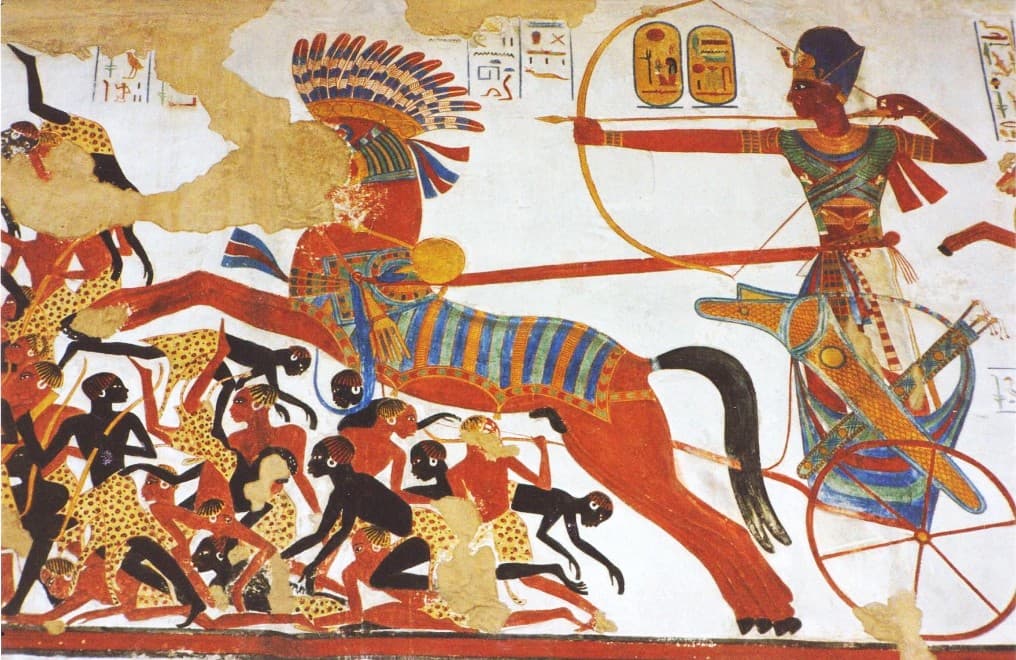
Bristish Museum - fresque de l'Egypte ancienne | expédition … | Flickr View original
Is this image relevant?
Sculpted reliefs depicting Ashurbanipal, the last great As… | Flickr View original
Is this image relevant?
File:Ancient Egypt and Mesopotamia c. 1450 BC.png - Wikimedia Commons View original
Is this image relevant?
Bristish Museum - fresque de l'Egypte ancienne | expédition … | Flickr View original
Is this image relevant?
Ancient Near Eastern influences
Mesopotamian myths laid much of the groundwork. The Epic of Gilgamesh contains a flood narrative strikingly similar to the biblical account, introducing the idea that gods might destroy humanity as an act of judgment. Egyptian eschatology, preserved in texts like the Book of the Dead, focused on individual judgment after death but also included ideas of cosmic renewal.
Babylonian creation myths, especially the Enuma Elish, framed the universe as emerging from a battle between order and chaos. That template of cosmic conflict became a recurring structure in later apocalyptic writing. Canaanite mythology contributed similar imagery of divine warfare and celestial battles between gods.
Zoroastrian apocalypticism
Zoroastrianism, developed in ancient Persia, was arguably the first religion to articulate a fully developed apocalyptic vision. Its core idea is cosmic dualism: the god of good, Ahura Mazda, is locked in a struggle against Angra Mainyu, the spirit of evil. This isn't an eternal stalemate; it has an endpoint.
- Frashokereti describes the final renovation of the universe, when evil is permanently defeated, the dead are resurrected, and all of creation is purified.
- The Saoshyant is a future savior figure who will lead this final transformation.
These concepts directly influenced later Jewish and Christian apocalyptic thought, particularly the ideas of bodily resurrection, final judgment, and a savior who arrives at the end of history.
Judeo-Christian apocalyptic tradition
Jewish apocalyptic literature developed significantly during and after the Babylonian Exile (6th century BCE), when the community was grappling with foreign domination. The Book of Daniel, written during the persecution under Antiochus IV (2nd century BCE), is the Hebrew Bible's most fully apocalyptic text, featuring symbolic visions of successive empires and a coming divine kingdom.
Earlier prophetic books like Ezekiel and Isaiah contain proto-apocalyptic elements: visions of cosmic upheaval, a restored Jerusalem, and a "Day of the Lord." During the intertestamental period (roughly 200 BCE to 100 CE), Jewish apocalyptic writing flourished with texts like the Book of Enoch and Jubilees, which expanded on themes of angelic warfare, divine secrets, and end-time judgment.
Christian apocalypticism built directly on these Jewish foundations. The Book of Revelation became the defining Christian apocalyptic text, while messianic expectations and the concept of the Kingdom of God gave Christian end-time thinking its distinctive shape.
Common themes in apocalyptic narratives
Despite emerging from very different cultures, apocalyptic stories share a surprisingly consistent set of themes. Recognizing these patterns is essential for comparative analysis and for understanding why these narratives have such enduring power.
End of the world scenarios
Most apocalyptic narratives describe the current world being destroyed before something new replaces it. The destruction typically comes through global cataclysms: floods, fires, earthquakes, or cosmic collisions.
A key distinction across traditions is whether time is linear or cyclical. In the Abrahamic religions, history moves toward a single, final endpoint. In Hindu cosmology, destruction and creation repeat in vast cycles. This difference shapes the entire emotional tone of the narrative: linear apocalypses carry a sense of finality, while cyclical ones emphasize renewal.
Environmental disasters in these texts frequently symbolize divine judgment or the consequences of human moral failure. Modern apocalyptic narratives have added technological catastrophes (nuclear war, AI rebellion) to this repertoire, but the underlying structure remains the same.
Divine judgment and retribution
A final reckoning for human actions sits at the heart of most apocalyptic stories. This theme addresses a problem that haunts every society: why do the wicked prosper and the righteous suffer? Apocalyptic narratives answer that injustice is temporary. A day of accounting is coming.
- The righteous are separated from the wicked, often through trials or tribulations that serve as purification.
- Divine justice corrects the imbalances of earthly life.
- In Eastern traditions, karmic consequences function as a parallel mechanism: actions accumulate across lifetimes and ultimately determine one's fate.
Cosmic battles: good vs. evil
Dualistic struggle between forces of light and darkness appears across nearly every apocalyptic tradition. These celestial wars mirror and magnify earthly conflicts, giving them cosmic significance. Angelic and demonic entities personify abstract moral forces, making the struggle vivid and dramatic.
The outcome of these battles determines the fate of the entire universe. This theme often intertwines with the hero's journey archetype, where a chosen figure must confront overwhelming evil to secure the world's salvation.
Messianic figures and saviors
Most apocalyptic traditions feature a charismatic leader or divine figure who plays a pivotal role in the end times. These figures tend to combine the roles of warrior, judge, and spiritual guide:
- Abrahamic traditions: The Messiah (Judaism), the returning Christ (Christianity), the Mahdi (Islam)
- Hinduism: Kalki, the tenth and final avatar of Vishnu
- Buddhism: Maitreya, the future Buddha
- Zoroastrianism: The Saoshyant
The savior figure provides a focal point for hope. Even as the world collapses, someone is coming to set things right.
Apocalyptic texts in world religions
Book of Revelation in Christianity
The final book of the New Testament, attributed to John of Patmos, is the most influential apocalyptic text in Western culture. Written likely during Roman persecution of Christians (around 95 CE), it uses dense symbolic imagery to describe the end of the current age and the triumph of God.
The narrative unfolds through a structured sequence of divine judgments: seven seals, seven trumpets, and seven bowls of wrath. Key images include the Four Horsemen of the Apocalypse (representing conquest, war, famine, and death), the Beast (often interpreted as a symbol of oppressive political power), and the New Jerusalem, a perfected city descending from heaven.
Revelation describes a millennial reign of Christ (a thousand-year period) before the final judgment and the creation of a new heaven and earth. Debates over whether this millennium is literal or symbolic have generated entire branches of Christian theology.
Islamic eschatology and Qiyamah
Qiyamah (the Day of Judgment) is a central doctrine in Islam. The Quran describes it in vivid terms: mountains crumble, the sky splits open, and all souls are resurrected for judgment.
Key figures and events in Islamic end-time narratives include:
- The Mahdi, a guided leader who will restore justice before the end
- The return of Isa (Jesus), who in Islamic tradition descends to defeat evil
- The Dajjal, an Antichrist-like deceiver who leads people astray
- Final judgment, where souls are sent to Jannah (Paradise) or Jahannam (Hell)
The Quran provides the theological framework, while the Hadiths (recorded sayings and actions of the Prophet Muhammad) supply much of the narrative detail about the sequence of end-time events.
Hindu concept of Kali Yuga
Hindu cosmology operates on a cyclical model of time divided into four yugas (ages), each progressively more degraded than the last. Kali Yuga is the fourth and final age, characterized by spiritual ignorance, moral decline, widespread conflict, and environmental degradation.
According to Hindu texts, we are currently living in Kali Yuga. The age ends with the appearance of Kalki, the tenth avatar of Vishnu, who destroys the forces of evil and ushers in cosmic dissolution (pralaya). After pralaya, the cycle begins again with a new golden age (Satya Yuga).
This cyclical framework means Hindu apocalyptic thought doesn't carry the same sense of permanent finality as Abrahamic traditions. Destruction is always followed by renewal.
Norse Ragnarök
Ragnarök ("fate of the gods") describes the end of the world in Norse mythology. It begins with Fimbulwinter, three successive winters with no summer in between, accompanied by social collapse and moral breakdown.
The climactic battle pits the gods against giants and monstrous forces:
- Odin is swallowed by the wolf Fenrir
- Thor kills the World Serpent Jörmungandr but dies from its venom
- Tyr falls in combat
The world sinks into the sea and burns. But Ragnarök is not purely an ending. The earth rises again from the water, green and fertile. Two human survivors, Líf and Lífþrasir, repopulate the world, and some of the younger gods survive to inhabit the renewed creation.
Symbolism and imagery
Apocalyptic literature relies heavily on symbolic language. These texts aren't meant to be read as straightforward journalism; they use imagery drawn from cultural traditions, numerology, and mythology to convey meaning on multiple levels. Interpreting these symbols requires understanding their original cultural and religious contexts.

Numbers and numerology
Specific numbers carry loaded meaning in apocalyptic texts:
- Seven signifies divine completeness or perfection (seven seals, seven trumpets, seven churches in Revelation)
- Twelve represents cosmic order or divine governance (twelve tribes of Israel, twelve apostles)
- Thousand indicates vast, often symbolic time periods (the millennial reign in Revelation)
- Gematria, a Jewish mystical practice that assigns numerical values to Hebrew letters, influenced apocalyptic interpretation. The famous "number of the Beast" (666) in Revelation likely derives from gematria applied to a political figure's name.
Beasts and mythical creatures
Monstrous entities in apocalyptic texts almost always symbolize something beyond themselves. The four beasts in the Book of Daniel represent successive empires (Babylon, Persia, Greece, Rome). The Beast and the Dragon in Revelation embody anti-divine political and spiritual powers.
In Norse mythology, Jörmungandr (the World Serpent encircling the earth) represents cosmic chaos held barely in check. Chimeric creatures that combine features of multiple animals appear across traditions, conveying complex meanings that a single animal image couldn't capture.
Natural disasters and celestial events
Earthquakes, floods, fires, darkened suns, and blood-red moons recur across apocalyptic traditions as signals that the cosmic order is breaking down. These aren't just dramatic set pieces; they carry specific symbolic weight:
- Falling stars can represent defeated angelic beings or collapsing power structures
- Darkened skies signal the withdrawal of divine favor or the unraveling of creation
- Floods recall primordial chaos reasserting itself
Modern apocalyptic narratives have adapted this imagery, with ecological catastrophes often carrying warnings about environmental destruction.
Visions and prophecies
Prophetic visions are the primary delivery mechanism for apocalyptic revelations. The seer typically enters an altered state of consciousness (a dream, a trance, or a heavenly journey) and witnesses events that transcend normal time and space.
These visions characteristically feature non-linear narratives and time distortions. Past, present, and future blur together, reflecting a divine perspective that stands outside ordinary chronology. The interpretation of these visions often becomes as important as the visions themselves, generating entire traditions of commentary and debate.
Literary devices in apocalyptic writing
Allegory and metaphor
Apocalyptic texts are saturated with symbolic representations of real-world entities. Political powers appear as animals or mythical beasts: Rome becomes a dragon, empires become multi-headed creatures. This metaphorical language serves a practical purpose beyond artistry. It allows authors to critique dangerous powers without naming them directly, protecting both writer and audience.
Allegorical narratives also enable multiple layers of meaning. A single passage might simultaneously describe a historical event, a spiritual truth, and a future prophecy. This layered quality is part of what makes apocalyptic texts so endlessly reinterpretable.
Vivid and surreal descriptions
The imagery in apocalyptic writing is deliberately intense and often bizarre: a lamb with seven eyes, locusts with human faces, a woman clothed with the sun. This surreal quality serves the genre's purpose. These texts claim to describe realities beyond ordinary human experience, so ordinary language won't suffice.
The juxtaposition of familiar and otherworldly elements creates a sense of the uncanny, pulling readers out of their normal frame of reference. Sensory details (sounds of trumpets, the taste of a scroll, the heat of fire) make the visions feel immersive despite their strangeness.
Non-linear narrative structures
Apocalyptic texts rarely tell their stories in straightforward chronological order. Events repeat with variations, timelines fold back on themselves, and the same moment might be described from multiple perspectives. In Revelation, for example, the seven seals, seven trumpets, and seven bowls may describe the same sequence of events from different angles rather than three separate sequences.
This non-linear structure reflects the genre's theological claim: divine perspective isn't bound by human time. It also contributes to the texts' mysterious quality, which has fueled centuries of interpretive debate.
Use of pseudonyms and pseudepigrapha
Many apocalyptic texts are attributed to ancient or revered figures who didn't actually write them. The Book of Daniel, for instance, is set in the 6th century BCE but was likely composed in the 2nd century BCE. The Book of Enoch is attributed to the biblical patriarch Enoch.
This practice, called pseudepigraphy, served several functions:
- It lent authority to the text by associating it with a respected figure
- It allowed authors to present recent events as ancient prophecy, making the predictions seem validated
- Code names for contemporary figures and places protected communities under persecution
- It expanded on canonical narratives, filling gaps that readers wanted addressed
Pseudepigraphy raises important questions in religious studies about authorship, authenticity, and how communities decide which texts carry authority.
Historical context of apocalyptic literature
Apocalyptic texts don't emerge in a vacuum. They're almost always products of crisis, written by or for communities facing existential threats. Understanding the historical circumstances behind these texts is crucial for interpreting their symbolism.
Social and political upheavals
The Babylonian Exile (586 BCE) was a watershed moment for Jewish apocalyptic thought. The destruction of the Temple and forced deportation created a crisis of faith that demanded new theological explanations. Similarly, the persecution under Antiochus IV Epiphanes (167-164 BCE) produced the Book of Daniel, and Roman imperial oppression generated the Book of Revelation.
Cultural clashes, economic instability, and rapid social change all fuel apocalyptic anxiety. These texts frequently encode critiques of dominant power structures in symbolic language, offering resistance through narrative when direct political action is impossible.
Religious persecution and resistance
Threats to religious identity intensify apocalyptic expectations. When a community faces forced assimilation or violent persecution, apocalyptic literature provides a framework for endurance: the suffering is temporary, the persecutors will face divine judgment, and the faithful will be vindicated.
Secret codes and symbols in these texts aren't just literary devices; they're survival tools. The number 666 in Revelation, for example, likely encoded a reference to Emperor Nero, allowing Christians to discuss their oppressor without risking detection. Martyrdom traditions intertwine with apocalyptic narratives, casting those who die for their faith as participants in a cosmic drama with a guaranteed outcome.
Millennialism and end-time expectations
Millennialism is the belief that a dramatic transformation of the world is imminent. Throughout history, this belief has generated powerful social movements. Some millenarian groups have calculated specific dates for the apocalypse; when those dates pass without incident, the resulting cognitive dissonance typically leads to reinterpretation rather than abandonment of the belief.
Millenarian movements often combine religious fervor with social reform agendas, channeling apocalyptic energy into efforts to reshape the present world. The interaction between linear apocalyptic expectations (common in Abrahamic traditions) and cyclical time concepts (common in Hindu and Buddhist thought) produces interesting variations in how different cultures experience millennialist urgency.
Interpretations of apocalyptic texts
How you read an apocalyptic text depends enormously on your interpretive framework. The same passage can yield radically different meanings depending on whether you approach it as literal prophecy, political allegory, or psychological symbolism.

Literal vs. symbolic readings
Literal interpretations treat apocalyptic texts as straightforward predictions of future events. Many contemporary evangelical Christians, for example, read Revelation as a timeline of events that will actually occur. Symbolic interpretations understand the imagery as representing spiritual truths, moral principles, or historical situations rather than future predictions.
Most traditions don't fall neatly into one camp. Many readers combine literal and symbolic approaches, treating some elements as predictive and others as metaphorical. The choice of interpretive approach often reflects broader theological commitments and has significant real-world consequences for how communities understand their place in history.
Historical-critical approach
This scholarly method examines apocalyptic texts in light of their original historical and cultural contexts. Rather than asking "What does this predict about the future?", it asks "What did this mean to its original audience?"
The historical-critical approach:
- Identifies the likely date and circumstances of composition
- Analyzes how earlier myths and texts influenced the writing
- Explores the social and political functions the text served in its community
- Traces how apocalyptic traditions developed and were transmitted over time
This approach often challenges traditional religious interpretations, which can generate tension between academic scholarship and faith communities.
Psychological interpretations
Drawing on the work of Carl Jung and others, psychological approaches treat apocalyptic visions as expressions of individual or collective psychological states. Jung's concept of the collective unconscious suggests that apocalyptic imagery taps into universal archetypes shared across human cultures.
From this perspective, cosmic battles between good and evil represent internal psychological conflicts. The destruction of the old world symbolizes personal transformation. Apocalyptic narratives may serve a cathartic function, allowing communities to process collective anxiety, grief, or rage through symbolic storytelling.
Influence on modern literature and media
Religious apocalyptic traditions have profoundly shaped contemporary storytelling. Modern writers and filmmakers draw on these ancient templates even when creating secular narratives, and the genre's core themes of destruction, survival, and renewal continue to resonate.
Post-apocalyptic fiction
Post-apocalyptic fiction focuses on what happens after the catastrophe. The genre explores survival, moral choices under extreme pressure, and the question of whether (and how) civilization can be rebuilt.
- Cold War era: Nuclear war scenarios dominated, as in Walter Miller's A Canticle for Leibowitz (1960)
- Environmental collapse: Cormac McCarthy's The Road (2006) depicts a world after an unspecified cataclysm
- Pandemic narratives: Emily St. John Mandel's Station Eleven (2014) gained new relevance after COVID-19
These works inherit the apocalyptic tradition's concern with judgment and renewal but typically replace divine agency with human responsibility.
Dystopian narratives
Dystopian fiction presents oppressive future societies as cautionary tales. While not always apocalyptic in the traditional sense, dystopias share the genre's preoccupation with the collapse of moral and social order.
Foundational works like George Orwell's 1984 (1949) and Aldous Huxley's Brave New World (1932) established key tropes: surveillance states, technological control, suppression of individuality. Young adult dystopian fiction, particularly Suzanne Collins' The Hunger Games (2008), brought these themes to new generations and often incorporate more explicit apocalyptic backstories.
Apocalyptic themes in popular culture
Apocalyptic imagery saturates contemporary media across formats:
- Zombie narratives (The Walking Dead) blend horror with societal collapse, using the undead as metaphors for consumerism or conformity
- Alien invasion stories (War of the Worlds) externalize apocalyptic threats
- Superhero narratives regularly feature world-ending threats and messianic savior figures
- Video games like the Fallout series create interactive post-apocalyptic experiences
- Climate fiction ("cli-fi") addresses apocalyptic themes tied directly to global warming
Comparative analysis of apocalyptic narratives
Cross-cultural similarities and differences
The fact that end-of-world scenarios appear in cultures with no direct contact suggests these narratives address universal human concerns: mortality, the desire for justice, anxiety about the future. Concepts of divine judgment and cosmic renewal transcend specific religious traditions.
The most significant structural difference across traditions is the treatment of time. Linear apocalyptic models (Abrahamic religions) envision a single, unrepeatable end. Cyclical models (Hinduism, some Buddhist traditions) see destruction as one phase in an endlessly repeating pattern. This distinction shapes everything from the emotional tone of the narrative to the role of human agency: in linear models, your choices matter for eternity; in cyclical models, the cosmic wheel turns regardless.
Recurring motifs across traditions
Several motifs appear with remarkable consistency:
- Savior figures who arrive at the critical moment (Mahdi, Maitreya, Kalki, the returning Christ, the Saoshyant)
- Cosmic battles between forces of good and evil
- Natural disasters and celestial signs heralding the end
- Judgment of souls and separation of the righteous from the wicked
- Renewal or recreation of the world after its destruction
Evolution of apocalyptic thought
Apocalyptic ideas have traveled and evolved across cultures and centuries. Ancient Near Eastern flood myths influenced Israelite apocalyptic traditions. Zoroastrian concepts of cosmic dualism, resurrection, and a final savior shaped Jewish and Christian eschatology, likely through contact during the Persian period (6th-4th centuries BCE).
Trade routes like the Silk Road facilitated the exchange of apocalyptic ideas between West and East. Modern scientific understanding has generated new forms of secular apocalyptic thought: nuclear annihilation, asteroid impacts, climate collapse, and AI takeover are contemporary versions of ancient fears. Globalization and mass media have accelerated the fusion of apocalyptic concepts from different traditions into hybrid narratives.
Contemporary relevance of apocalyptic literature
Environmental concerns and climate change
Climate change has become the dominant apocalyptic narrative of the 21st century. Rising temperatures, mass extinction events, and extreme weather evoke the same imagery found in ancient texts: floods, fires, uninhabitable landscapes. Climate activists frequently employ apocalyptic rhetoric to convey urgency, framing environmental destruction as a consequence of human moral failure (overconsumption, greed) in ways that parallel religious narratives of divine judgment.
Emerging genres like solarpunk attempt to reimagine the apocalyptic template, replacing visions of doom with narratives of ecological restoration and sustainable futures.
Technological threats and AI
Fears about artificial intelligence echo ancient apocalyptic narratives about inhuman forces threatening to overwhelm humanity. The concern that AI might become uncontrollable mirrors stories of cosmic chaos breaking free from divine order. Transhumanist visions of merging human consciousness with machines reflect apocalyptic themes of radical transformation, while debates over AI ethics parallel age-old questions about human agency in the face of overwhelming power.
Pandemic scenarios and global crises
The COVID-19 pandemic revived interest in contagion-based apocalyptic narratives and demonstrated how quickly apocalyptic thinking can surface in modern societies. Conspiracy theories about the pandemic frequently incorporated apocalyptic elements (secret plots, hidden signs, imminent collapse). The experience of global lockdowns, economic disruption, and mass death gave many people a visceral sense of what societal collapse might feel like, making ancient apocalyptic texts feel newly relevant.
See Fiveable more often in Google
Mark Fiveable as a preferred source and Google is more likely to show you our guides in Top Stories, with a "preferred" badge in AI Mode and AI Overviews.