5.8 Journeys to the underworld in mythology

📚Myth and Literature Unit 5 Review
5.8 Journeys to the underworld in mythology
📚 Myth and Literature
5.1
Greek and Roman underworld
5.2
Egyptian concept of afterlife
5.3
Norse realms of the dead
5.4
Hindu and Buddhist afterlife beliefs
5.5
Judeo-Christian concepts of heaven and hell
5.6
Mesoamerican underworld narratives
5.7
African afterlife traditions
5.8
Journeys to the underworld in mythology
5.9
Psychopomp figures and death deities
Journeys to the underworld are a common theme in mythology, reflecting ancient attempts to understand death and the afterlife. These narratives serve as metaphors for personal growth and spiritual enlightenment, often representing a bridge between the mortal world and the divine realm.
Underworld journeys mark pivotal moments in a hero's quest, testing character and spiritual strength. They represent the cyclical nature of life, death, and rebirth in many cultures, offering explanations for natural phenomena and serving as a place of transformation and self-discovery.
Origins of underworld journeys
- Underworld journeys in mythology reflect ancient human attempts to understand death and the afterlife
- These narratives serve as metaphors for personal growth, spiritual enlightenment, and the human psyche
- Underworld journeys often represent a bridge between the mortal world and the realm of the divine

Top images from around the web for Ancient cultural beliefs
Ancient Mesopotamian underworld - Wikipedia View original
Is this image relevant?
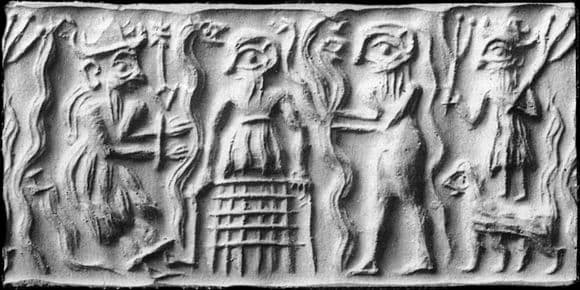
Ancient Mesopotamian underworld - Wikiquote View original
Is this image relevant?
Hades - Wikipedia View original
Is this image relevant?
Ancient Egyptian religion - Wikipedia View original
Is this image relevant?
Ancient Mesopotamian underworld - Wikipedia View original
Is this image relevant?
Ancient Mesopotamian underworld - Wikiquote View original
Is this image relevant?
Ancient cultural beliefs
- Mesopotamian concept of Irkalla influenced later underworld depictions
- Egyptian Book of the Dead outlined complex afterlife journey through Duat
- Greek Hades evolved from earlier chthonic deities and Mycenaean beliefs
- Mayan Xibalba represented a multilayered underworld with various challenges
Mythological significance
- Underworld journeys often mark pivotal moments in a hero's quest or a deity's mythology
- Serve as tests of character, wisdom, and spiritual strength
- Represent the cyclical nature of life, death, and rebirth in many cultures
- Offer explanations for natural phenomena (seasons, celestial movements)
Archetypal hero's journey
- Joseph Campbell's monomyth structure often includes descent into the underworld
- Represents the hero's confrontation with death, fear, and the unknown
- Underworld serves as a place of transformation and self-discovery
- Return from the underworld symbolizes rebirth and newfound wisdom
Notable underworld journeys
Greek myths
- Orpheus's descent to rescue Eurydice explores themes of love and loss
- Odysseus's nekuia in the Odyssey provides prophecies and guidance
- Heracles's capture of Cerberus demonstrates superhuman strength and cunning
- Psyche's journey to the underworld tests her determination and resourcefulness

Norse mythology
- Odin's self-sacrifice on Yggdrasil to gain wisdom of the runes
- Hermod's ride to Hel to attempt Baldr's rescue
- Valkyries' role in transporting fallen warriors to Valhalla
- Loki's punishment in the underworld foreshadows Ragnarök
Egyptian afterlife concepts
- Journey of the sun god Ra through the Duat each night
- Weighing of the heart ceremony in the Hall of Two Truths
- Osiris's death and resurrection as lord of the underworld
- Use of funerary texts and spells to navigate the afterlife
Themes in underworld journeys
Death and rebirth
- Underworld often serves as a transitional space between life and death
- Heroes frequently undergo symbolic death and rebirth
- Vegetation deities' annual descent and return reflect seasonal cycles
- Initiation rites in mystery cults often reenact underworld journeys
Knowledge and wisdom
- Underworld portrayed as repository of hidden or forbidden knowledge
- Consultation with the dead or chthonic deities for prophecies or advice
- Acquisition of magical abilities or divine secrets
- Understanding of cosmic order and one's place within it

Transformation and growth
- Physical or spiritual metamorphosis during underworld sojourn
- Overcoming personal flaws or limitations through trials
- Gaining new perspectives on life, death, and the nature of reality
- Development of empathy or compassion through encounters with the dead
Symbolic elements
Rivers of the underworld
- Greek five rivers (Styx, Acheron, Cocytus, Phlegethon, Lethe) represent different aspects of death
- Egyptian celestial Nile as pathway for solar barque
- Norse Élivágar as source of primordial ice and creation
- Sanzu River in Japanese Buddhism as boundary between life and death
Guardians and gatekeepers
- Multi-headed creatures (Cerberus, Orthrus) guard entrances
- Psychopomps (Hermes, Anubis) guide souls to the afterlife
- Ferryman figures (Charon, Vainamoinen) transport across underworld waters
- Judges (Minos, Osiris) determine fate of souls
Trials and challenges
- Riddles and tests of wit (Sphinx, Tuonetar)
- Physical obstacles or monsters to overcome
- Moral judgments and ethical dilemmas
- Temptations to resist or bargains to negotiate
See Fiveable more often in Google
Mark Fiveable as a preferred source and Google is more likely to show you our guides in Top Stories, with a "preferred" badge in AI Mode and AI Overviews.