5.1 Elements of Interpersonal Communication

📱Intro to Communication Studies Unit 5 Review
5.1 Elements of Interpersonal Communication
📱 Intro to Communication Studies
Interpersonal communication is the process of exchanging messages between people who know each other and influence each other's responses. It's the foundation of how we build relationships, resolve conflicts, and navigate everyday social life. This section covers the core components of that process, how verbal and nonverbal cues interact, the role of self-concept and perception, and common barriers that get in the way.
Interpersonal Communication: Definition and Components
Definition and Key Characteristics
Interpersonal communication is the process of exchanging messages between two or more people who are interdependent and have some knowledge of each other. The key word there is interdependent: each person's actions affect the other's responses. A conversation isn't a one-way broadcast; it's a back-and-forth where both people shape the outcome.
Every interpersonal message carries two dimensions:
- Content dimension: the literal meaning of what's being said ("The project is due Friday")
- Relationship dimension: what the message signals about the connection between the communicators (whether the tone is supportive, dismissive, authoritative, etc.)
Both dimensions are always present, even when you're not thinking about them.
Channels and Components
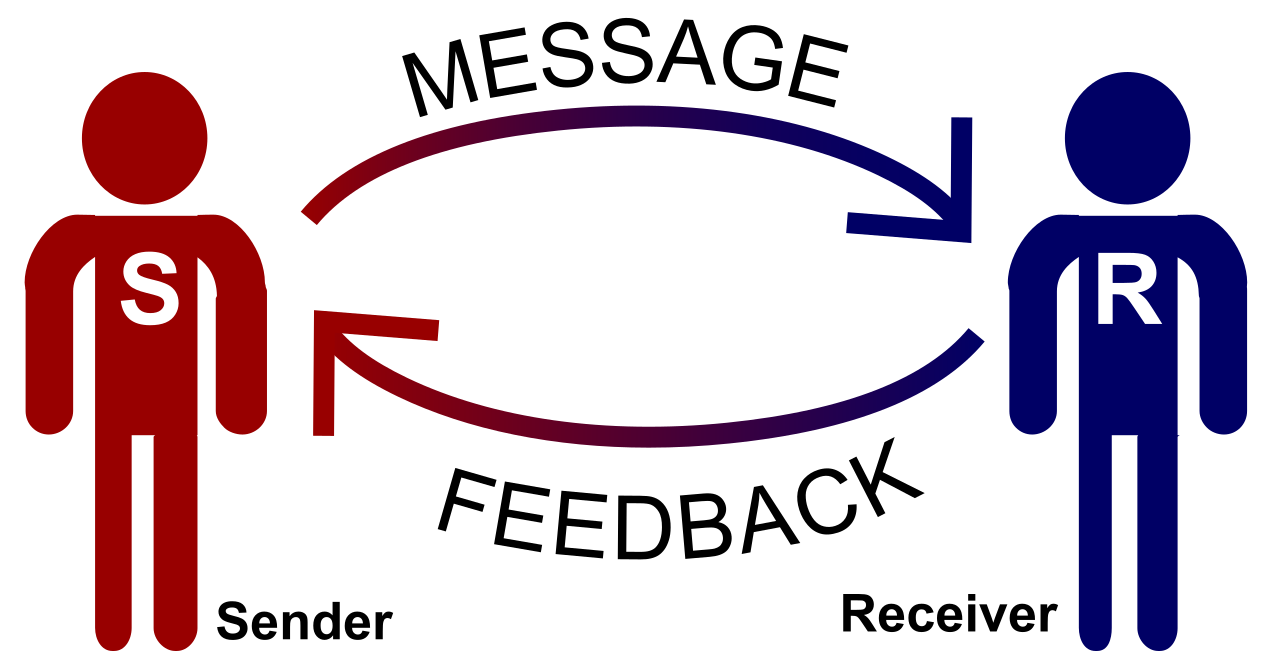
Interpersonal communication often happens face-to-face, but it also takes place through mediated channels like phone calls, text messages, and video chats. Regardless of the channel, the same core components are at work:
- Sender: The person initiating the message
- Receiver: The person interpreting the message
- Message: The information being conveyed (both verbal and nonverbal)
- Channel: The medium through which the message travels (in person, phone, text, etc.)
- Feedback: The receiver's response, which lets the sender know how the message landed
- Context: The physical, social, and psychological environment surrounding the interaction
Context is easy to overlook, but it matters a lot. The same words can mean very different things depending on whether you're in a job interview, a group chat, or a quiet conversation with a close friend.
Verbal and Nonverbal Communication in Interactions
Verbal Communication
Verbal communication refers to using words and language to convey meaning. This includes both spoken and written forms: face-to-face conversations, emails, letters, texts.
Effective verbal communication means choosing language that's clear, concise, and appropriate for your audience. The way you phrase something for a professor differs from how you'd say it to a roommate, even if the core message is the same.

Nonverbal Communication
Nonverbal communication includes body language, facial expressions, tone of voice, gestures, eye contact, posture, and even how much physical space you maintain. These cues convey meaning without words, and they often carry more weight than the words themselves.
Nonverbal cues can interact with verbal messages in several ways:
- Reinforce: A smile while giving a compliment strengthens the message
- Complement: A nod while saying "yes" adds emphasis
- Substitute: A wave instead of saying "hello"
- Contradict: Saying "I'm fine" while visibly clenching your jaw sends a mixed signal
Cultural differences play a significant role here. The amount of eye contact considered respectful, the meaning of certain hand gestures, and expectations around personal space all vary across cultures. What feels normal in one context can easily be misread in another.
Interaction of Verbal and Nonverbal Communication
Verbal and nonverbal communication work together to create shared meaning. When the two are congruent (they match), the message comes across as clear and credible. When they're incongruent (they clash), the receiver tends to trust the nonverbal cues more. If someone says "I'm really happy for you" in a flat, monotone voice while avoiding eye contact, you're probably going to doubt the words.
Self-Concept and Perception in Communication
Self-Concept and Self-Esteem
Self-concept is the collection of beliefs, attitudes, and perceptions you hold about yourself. It shapes how you communicate: what you're willing to say, how you interpret what others say to you, and how confident you are in social situations.
Self-esteem is the evaluative part of self-concept. It's how positively or negatively you judge yourself overall. Someone with low self-esteem might avoid difficult conversations, assume criticism where none was intended, or hold back from sharing ideas. Someone with higher self-esteem is generally more willing to engage openly. Being aware of how your self-concept influences your communication is the first step toward communicating more effectively.
Perception and Perceptual Filters
Perception is the process of selecting, organizing, and interpreting information from your environment, including what other people say and do. You don't passively absorb messages; you actively filter them.
Perceptual filters are the lenses through which you interpret communication. These include stereotypes, past experiences, prejudices, and emotional states. For example, if you had a negative experience with a coworker last week, you might interpret their neutral email this week as passive-aggressive, even if it isn't.
One particularly powerful filter is the self-fulfilling prophecy: when your expectations about an interaction actually shape how you behave, which in turn shapes the outcome. If you walk into a conversation expecting it to go badly, you might act defensive or withdrawn, which makes the other person respond negatively, which confirms your original expectation. The prophecy fulfills itself.
Barriers to Effective Communication
Physical and Psychological Barriers
Physical barriers are environmental obstacles that interfere with communication: loud background noise, poor phone reception, physical distance, or technology glitches during a video call. Trying to have a serious conversation in a crowded restaurant is a classic example.
Psychological barriers are internal obstacles. These include being preoccupied with personal problems, strong emotional states like anger or anxiety, or simply lacking interest in the conversation. If your mind is somewhere else, you're not fully processing what the other person is saying.
Semantic and Cultural Barriers
Semantic barriers arise when communicators interpret words or phrases differently. Using jargon, slang, or technical terms the other person doesn't know is a common cause. Even everyday words can carry different connotations depending on someone's background.
Cultural barriers go beyond language. Differences in values, communication norms, and nonverbal expectations can all create misunderstandings. A gesture that's friendly in one culture might be offensive in another. These barriers don't require people to speak different languages; they can show up between any two people with different cultural backgrounds.
Feedback and Overcoming Barriers
Without adequate feedback, miscommunication goes undetected. If the receiver never signals whether they understood the message, the sender has no way to correct course.
Effective communicators are proactive about barriers. Practical strategies include:
- Asking for clarification when something is unclear ("Can you say more about what you mean by that?")
- Rephrasing your message if the other person seems confused
- Checking your assumptions before reacting, especially when perceptual filters might be at play
- Seeking common ground to bridge cultural or semantic gaps
The goal isn't to eliminate all barriers; that's not realistic. The goal is to recognize them when they appear and adjust accordingly.
See Fiveable more often in Google
Mark Fiveable as a preferred source and Google is more likely to show you our guides in Top Stories, with a "preferred" badge in AI Mode and AI Overviews.