4.4 Comparative Analysis of Constitutional Systems

🪩Intro to Comparative Politics Unit 4 Review
4.4 Comparative Analysis of Constitutional Systems
🪩 Intro to Comparative Politics
Constitutional Frameworks: Comparisons and Features
Constitutional systems are the blueprints for how governments operate, distribute power, and protect rights. Comparing these systems across countries reveals why some governments are more stable, more representative, or more adaptable than others. This section covers the major structural differences, how those differences play out in practice, and the historical forces that shape constitutional design.
Variations in Government Structure and Power Distribution
Constitutional frameworks differ in two fundamental ways: how power is distributed geographically (unitary vs. federal) and how the executive relates to the legislature (presidential vs. parliamentary).
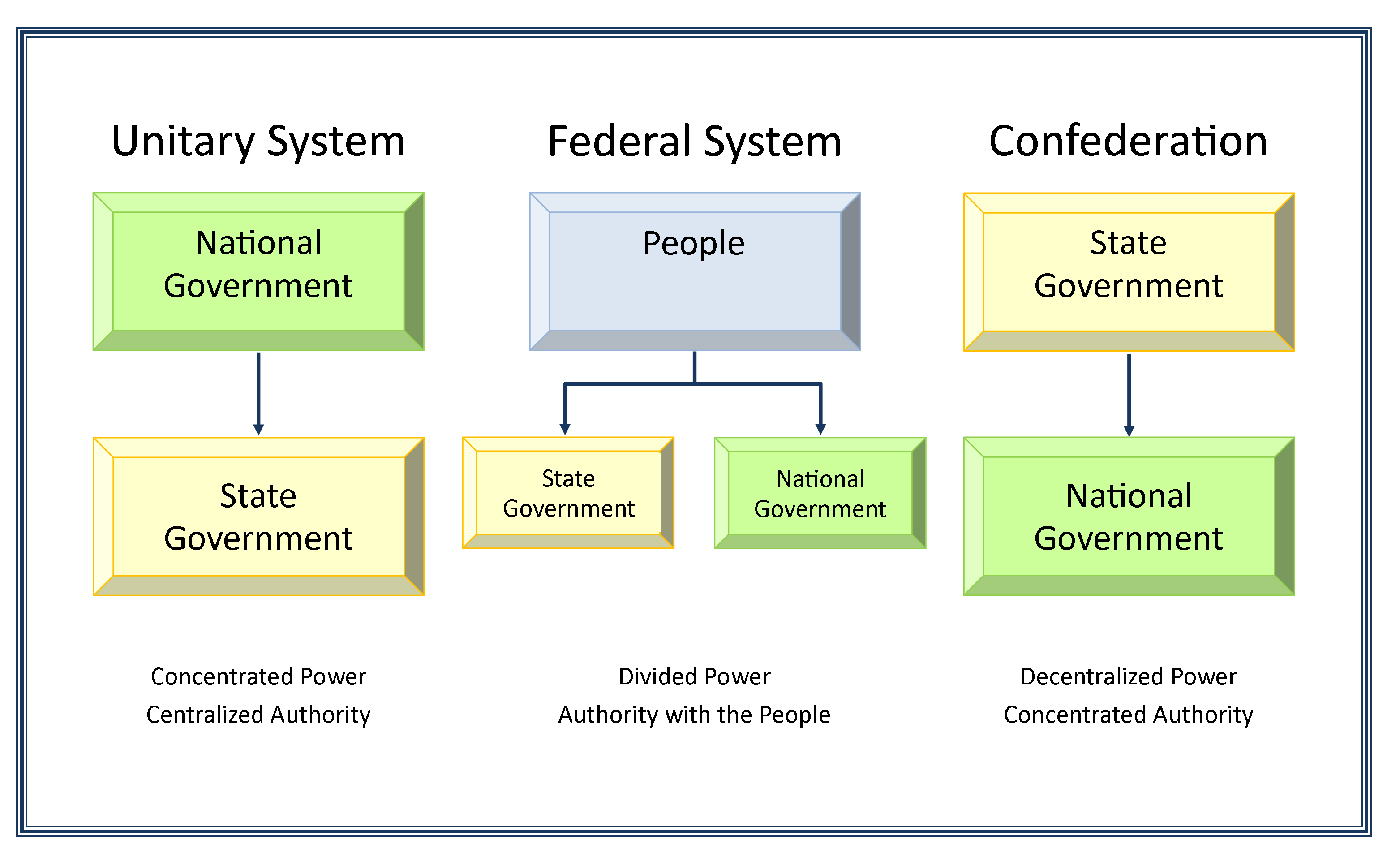
Unitary vs. Federal Systems
- Unitary systems concentrate governing authority in a central government. Regional or local governments exist, but their powers are delegated by the center and can be taken back.
- France and Japan are classic examples. The national government holds supreme authority and decides how much power local governments get.
- Federal systems constitutionally divide power between a central government and regional units (states, provinces, Länder). Neither level can simply abolish the other's authority.
- The United States and Germany both have this structure, where state/provincial governments hold powers that the central government cannot override in certain areas.
Presidential vs. Parliamentary Systems
- In presidential systems (United States, Mexico), the president is directly elected by the people and serves as both head of state and head of government. The executive and legislature are separate branches with independent sources of legitimacy.
- In parliamentary systems (United Kingdom, India), the prime minister is typically the leader of the majority party or coalition in the legislature. The executive depends on maintaining the confidence of parliament to stay in power.
Types of Constitutions and Amendment Processes
Written vs. Unwritten Constitutions
- Written constitutions (United States, South Africa) are codified in a single document that lays out the structure of government and citizens' rights.
- Unwritten constitutions (United Kingdom, New Zealand) are not contained in one document. Instead, they draw from a combination of statutes, court decisions, and long-standing conventions. The rules of government are real and binding, but they're spread across many sources.
Rigid vs. Flexible Amendment Processes
How hard it is to change a constitution matters enormously. A rigid process protects foundational principles from hasty change; a flexible process allows the system to evolve more easily.
- Rigid processes (United States, Japan) require supermajorities in the legislature, approval by state legislatures, or national referendums. The U.S. Constitution, for instance, requires two-thirds of both houses of Congress and ratification by three-fourths of state legislatures.
- Flexible processes (India, South Africa) allow amendments through simpler legislative majorities or less demanding referendum requirements, making constitutional change more accessible.
Judicial Systems and International Law
Constitutional Courts vs. Supreme Courts
- Some countries (Germany, South Africa) have specialized constitutional courts whose sole job is interpreting and enforcing the constitution.
- Others (United States, Canada) give this role to a supreme court that also handles statutory law and serves as the highest court of appeal.
Monist vs. Dualist Systems
This distinction determines how international law enters a country's domestic legal system.
- Monist systems (Netherlands, France) automatically incorporate ratified international treaties into domestic law. No additional legislation is needed.
- Dualist systems (United Kingdom, Australia) treat international and domestic law as separate. Parliament must pass enabling legislation before a treaty has legal force domestically.
Effectiveness of Constitutional Systems
Impact of Government System on Stability and Consensus-Building
The presidential vs. parliamentary choice has real consequences for how well a government functions.
- Parliamentary systems tend to foster collaboration because the executive must maintain the legislature's confidence. If the government loses support, it falls. This creates strong incentives to build and maintain coalitions.
- Presidential systems can be more prone to gridlock, especially during divided government (when the president's party doesn't control the legislature). The executive and legislature each have independent mandates, so neither is forced to compromise.

Electoral Systems and Representation
The electoral system shapes who gets a seat at the table.
- Proportional representation (Israel, Netherlands) allocates legislative seats based on each party's vote share. This produces more diverse parliaments with multiple parties but can lead to fragmented coalitions that are harder to hold together.
- First-past-the-post (United States, United Kingdom) awards each district's seat to whoever wins the most votes. This tends to produce two-party systems and more stable governing majorities, but smaller parties and minority viewpoints often get shut out.
Checks and Balances and Protection of Rights
Preventing Abuse of Power
- An independent judiciary with the power of judicial review can strike down laws or executive actions that violate the constitution. This is one of the most important checks on government power.
- Other mechanisms include the separation of powers and legislative oversight (the ability of parliament or congress to investigate and scrutinize executive actions).
Entrenching Rights
- Constitutionally protected rights like freedom of speech and due process give individuals a legal basis to challenge government actions in court.
- Some constitutions go further by including socio-economic rights. South Africa's constitution, for example, guarantees rights to housing, healthcare, and education, placing affirmative obligations on the government to promote social welfare.
Accountability Mechanisms and Adaptability
Removing Leaders
Different systems have different tools for holding leaders accountable:
- Impeachment (United States, South Korea) allows for removal of a president or official for serious misconduct. It's typically a lengthy, high-threshold process.
- No-confidence votes (United Kingdom, Japan) let the legislature remove a prime minister and government more quickly if they lose majority support.
Constitutional Evolution
Constitutions need to adapt over time without losing their foundational stability.
- Flexible amendment procedures and "living constitution" approaches allow the document to evolve with society.
- Judicial precedent lets courts interpret constitutional provisions in light of contemporary circumstances, keeping the constitution relevant without formal amendment.
Shaping Constitutional Systems: History and Culture
Legacy of Colonialism and Foreign Influence
Many countries' constitutional systems bear the imprint of their colonial past.
- Former British colonies (India, Nigeria) often inherited parliamentary systems, common law traditions, and Westminster-style constitutions.
- Former French colonies (Senegal, Côte d'Ivoire) tend to have civil law systems and semi-presidential structures with strong executives and centralized administration.
Political upheaval also reshapes constitutions. The fall of communism in Eastern Europe produced a wave of new constitutions emphasizing democracy, human rights, and the rule of law. The Arab Spring led to constitutional reforms in countries like Tunisia, where popular demands for political freedom drove the drafting of a new constitution in 2014.
Role of Religion, Culture, and Diversity
- In some Islamic countries (Iran, Saudi Arabia), Sharia law is incorporated into the constitution and legal system, particularly in areas like family law.
- Other constitutions (Canada, South Africa) explicitly recognize indigenous peoples' rights, protecting their languages, cultures, and traditional practices.
Ethnic and linguistic diversity often drives structural choices:
- Ethnically diverse countries (Nigeria, Ethiopia) frequently adopt federal systems with provisions for regional autonomy and group representation in national institutions.
- Linguistically diverse countries (Switzerland, Belgium) build in constitutional guarantees for multiple official languages and protections for linguistic communities.
Political Economy and Constitutional Design
Economic and social conditions shape what a constitution prioritizes.
- Countries with deep poverty and inequality may emphasize socio-economic rights and redistributive policies in their constitutions.
- A strong civil society (active NGOs, social movements, free press) can push constitutional drafters toward greater public participation and government accountability.
The balance of power among political elites also matters. The military, business interests, and regional leaders all bring bargaining power to the drafting process. When certain groups are excluded from constitution-making, the resulting document may lack legitimacy, which can undermine the stability of the entire political system.
Constitutional Design: Impact on Political Outcomes
Electoral Systems and Representation
- Proportional representation tends to facilitate the election of smaller parties, women, and minority groups.
- First-past-the-post can lead to underrepresentation of these groups and dominance by larger, established parties.
The structure of the executive also shapes governance:
- A strong presidential system (United States, Russia) can concentrate power in the executive, producing more centralized and personalized decision-making.
- A parliamentary system with a ceremonial head of state (Germany, India) tends to promote more collegial, consensus-based policy-making because the prime minister must work with a cabinet and maintain coalition support.
Decentralization, Judicial Review, and Direct Democracy
Decentralization
- Federal systems with significant devolution (Canada, Brazil) allow regions to experiment with different policies and respond to local needs.
- Even unitary systems (Japan, Sweden) can achieve decentralized governance through strong local government structures.
Judicial Review
- A strong, independent judiciary that can strike down unconstitutional laws is a critical safeguard for individual rights.
- The accessibility of the judicial system matters too. Constitutional complaint mechanisms (like Germany's individual constitutional complaint) give ordinary citizens a direct path to enforce their rights.
Direct Democracy
- Referendums (Switzerland, Ireland) let citizens vote directly on constitutional amendments or major policy questions.
- Citizen initiatives and recall processes (some U.S. states, Venezuela) allow the public to propose legislation or remove elected officials from office.
Government Formation and Stability
The rules for forming and dismissing governments affect both stability and accountability.
- In many parliamentary systems (United Kingdom, Spain), the head of state appoints the leader of the largest party or coalition as prime minister. This provides a clear, predictable process for government formation.
- Where the president or monarch has the power to dismiss the government or dissolve parliament (France, Thailand), political crises can escalate quickly, creating instability.
Federalism and Coordination
- Clear division of exclusive and shared powers between federal and state governments (Germany, Australia) reduces duplication and confusion over who is responsible for what.
- Intergovernmental forums and dispute resolution mechanisms (Canada, South Africa) help different levels of government cooperate and resolve conflicts without constitutional crises.
See Fiveable more often in Google
Mark Fiveable as a preferred source and Google is more likely to show you our guides in Top Stories, with a "preferred" badge in AI Mode and AI Overviews.