3.1 Defining and Measuring Democracy

🪩Intro to Comparative Politics Unit 3 Review
3.1 Defining and Measuring Democracy
🪩 Intro to Comparative Politics
Core principles of democracy
Democracy is a system of government where power is vested in the people, who exercise authority either directly or through freely elected representatives. To understand how democracies differ from authoritarian regimes, you need a solid grasp of the principles that make democracy work and the institutions that hold it together.

Top images from around the web for Key principles and institutions
United States Government: Why form a government? | United States Government View original
Is this image relevant?
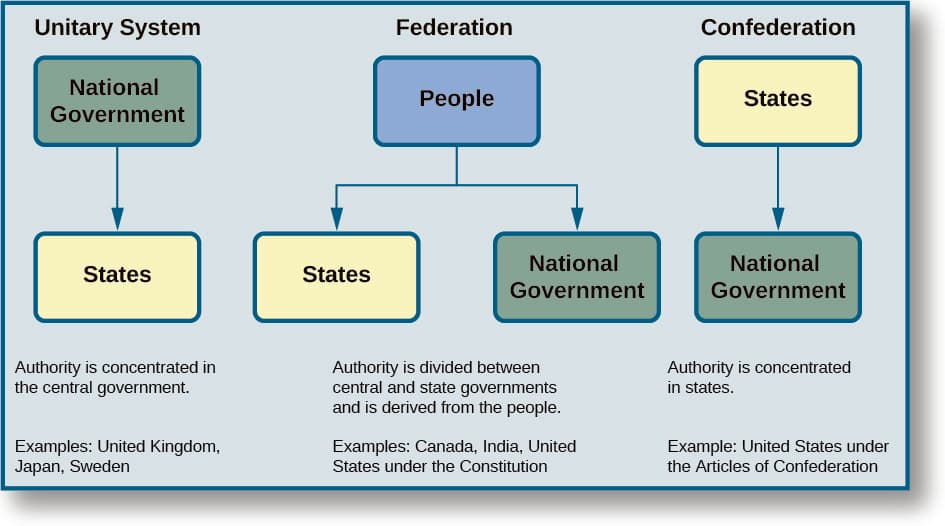
The Division of Powers – American Government View original
Is this image relevant?
Elements of Democracy | "According to political scientist La… | Flickr View original
Is this image relevant?
United States Government: Why form a government? | United States Government View original
Is this image relevant?
The Division of Powers – American Government View original
Is this image relevant?
Key principles and institutions
Five core principles define democratic governance:
- Popular sovereignty: The government's legitimacy comes from the consent of the governed. If the people don't authorize it, the government doesn't have the right to do it.
- Political equality: Every citizen gets an equal say in the political process and equal rights under the law.
- Political freedom: Individual rights and liberties are protected, including freedom of speech, assembly, and religion.
- Majority rule: Decisions reflect the will of the majority.
- Minority rights: Even when the majority decides, the rights and interests of minority groups are still protected. This tension between majority rule and minority rights is one of the trickiest balancing acts in any democracy.
These principles don't exist in the abstract. They require institutions to make them real:
- Free and fair elections: Regular, competitive elections where all eligible voters can participate without coercion or intimidation.
- Multi-party system: Multiple political parties compete for power and represent diverse interests and ideologies. A single-party system, even with elections, doesn't meet this standard.
- Independent judiciary: Courts that are free from political interference and apply the law impartially.
- Free press: Media outlets that can report on political issues without government censorship or undue influence.
Rule of law and separation of powers
The rule of law means that everyone, including the government itself, is accountable to laws that are:
- Publicly promulgated: Laws are made known and accessible to all citizens
- Equally enforced: Laws apply consistently, without discrimination
- Independently adjudicated: An impartial judiciary, separate from other branches, resolves disputes
The separation of powers divides government authority among three branches to prevent any single branch from accumulating too much control:
- Executive branch (e.g., President, Prime Minister): Implements and enforces laws
- Legislative branch (e.g., Congress, Parliament): Creates and modifies laws
- Judicial branch (e.g., Supreme Court, Constitutional Court): Interprets laws and reviews their constitutionality
Each branch checks the others. For example, a legislature can pass laws, but the executive can veto them, and the judiciary can strike them down as unconstitutional.
Civil society organizations like NGOs and advocacy groups (Amnesty International, Greenpeace) also play a crucial role. They promote citizen participation and hold governments accountable outside of formal government structures.

Measuring democracy levels
Key indicators
No single metric captures whether a country is "democratic." Instead, researchers look at a range of indicators:
Free and fair elections are the most fundamental. This means independent electoral commissions, international election observers, and the absence of voter suppression, vote-buying, or electoral violence.
Political pluralism and participation look at whether multiple competitive parties exist and whether citizens actually engage in politics through voting, campaigning, protesting, referendums, and public consultations.
Freedom of expression and belief covers press freedom, legal protections for speech and religion, and the absence of censorship or intimidation of journalists.
Associational and organizational rights measure whether people can freely form and join organizations like trade unions and civil society groups. A vibrant civil society is a strong signal of democratic health.
Rule of law and judicial independence ensure that all citizens are treated equally under the law and that the government cannot act arbitrarily or abuse its power.
Government accountability and transparency look at whether citizens can hold representatives responsible (through recall elections, impeachment) and access information about government activities (freedom of information laws, open data initiatives).
Protection of individual rights, including freedom from discrimination and the right to due process, rounds out the picture.

Democracy indices and their limitations
Several major indices attempt to quantify democracy. Each takes a different approach, and each has trade-offs.
Freedom House: Freedom in the World Index Assesses political rights and civil liberties worldwide. It's widely cited but has been criticized for potential subjectivity and Western bias, since it relies on expert assessments that may not fully account for cultural differences.
Economist Intelligence Unit (EIU): Democracy Index Evaluates countries across five categories: electoral process and pluralism, civil liberties, functioning of government, political participation, and political culture. The multidimensional approach is a strength, but it still relies heavily on expert judgment.
Polity IV Project Focuses on authority characteristics of governing institutions, measuring competitiveness of political participation and constraints on executive power. It's valuable for tracking regime change over long time periods, but it may miss more nuanced aspects of democratic quality.
Varieties of Democracy (V-Dem) Takes a disaggregated approach, measuring five high-level principles: electoral, liberal, participatory, deliberative, and egalitarian democracy. This is the most comprehensive and nuanced index, though its complexity can make it less accessible.
World Bank: Worldwide Governance Indicators Assesses six dimensions of governance, including voice and accountability, political stability, and control of corruption. These offer a broad view of governance quality but aren't specifically designed to measure democracy, so they may miss essential democratic elements.
The key takeaway: no single index is perfect. Each captures different dimensions, and smart analysis uses multiple indices rather than relying on just one.
Democratic principles vs. implementation
Contextual factors influencing democracy
There's often a gap between democratic principles on paper and how they play out in practice. Several factors shape this gap:
Historical factors like colonial legacies, past authoritarianism, or conflict can leave lasting imprints on political institutions. A country that gained independence from a colonial power with centralized authority may struggle to build decentralized democratic institutions.
Cultural factors such as political culture, social norms, and attitudes toward authority and participation influence how citizens and leaders interact with democratic processes.
Socio-economic factors matter too. Extreme poverty and income inequality can undermine political equality because disadvantaged groups may lack the resources to participate in politics. Conversely, middle-class growth and economic modernization tend to increase demand for political representation and accountability.
When countries adopt democratic forms without genuinely embracing democratic norms, you get problematic categories:
- Facade democracies: Countries that hold elections but lack real political competition or respect for civil liberties. The elections are window dressing.
- Hybrid regimes: Countries that mix authoritarian and democratic elements, such as competitive authoritarianism (elections occur but are heavily tilted toward incumbents) or illiberal democracy (elected leaders systematically erode civil liberties).
Social cleavages based on ethnicity, religion, or language can also challenge democratic consolidation. When identity groups become heavily politicized, it can lead to exclusionary practices or conflict. Some countries address this through consociationalism (power-sharing arrangements among groups) or federalism to accommodate diversity and prevent majority tyranny.
Role of non-elected institutions and international factors
Not all political power sits with elected officials. The military can be a major factor: countries with histories of military coups or where the military retains significant political influence often struggle to establish civilian control. Other non-elected institutions, like religious authorities or traditional leaders, may also limit the scope of democratic decision-making.
International factors shape democratic prospects in several ways:
- Foreign aid conditionality: Donor countries or international organizations may tie aid to democratic reforms or human rights compliance
- Regional organizations: Bodies like the European Union or the Organization of American States promote democratic norms and monitor member states' adherence
- Diffusion of democratic norms: Democratic ideas spread across borders through international media, civil society networks, and political movements
Finally, the relationship between democracy and other political goods is more complicated than it might seem:
- Stability: Democracy is associated with long-term stability, but transitions to democracy can be destabilizing in the short term, especially in divided societies.
- Economic growth: The link is contested. Some argue democracy promotes growth through accountability and rule of law; others point to authoritarian regimes that have implemented rapid economic reforms (e.g., China's economic rise).
- Human development: Democracy tends to support better outcomes in education, health, and gender equality by empowering citizens and promoting inclusive policies. But the causal relationship is mediated by other factors like state capacity and resource distribution.
See Fiveable more often in Google
Mark Fiveable as a preferred source and Google is more likely to show you our guides in Top Stories, with a "preferred" badge in AI Mode and AI Overviews.