2.3 New trade theory and economies of scale

🥇International Economics Unit 2 Review
2.3 New trade theory and economies of scale
🥇 International Economics
New Trade Theory and Economies of Scale

Top images from around the web for Main ideas of new trade theory
8.4 Monopolistic Competition – Principles of Microeconomics View original
Is this image relevant?
8.4 Monopolistic Competition – Principles of Microeconomics View original
Is this image relevant?
Monopolistic Competition | Boundless Economics View original
Is this image relevant?
8.4 Monopolistic Competition – Principles of Microeconomics View original
Is this image relevant?
8.4 Monopolistic Competition – Principles of Microeconomics View original
Is this image relevant?
Main ideas of new trade theory
Traditional trade models like Ricardo's comparative advantage and Heckscher-Ohlin focus on differences between countries (productivity gaps or factor endowments) to explain why they trade. But by the 1970s and 1980s, economists noticed something those models couldn't explain: countries with very similar economies were trading huge volumes of very similar goods with each other. Germany exports BMWs to Japan while Japan exports Toyotas to Germany. Why?
New trade theory, developed most prominently by Paul Krugman, answers this by pointing to three forces traditional models largely ignored:
- Increasing returns to scale: As firms produce more, their average cost per unit falls. This creates an incentive to concentrate production in fewer locations rather than spread it everywhere.
- Product differentiation: Firms don't sell identical goods. They compete by offering distinct varieties, and consumers value that variety.
- Imperfect competition: Because products are differentiated, firms have some pricing power. Markets look like monopolistic competition rather than perfect competition.
Together, these forces explain intra-industry trade, where countries simultaneously import and export goods within the same industry. France and Italy both produce and trade wine with each other, not because one has a clear comparative advantage, but because consumers in both countries want access to different varieties.

Economies of scale in trade
Economies of scale are cost advantages that come from producing at a larger volume. They're central to new trade theory because they explain why production concentrates geographically and why trade occurs even between similar countries.
There are two types:
- Internal economies of scale come from within the firm. A larger factory can use more specialized machinery, divide labor more efficiently, and spread fixed costs (R&D, marketing) over more units. If a pharmaceutical company spends $1 billion developing a drug, selling it to a global market of millions makes the per-unit R&D cost far lower than selling only domestically.
- External economies of scale come from the industry or region around the firm. When many firms in the same industry cluster together, they benefit from a shared pool of specialized workers, a network of suppliers, and knowledge spillovers. Silicon Valley for tech and Wall Street for finance are classic examples.
These scale effects have several implications for international trade:
- Concentration of production: It's more efficient for a few locations to produce large quantities than for every country to produce small amounts. This is why commercial aircraft production is dominated by just two firms (Boeing and Airbus) rather than dozens spread across many countries.
- Trade creation: Once production concentrates, firms export to the rest of the world. Countries that don't produce a good domestically import it instead.
- First-mover advantages: Firms that scale up early can lock in cost advantages that make it very difficult for new entrants to compete. Airbus needed decades of government support before it could challenge Boeing's established position.
- Policy incentives: Governments may use subsidies, tariffs, or infrastructure investment to help domestic firms reach the scale needed to compete globally.

Product differentiation and monopolistic competition
Product differentiation is what makes new trade theory work at the firm level. If all goods were identical, there'd be no reason for two similar countries to trade the same type of product back and forth. Differentiation gives consumers a reason to demand foreign varieties alongside domestic ones.
Two forms of differentiation matter here:
- Horizontal differentiation: Products differ in characteristics that are about taste, not quality. A Swedish consumer might prefer Italian pasta shapes over domestic ones, while an Italian consumer might prefer Swedish crispbread. Neither product is objectively "better."
- Vertical differentiation: Products differ in quality. A luxury Swiss watch and a budget quartz watch serve the same function, but at very different quality and price points.
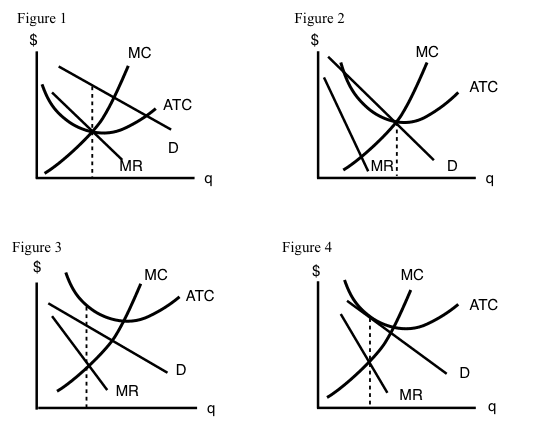
The market structure that results is monopolistic competition. Many firms sell differentiated products, and each firm has some market power because its product isn't perfectly substitutable. This means:
- Each firm faces a downward-sloping demand curve and can set prices above marginal cost.
- Free entry and exit in the long run drives economic profits toward zero. Firms earn just enough to cover costs, including the cost of differentiation.
In the context of trade, this structure produces a clear pattern. When two countries open to trade, consumers in both gain access to more varieties. French consumers can buy German cars alongside French ones, and German consumers get French wines alongside German ones. Firms in each country specialize in particular varieties and export them, generating intra-industry trade. The result is that trade increases product variety for consumers without necessarily eliminating domestic producers, since each firm occupies its own niche.
Policy implications for trade and development
New trade theory provides a rationale for government intervention that traditional free-trade models don't. If economies of scale and first-mover advantages matter, then strategic policy could help a country's firms capture global market share.
Strategic trade policies include:
- Infant industry protection: Temporary tariffs or subsidies shield new domestic industries from foreign competition while they scale up and reduce costs. South Korea's support for its steel and shipbuilding industries in the 1960s–1980s is a frequently cited success case.
- Export promotion: Tax incentives, subsidized credit, or marketing support encourage firms to expand output and reach foreign markets, helping them move down the average cost curve faster.
Drawbacks of strategic trade policy are significant, though:
- Retaliation: If one country subsidizes its aircraft industry, trading partners may respond with their own subsidies or tariffs, potentially triggering trade conflicts that reduce welfare for everyone. The long-running Boeing-Airbus subsidy dispute at the WTO illustrates this.
- Rent-seeking: When governments pick industries to support, firms spend resources lobbying for protection rather than innovating. This misallocates resources and can prop up uncompetitive industries.
- Information problems: Governments must correctly identify which industries will achieve economies of scale and become globally competitive. Getting this wrong means wasting public funds on industries that never become viable.
For developing countries, new trade theory suggests several paths forward:
- Specializing in specific segments of global value chains (Bangladesh in garments, Vietnam in electronics assembly) lets countries exploit scale economies even without building entire industries from scratch.
- Foreign direct investment can transfer technology and management practices, helping domestic firms reach efficient scale more quickly.
- Regional trade agreements like ASEAN or Mercosur give firms in smaller economies access to larger combined markets, making it easier to achieve the production volumes needed for scale economies to kick in.
The core tension in policy is this: new trade theory shows that strategic intervention can work in principle, but the practical risks of government failure, retaliation, and rent-seeking mean it often doesn't work as planned.
See Fiveable more often in Google
Mark Fiveable as a preferred source and Google is more likely to show you our guides in Top Stories, with a "preferred" badge in AI Mode and AI Overviews.