6.2 Marginal productivity theory of income distribution

🧃Intermediate Microeconomic Theory Unit 6 Review
6.2 Marginal productivity theory of income distribution
🧃 Intermediate Microeconomic Theory
Marginal Productivity Theory of Income Distribution
Factor markets determine how income gets divided up in an economy. The marginal productivity theory offers a specific answer to this question: each factor of production (labor, capital, land) gets paid according to its contribution to output. This framework connects firm-level hiring decisions to economy-wide patterns of wages, rent, interest, and profit.

Top images from around the web for Core Principles and Assumptions
Perfect Competition | Boundless Economics View original
Is this image relevant?
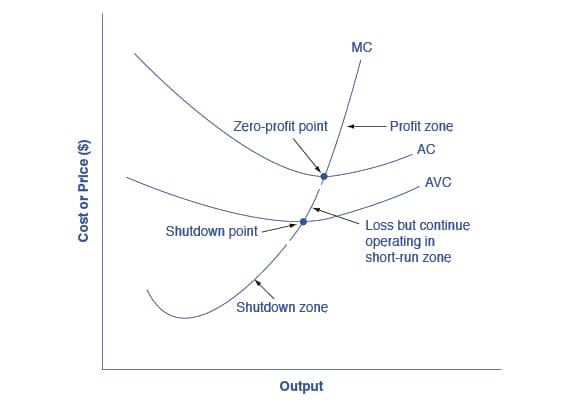
11.2 How Perfectly Competitive Firms Make Output Decisions – Principles of Microeconomics ... View original
Is this image relevant?
Production Decisions in Perfect Competition | Boundless Economics View original
Is this image relevant?
Perfect Competition | Boundless Economics View original
Is this image relevant?
11.2 How Perfectly Competitive Firms Make Output Decisions – Principles of Microeconomics ... View original
Is this image relevant?
Marginal Productivity Theory of Income Distribution
Core Principles and Assumptions
The central claim is straightforward: in a competitive economy, each factor of production receives payment equal to the value of what the last unit of that factor adds to output. A worker's wage, for example, reflects the revenue generated by the last worker hired, not the average across all workers.
For this result to hold, the theory relies on several assumptions:
- Perfectly competitive factor markets: many buyers and sellers of labor, capital, and land, so no single firm or worker can influence the going price
- Perfectly competitive output markets: firms are price-takers in the goods market too
- Profit-maximizing firms: firms hire additional units of a factor until the cost of one more unit exactly equals the revenue it generates
- Diminishing marginal returns: each additional unit of a factor contributes less than the previous one, holding other inputs fixed
Under these conditions, the theory also delivers an important result tied to Euler's theorem: if the production function exhibits constant returns to scale, paying each factor its marginal product exactly exhausts total output. There's nothing left over and no shortfall. This "product exhaustion" result is what makes the theory a complete account of income distribution rather than just a theory of factor pricing.
The theory explains the determination of all four factor payments: wages (labor), rent (land), interest (capital), and profit (entrepreneurship). Income distribution among these groups stems from differences in their relative marginal productivities.
Limitations worth knowing: The perfect competition assumption is a big one. Real-world labor markets feature unions, monopsony employers, minimum wage laws, and information asymmetries. The theory also struggles to account for institutional factors like discrimination or bargaining power that clearly affect pay. And the constant returns to scale requirement is strong: with increasing returns, paying marginal products would exceed total output, and with decreasing returns, there'd be a residual left unexplained. These criticisms don't make the theory useless, but they define its boundaries.
Applications and Implications
- Provides a baseline framework for analyzing why different factors earn what they earn
- Predicts that productivity improvements lead to higher factor returns (e.g., a more skilled workforce should command higher wages)
- Implies that factors with higher marginal productivity receive a larger share of total income
- Helps explain wage differentials across industries and occupations: a software engineer's marginal product in a tech firm differs from a retail clerk's
- Predicts that changes in technology or product demand can shift income distribution by altering which factors are most productive
- Informs policy debates around minimum wage, taxation, and inequality by providing a benchmark of what "market-determined" pay looks like

Factor Demand and Price in Competitive Markets
Marginal Product and Value of Marginal Product
Marginal product (MP) is the additional output produced by employing one more unit of a factor, holding all other inputs constant. If hiring a 10th worker at a factory raises output from 200 to 218 units, that worker's marginal product is 18 units.
To figure out what that extra output is worth to the firm, you calculate the value of marginal product (VMP):
where is the market price of the output. If each unit sells for $5, that 10th worker's VMP is dollars.
Note the distinction: VMP applies when the firm is a price-taker in the output market. If the firm has market power in the goods market, you'd instead use the marginal revenue product (MRP), which is . Since for a firm facing a downward-sloping demand curve, , meaning a monopolist hires fewer units of a factor than a competitive firm would. For this section, we're focusing on the competitive case where and the two concepts coincide.
The profit-maximizing hiring rule follows directly: a firm keeps hiring until VMP equals the factor price. If the wage is $90, hiring that 10th worker just breaks even. If the wage were $70, the firm would want to hire more workers because each one still adds more revenue than cost.
The VMP curve slopes downward because of diminishing marginal returns. As you add more of one factor while holding others fixed, each additional unit contributes less. This downward-sloping VMP curve is the firm's demand curve for that factor in a competitive market.
Factor Demand Curve and Elasticity
The factor demand curve shows how much of a factor a firm (or market) wants to employ at each possible price. It's derived directly from the VMP curve.
To move from the individual firm's demand to the market demand for a factor, you can't simply sum the individual VMP curves horizontally. When all firms expand hiring in response to a lower wage, total industry output rises, which pushes down the output price . That reduction in shifts each firm's VMP curve leftward. The market factor demand curve is therefore steeper (less elastic) than a simple horizontal summation would suggest.
Elasticity of factor demand measures how responsive the quantity demanded of a factor is to changes in its price. The key determinants are sometimes called the Hicks-Marshall rules of derived demand:
- Substitutability of factors: If machinery can easily replace labor, demand for labor is more elastic. A price increase leads firms to substitute away quickly.
- Elasticity of product demand: If consumers are very price-sensitive, a rise in factor costs that raises product prices will sharply reduce output and factor demand.
- Factor's share in total costs: When a factor represents a large share of production costs, a change in its price has a bigger impact on total cost and output decisions.
- Elasticity of supply of other factors: If substitute inputs (like capital) are supplied elastically, firms can switch to them more readily when labor gets expensive, making labor demand more elastic.
Shifts in the factor demand curve occur when something other than the factor's own price changes:
- Technological changes: Automation in manufacturing shifts demand away from routine labor and toward capital
- Changes in complementary factors: More advanced machinery can increase demand for skilled workers who operate it
- Output price changes: If smartphone prices rise due to higher demand, the VMP of workers producing smartphones increases, shifting labor demand rightward

Factor Prices and Income Distribution
Functional Distribution of Income
Factor prices determine the returns flowing to each category of production input:
- Wages for labor
- Rent for land
- Interest for capital
- Profit for entrepreneurship
The functional distribution of income describes how total national income is divided among these four categories. In the U.S., labor's share has historically been around 60-65% of national income, with capital claiming most of the remainder. Recent research has documented a gradual decline in labor's share since roughly 2000, a trend that has generated significant debate about its causes.
Changes in relative factor prices directly affect income distribution. Two important trends illustrate this:
- The shift toward high-skill labor has widened the wage premium for education. Workers with college degrees earn substantially more relative to those without, partly because their marginal product in a knowledge-based economy is higher.
- Rising returns to capital relative to labor have contributed to growing inequality in many advanced economies, as capital ownership is more concentrated than labor income.
Technological Progress and Income Distribution
Technology reshapes income distribution by changing which factors are most productive.
Skill-biased technological change is a particularly important concept. When new technology (like computers) raises the productivity of skilled workers more than unskilled workers, it increases demand for skilled labor and widens the wage gap. A data analyst using modern software can process work that once required a whole team, making their marginal product much higher.
Automation works through a different channel: it can substitute for certain types of labor entirely. Robotics in manufacturing reduces demand for routine manual tasks, pushing down wages for those workers or displacing them. Meanwhile, workers who design, program, or maintain those robots see their demand increase.
The net effect on income distribution depends on which forces dominate and how quickly workers can acquire new skills.
Policy Interventions and Market Forces
Government policies can alter the income distribution that competitive markets would otherwise produce:
- Minimum wage laws set a floor on labor prices, raising pay for low-wage workers but potentially reducing employment if set above the market-clearing wage
- Progressive taxation redistributes income from higher earners to fund public services and transfers
- Education subsidies invest in human capital, raising workers' marginal productivity and future earnings
A technical detail that matters for policy analysis: the elasticity of substitution between factors determines how supply changes affect relative prices. If capital and labor are easily substitutable (high elasticity of substitution), an increase in labor supply has a smaller effect on wages because firms can adjust their input mix. If they're hard to substitute (low elasticity), wages are more sensitive to supply shifts. In a Cobb-Douglas production function, the elasticity of substitution equals 1, and factor shares stay constant regardless of input quantities. Empirically, whether the elasticity is above or below 1 matters a great deal for predicting how capital accumulation or labor force growth will affect the income distribution.
Finally, the personal distribution of income (how income is distributed across households) depends on two things working together:
- The functional distribution (how much goes to labor vs. capital vs. land)
- Patterns of factor ownership: who owns the capital, land, and skills in the economy
This is why two economies with identical functional distributions can have very different levels of inequality. If capital ownership is concentrated among a few households, a rising capital share translates directly into greater personal income inequality. Policies like the Earned Income Tax Credit (which supplements low-wage workers' earnings) and capital gains tax rates (which affect after-tax returns to investment) target different points in this chain.
See Fiveable more often in Google
Mark Fiveable as a preferred source and Google is more likely to show you our guides in Top Stories, with a "preferred" badge in AI Mode and AI Overviews.