6.4 Capital markets and interest rates

🧃Intermediate Microeconomic Theory Unit 6 Review
6.4 Capital markets and interest rates
🧃 Intermediate Microeconomic Theory
Capital markets and resource allocation
Capital markets connect savers (who supply funds) with borrowers (who demand funds), determining how financial resources get distributed across the economy. The central question for microeconomic theory is how the price of capital (the interest rate) gets determined and how it shapes firm and household decisions.

Top images from around the web for Capital market functions and components
Diversification | Boundless Finance View original
Is this image relevant?
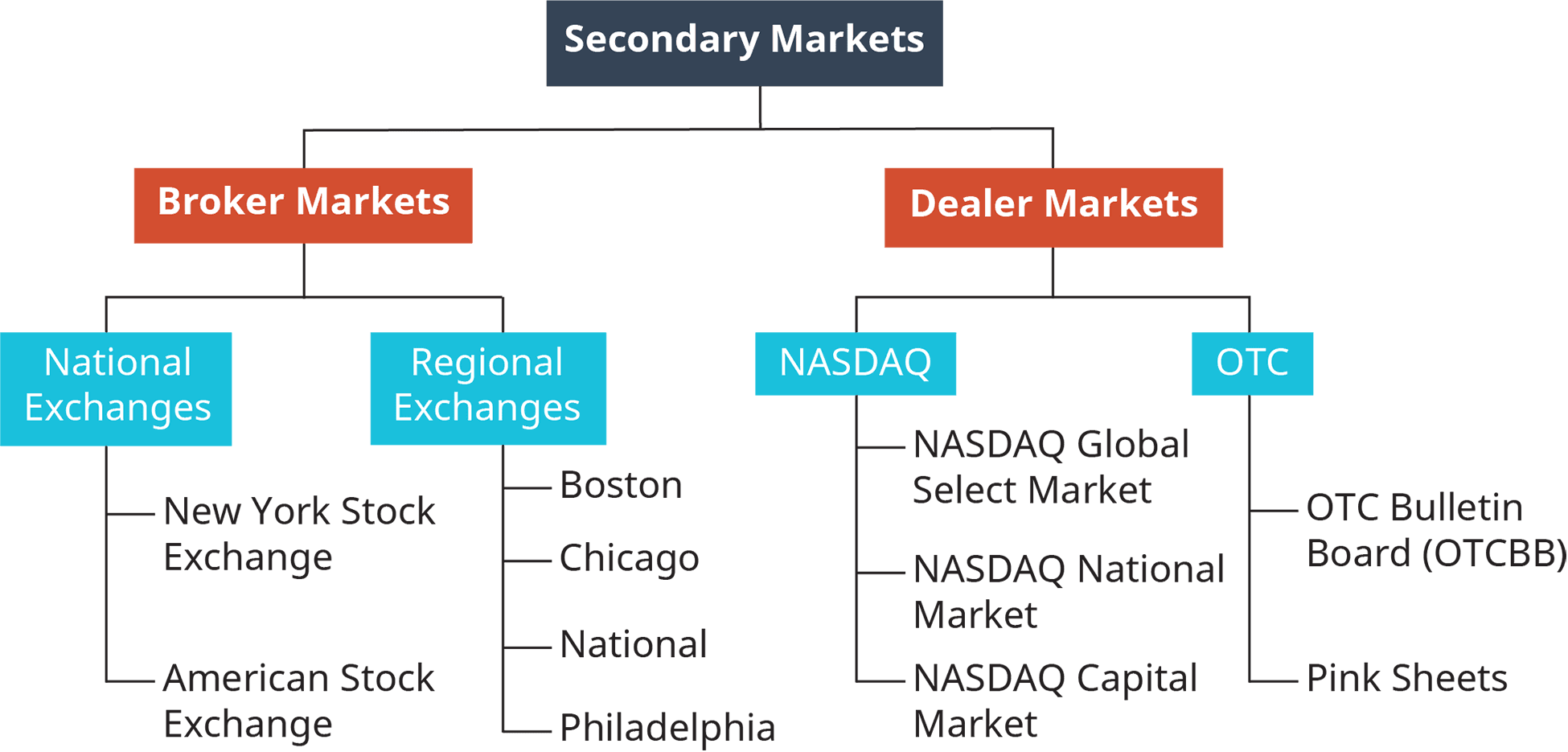
Buying and Selling at Securities Exchanges | OpenStax Intro to Business View original
Is this image relevant?
Principles of Finance/Section 1/Chapter 7/Modern Portfolio Theory - Wikibooks, open books for an ... View original
Is this image relevant?
Diversification | Boundless Finance View original
Is this image relevant?
Buying and Selling at Securities Exchanges | OpenStax Intro to Business View original
Is this image relevant?
Capital market functions and components
Capital markets are venues where long-term financial instruments like stocks and bonds are traded. Their core economic function is channeling savings into productive investment.
- Stock exchanges and bond markets allow firms to raise funds for large-scale projects (factory expansion, infrastructure) while giving savers a return on their wealth
- Liquidity provision matters because investors are more willing to supply funds when they can sell their position later. This willingness lowers the cost of capital for borrowers.
- Portfolio diversification lets investors spread risk across assets (stocks, bonds, real estate), which reduces the risk premium they demand and lowers borrowing costs economy-wide
- Price discovery aggregates information from many buyers and sellers to determine the fair value of securities, guiding capital toward its most productive uses
Economic impact of capital markets
Well-functioning capital markets improve allocative efficiency. When price signals in these markets are accurate, capital flows toward projects with the highest risk-adjusted returns.
- Risk management instruments like options and futures let firms hedge against price fluctuations, making long-term investment less risky
- Corporate governance improves because shareholders can monitor firm performance and "vote with their feet" by selling shares of poorly managed companies
- Innovation funding comes through venture capital and IPOs, giving startups access to capital they couldn't get from traditional bank lending alone
Supply and demand for loanable funds
The loanable funds model is the workhorse framework for understanding how interest rates are determined. Think of it as a standard supply-and-demand model where the "good" being traded is borrowable money and the "price" is the real interest rate.
Sources and drivers of loanable funds
Supply of loanable funds comes from agents who save rather than consume:
- Household savings (the largest source in most economies)
- Corporate retained earnings (profits not paid out as dividends)
- Foreign capital inflows (foreign investors buying domestic assets)
Supply increases when income rises, when tax policy favors saving (e.g., tax-advantaged retirement accounts), or when people expect worse future economic conditions and save as a precaution.
Demand for loanable funds comes from agents who want to spend more than their current income:
- Firms financing capital investment (new equipment, R&D)
- Households borrowing for major purchases (homes, education)
- Governments running budget deficits
Demand increases when expected returns on investment rise, when business confidence improves, or when government borrowing expands.

Interest rate determination
The equilibrium interest rate is the rate at which the quantity of funds supplied equals the quantity demanded.
- The supply curve slopes upward: higher interest rates reward saving more, so the quantity of funds supplied increases
- The demand curve slopes downward: higher interest rates raise the cost of borrowing, so the quantity of funds demanded decreases
- At the intersection, the market clears. No excess supply of savings and no excess demand for loans.
When something shifts either curve, the equilibrium adjusts:
Example: Suppose a tax cut increases the government's budget deficit. The government must borrow more, shifting the demand curve for loanable funds to the right. At the original interest rate there's now excess demand, so the interest rate rises until a new equilibrium is reached. This is the mechanism behind crowding out: increased government borrowing pushes up interest rates and reduces private investment.
Note the distinction between movements along the curves (caused by a change in the interest rate itself) and shifts of the curves (caused by changes in underlying determinants like income, expectations, or policy). This is the same logic you've used in product markets, and it applies identically here.
Interest rates, investment, and growth
Interest rate effects on investment
The interest rate is simultaneously the cost of borrowing and the opportunity cost of using your own funds, since you could earn that rate by lending them out instead. This is why the interest rate matters for investment decisions even when a firm isn't borrowing.
A firm should invest in a project whenever the project's expected rate of return exceeds the interest rate. This gives us the investment demand curve: an inverse relationship between the interest rate and the quantity of planned investment.
- Lower rates reduce the cost of capital, making more projects profitable. Capital-intensive, long-lived industries like construction and manufacturing are especially sensitive to rate changes.
- Higher rates raise the hurdle that a project's return must clear, so marginal projects get cut first.
The connection to present value makes this precise. The interest rate serves as the discount rate for future cash flows. When rates fall, the present value of a project's future returns rises, making the project more attractive.
The present value of a future payment received in years at interest rate is . A lower means a higher , which is why investment and interest rates move in opposite directions.
To see this concretely: a machine that pays in 5 years has a present value of at a 3% rate, but only at an 8% rate. That difference can determine whether the investment is worth making.
Investment and economic growth relationship
Higher investment today builds the capital stock, which raises future output. This is the channel through which capital markets affect long-run growth.
- Physical capital accumulation (machines, buildings) raises labor productivity, meaning each worker produces more output
- Human capital investment (education, job training) works similarly by making workers more skilled
- R&D investment drives technological progress, which economists consider the main engine of sustained long-run growth
- The multiplier effect means that an initial increase in investment spending generates additional rounds of income and spending, amplifying the short-run impact on GDP

Long-term growth considerations
- The natural (or neutral) rate of interest is the rate consistent with full employment and stable inflation. It represents the rate at which desired saving equals desired investment when the economy is at potential output.
- Sustainable growth requires a balance between consumption and investment. Too little investment means slow capital accumulation; too much investment relative to saving can lead to overheating and inflation.
- Demographic shifts matter: an aging population tends to save less (dissaving in retirement), reducing the supply of loanable funds and potentially raising interest rates, all else equal.
Government policies and capital markets
Monetary policy impacts
Central banks are the most direct influence on short-term interest rates. Their tools work by changing the supply of money and reserves in the banking system.
Key monetary policy tools:
- Open market operations: Buying government bonds injects reserves into the banking system, pushing short-term rates down. Selling bonds does the opposite.
- Policy rate adjustments: The central bank sets a target for the overnight interbank lending rate (the federal funds rate in the U.S.), which anchors other short-term rates.
- Reserve requirements: Raising required reserves reduces the funds banks can lend, tightening credit; lowering them does the reverse.
Expansionary policy (lowering rates) aims to stimulate borrowing and investment. Contractionary policy (raising rates) aims to slow spending and reduce inflation.
Two additional tools became prominent after the 2008 financial crisis:
- Quantitative easing (QE): Large-scale purchases of long-term bonds to push down long-term interest rates when short-term rates are already near zero (the "zero lower bound" problem)
- Forward guidance: Public communication about the likely future path of policy rates, which shapes market expectations and influences long-term rates today
Fiscal policy effects
Government taxing and spending decisions affect capital markets primarily through the loanable funds market.
- Budget deficits mean the government is a net borrower, increasing demand for loanable funds. This pushes interest rates up and can crowd out private investment.
- Tax policy shapes saving and investment incentives. For instance, lower capital gains taxes increase the after-tax return on investment, shifting the investment demand curve to the right.
- Government debt levels matter for risk premiums. If investors worry about a government's ability to repay, they demand higher yields on government bonds, which raises interest rates across the economy.
The crowding-out effect deserves emphasis because it connects fiscal policy back to the loanable funds model. A deficit-financed spending increase shifts demand for funds rightward, raising , which reduces private investment. The size of this effect depends on how elastic the supply of loanable funds is. If supply is relatively elastic (flat), the interest rate increase is small and crowding out is limited. If supply is inelastic (steep), the rate increase is large and crowding out is severe.
Regulatory and intervention measures
- Capital requirements force banks to hold a minimum ratio of equity to assets, which limits how much they can lend but makes the financial system more stable
- Government interventions like bailouts and loan guarantees reduce perceived risk for certain borrowers, lowering the interest rates they face but potentially creating moral hazard (the tendency to take on excessive risk when you're insulated from the consequences)
- Financial regulations (disclosure requirements, insider trading laws) aim to improve the quality of information in markets, making price discovery more accurate
- Macroprudential policies target systemic risk in the financial system as a whole, rather than individual institutions, to prevent cascading failures like those seen in the 2008 crisis
The effectiveness of all these policies depends on the current state of the economy, global financial conditions, and how market participants form expectations about the future.
See Fiveable more often in Google
Mark Fiveable as a preferred source and Google is more likely to show you our guides in Top Stories, with a "preferred" badge in AI Mode and AI Overviews.