17.1 China's rapid economic growth and development

🏓History of Modern China Unit 17 Review
17.1 China's rapid economic growth and development
🏓 History of Modern China
Key Factors and Policies in China's Rapid Economic Growth
China's economic transformation since the late 1970s stands as one of the most dramatic in modern history. Deng Xiaoping's reforms, a massive labor supply, heavy infrastructure investment, and an export-driven strategy combined to produce decades of near-double-digit GDP growth, lifting hundreds of millions out of poverty. That growth also created serious problems: widening inequality, environmental damage, and new strains on social welfare systems. At the same time, China's rising economic power reshaped its role on the world stage, strengthening the Communist Party's hold at home while generating friction with other nations.

Top images from around the web for Factors in China's economic growth
Deng Xiaoping - Wikipedia View original
Is this image relevant?
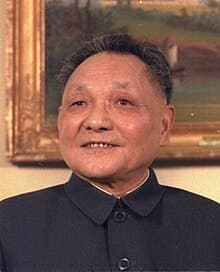
Deng Xiaoping - Wikipedia View original
Is this image relevant?
Economia della Repubblica Popolare Cinese - Wikipedia View original
Is this image relevant?
Deng Xiaoping - Wikipedia View original
Is this image relevant?
Deng Xiaoping - Wikipedia View original
Is this image relevant?
Factors in China's Economic Growth
Deng Xiaoping's reforms and "Opening Up" policy. Starting in 1978, Deng shifted China away from rigid central planning toward market-oriented decision-making. The government encouraged foreign investment and international trade by creating Special Economic Zones (SEZs) in coastal cities like Shenzhen and Zhuhai, where foreign firms received tax breaks and streamlined regulations. These zones served as laboratories for capitalist practices inside a nominally socialist system.
Abundant and low-cost labor. China's enormous population, combined with rural-to-urban migration, supplied a seemingly endless workforce for manufacturing and construction. The hukou system (household registration) tied social benefits to a person's place of origin, which kept migrant workers' wages low since they had limited bargaining power in the cities. Competitive labor costs attracted foreign companies looking to offshore production, making China the world's factory floor.
Massive infrastructure investment. The government poured resources into transportation (highways, high-speed rail), energy (power plants, electrical grids), and communications (telecommunications, internet). A high domestic savings rate among households and state-owned enterprises provided the capital for building factories, machinery, and productive assets at a pace few countries have matched.
Export-oriented growth strategy. China leveraged its comparative advantage in labor-intensive manufacturing (textiles, electronics, consumer goods) to become a global export powerhouse. SEZs and coastal cities offered tax incentives and favorable regulations specifically designed to attract foreign investment and boost exports.

Role of Economic Reforms
China's transition from central planning to a market-based economy was gradual and experimental, which distinguished it sharply from the "shock therapy" approach the former Soviet Union attempted in the early 1990s.
- Dual-track system: State-owned enterprises continued operating under the plan while private enterprises responded to market forces. This allowed the government to test reforms without dismantling the entire existing system overnight.
- Agricultural reforms and the Household Responsibility System: Decollectivization replaced the commune system with individual household farming. Families could now sell surplus crops on the open market, which boosted agricultural productivity dramatically and freed up labor to move into the industrial sector.
- State-owned enterprise (SOE) reforms: Managers at SOEs gained more autonomy and performance-based incentives to improve efficiency. Inefficient SOEs were closed, which caused painful layoffs but also accelerated the growth of private-sector employment.
- Trade liberalization and WTO accession: China steadily lowered tariffs and eased import restrictions through the 1980s and 1990s. Joining the World Trade Organization in 2001 was a turning point, further opening the economy to international competition and locking in many of these reforms. The government attracted foreign direct investment (FDI) through tax exemptions, purpose-built industrial parks, and favorable rules on profit repatriation.

Challenges and Consequences of China's Economic Growth
Challenges of Rapid Development
Growing income inequality and regional disparities. The benefits of growth were distributed unevenly. Coastal and urban areas surged ahead while rural and inland regions lagged behind, creating a persistent eastern-western development gap. The urban-rural income ratio widened significantly, fueling social tensions and calls for redistributive policies.
Environmental degradation. Rapid industrialization, heavily reliant on coal, produced severe air pollution (smog, dangerous particulate matter levels), water pollution (industrial waste, agricultural runoff), and soil contamination. Deforestation, desertification from overgrazing, and biodiversity loss from habitat destruction became serious ecological threats. By the 2000s, China was home to some of the most polluted cities on Earth.
Social welfare and healthcare gaps. Migrant workers often lacked access to portable benefits like healthcare and pensions because their hukou was registered in their home province, not the city where they actually lived. Rural residents faced lower-quality medical facilities. Meanwhile, the demographic effects of the one-child policy (introduced in 1979) began straining pension and healthcare systems as the ratio of working-age adults to retirees declined.
Urbanization and social dislocation. Cities like Beijing and Shanghai experienced overcrowding, housing shortages, and rising costs of living. In rural areas, land expropriation for development projects displaced communities, and traditional social structures like extended family networks and village support systems eroded.
Impact on Political Influence
Domestic legitimacy of the CCP. Rising living standards gave the Chinese Communist Party a powerful source of legitimacy: the promise of prosperity. But that same growth generated challenges to CCP authority, including public anger over corruption (prompting large-scale anti-corruption campaigns), a rising Gini coefficient reflecting inequality, and periodic social unrest through protests and strikes.
Growing economic interdependence. China became the world's largest exporter and second-largest importer, as well as a major source of outward foreign direct investment. This web of economic ties gave China significant leverage in trade negotiations and diplomatic relations across Asia, Africa, and Latin America.
Assertive foreign policy. Economic power emboldened more assertive territorial claims, particularly in the South China Sea (Spratly Islands) and the East China Sea (Diaoyu/Senkaku Islands). These disputes created tensions with Japan, Vietnam, the Philippines, and the United States over freedom of navigation and regional influence.
Expanding soft power and global reach. China's economic success enhanced its cultural and diplomatic influence through vehicles like Confucius Institutes, UN peacekeeping contributions, and development aid. The Belt and Road Initiative (launched in 2013), a massive infrastructure investment program spanning dozens of countries, and the Asian Infrastructure Investment Bank extended China's economic statecraft and global presence well beyond its borders.
See Fiveable more often in Google
Mark Fiveable as a preferred source and Google is more likely to show you our guides in Top Stories, with a "preferred" badge in AI Mode and AI Overviews.