9.2 Quantifier Scope and Binding

👁️🗨️Formal Logic I Unit 9 Review
9.2 Quantifier Scope and Binding
👁️🗨️ Formal Logic I
Quantifier scope and binding are crucial concepts in formal logic. They determine how variables are affected by quantifiers and how formulas are interpreted. Understanding these ideas helps us grasp the meaning of complex logical statements and avoid ambiguity.
Nested quantifiers and their order add another layer of complexity. They allow us to express intricate relationships between variables, but changing their order can drastically alter a formula's meaning. Recognizing these nuances is key to mastering quantifier logic.
Quantifier Scope and Binding

Top images from around the web for Understanding Scope and Binding
Oikonomou | Quantifier scope and information structure in Greek | Glossa: a journal of general ... View original
Is this image relevant?
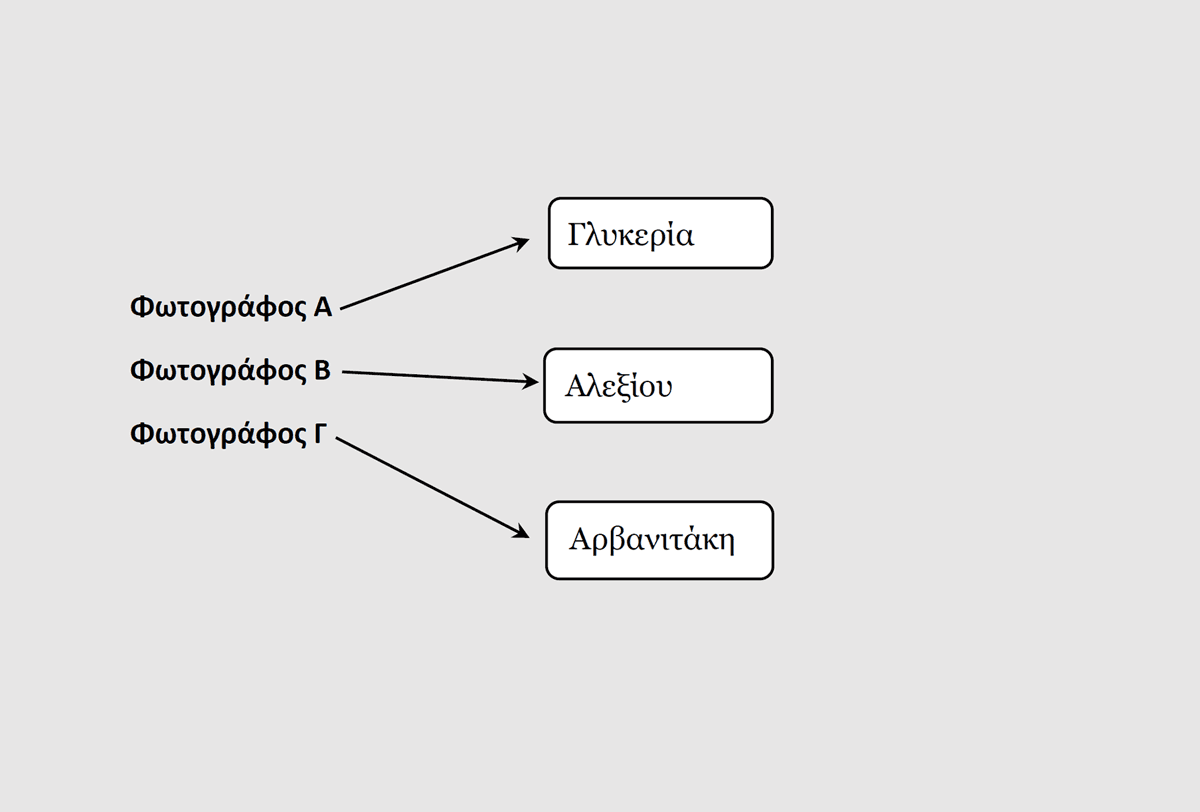
Oikonomou | Quantifier scope and information structure in Greek | Glossa: a journal of general ... View original
Is this image relevant?
Oikonomou | Quantifier scope and information structure in Greek | Glossa: a journal of general ... View original
Is this image relevant?
Oikonomou | Quantifier scope and information structure in Greek | Glossa: a journal of general ... View original
Is this image relevant?
Oikonomou | Quantifier scope and information structure in Greek | Glossa: a journal of general ... View original
Is this image relevant?
Understanding Scope and Binding
- Scope refers to the part of a formula that is affected by a quantifier
- Determines which variables are bound by the quantifier
- Typically extends from the quantifier to the end of the formula or to a matching closing parenthesis
- Binding occurs when a quantifier is applied to a variable, connecting the quantifier to the occurrences of that variable within its scope
- Binds the variable to the quantifier
- Allows the quantifier to govern the interpretation of the variable
Bound and Free Occurrences
- Bound occurrence of a variable is an occurrence that falls within the scope of a quantifier for that variable
- Governed by the quantifier
- Interpretation depends on the quantifier (, the in and are bound occurrences)
- Free occurrence of a variable is an occurrence that does not fall within the scope of a quantifier for that variable
- Not governed by any quantifier
- Interpretation is not determined by a quantifier (, the in is a free occurrence)
- A formula is considered a sentence if it has no free occurrences of variables
- All variables are bound by quantifiers
- Can be assigned a truth value
Nested Quantifiers and Order
Nesting Quantifiers
- Nested quantifiers occur when one quantifier appears within the scope of another quantifier
- Creates a hierarchy of quantification
- Inner quantifier's scope is contained within the outer quantifier's scope ()
- Nesting allows for expressing complex logical relationships between variables
- Specifies the dependence or independence of variables
- Enables reasoning about multiple entities and their properties
Quantifier Order and Precedence
- Order of quantifiers in a nested structure is crucial for determining the meaning of the formula
- Changing the order can significantly alter the logical interpretation
- Consider vs.
- In the first case, for each , there exists a such that holds
- In the second case, there exists a single such that for all , holds
- Quantifier precedence follows the standard convention: (universal quantifier) binds tighter than (existential quantifier)
- In the absence of parentheses, takes precedence over
- is equivalent to
Ambiguity in Quantification
Sources of Ambiguity
- Ambiguity in quantification arises when the intended scope or binding of quantifiers is unclear
- Can lead to multiple interpretations of the same formula
- Often occurs when parentheses are omitted or misplaced
- Ambiguous statements can have different meanings depending on how the quantifiers are interpreted
- Example: "Every student likes a professor" can mean either:
- Example: "Every student likes a professor" can mean either:
Resolving Ambiguity
- To resolve ambiguity, it is essential to use parentheses to clearly specify the scope of quantifiers
- Parentheses determine the grouping and binding of variables
- Helps eliminate multiple interpretations and ensures the intended meaning is conveyed
- When translating natural language statements into logical formulas, pay attention to the intended scope and use parentheses accordingly
- Consider the context and the desired logical relationship between the variables
- Break down the statement into smaller components and identify the appropriate quantifier placement
- If a statement remains ambiguous even with parentheses, it may be necessary to rephrase or clarify the statement in natural language before translating it into a logical formula
See Fiveable more often in Google
Mark Fiveable as a preferred source and Google is more likely to show you our guides in Top Stories, with a "preferred" badge in AI Mode and AI Overviews.