2.2 Logical Connectives and Their Symbols

👁️🗨️Formal Logic I Unit 2 Review
2.2 Logical Connectives and Their Symbols
👁️🗨️ Formal Logic I
Logical Connectives
Negation and Conjunction
Logical connectives let you build complex statements out of simpler ones. Each connective has a precise symbol and a specific rule for how it affects truth values. The two simplest to start with are negation and conjunction.
Negation (symbol: or ) flips the truth value of a single proposition. If is true, then is false, and vice versa. It's the only connective that operates on just one proposition rather than combining two.
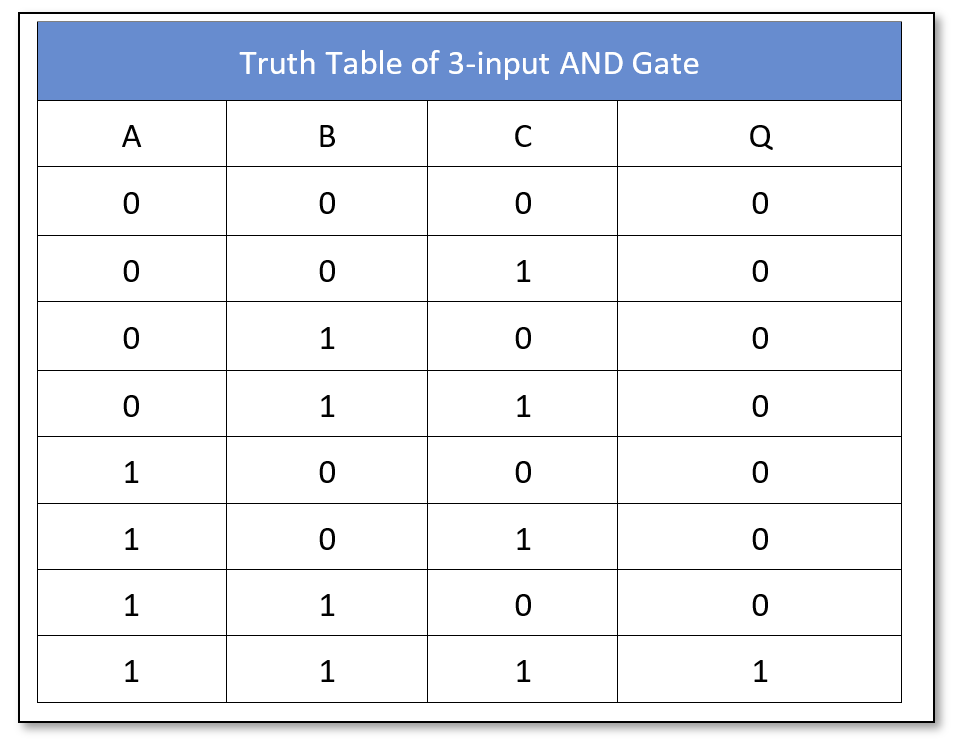
Conjunction (symbol: or ) combines two propositions with "and." The conjunction is true only when both and are true. If either one is false, the whole conjunction is false.
Think of conjunction as a strict gatekeeper: both parts must hold for the compound statement to be true.

Disjunction, Conditional, and Biconditional
Disjunction (symbol: ) combines two propositions with "or." The disjunction is true when at least one of the propositions is true. This is inclusive or, meaning it's also true when both are true. The only way is false is if both and are false.
Conditional (symbol: or ) represents an "if...then" statement. is read as "if , then ." The proposition on the left is called the antecedent and the one on the right is the consequent.
The tricky part: a conditional is false only when the antecedent is true and the consequent is false. In every other case, it's true. That means if is false, is true regardless of what is. This surprises a lot of students, but it follows directly from the truth-functional definition.
Biconditional (symbol: or ) represents "if and only if." is true when both propositions share the same truth value: both true or both false. If they differ, the biconditional is false. You can think of it as requiring the conditional to work in both directions.
Truth and Logical Connectives
Truth-Functional Connectives
A truth-functional connective is a logical operator whose output truth value is determined solely by the truth values of its component propositions. Nothing else matters: not the meaning of the propositions, not the context, just the truth values going in.
All five connectives covered above (negation, conjunction, disjunction, conditional, biconditional) are truth-functional. For example, the truth value of depends only on whether is true and whether is true. Swap in completely different propositions with the same truth values, and you get the same result.
This property is what makes truth tables possible: since truth values are the only input, you can systematically list every combination and compute the output.
Truth Tables
A truth table displays every possible combination of truth values for a set of propositions alongside the resulting truth value of a compound proposition. It's the standard tool for verifying how a connective behaves.
How to build one:
- Identify the number of distinct propositional variables (call it ).
- The table will have rows, one for each possible combination of T and F.
- Create a column for each propositional variable and a column for the compound proposition.
- Fill in every combination of truth values for the variables, then compute the compound proposition's value row by row using the connective's rule.
For example, the truth table for has rows:
| T | T | T |
| T | F | F |
| F | T | F |
| F | F | F |
Only the first row produces T, confirming that conjunction requires both components to be true. As formulas get more complex (say, three variables), the table grows to rows, but the process stays the same: list all combinations, then evaluate step by step.
See Fiveable more often in Google
Mark Fiveable as a preferred source and Google is more likely to show you our guides in Top Stories, with a "preferred" badge in AI Mode and AI Overviews.