9.1 Postcolonial theory and its application to film

📺Film and Media Theory Unit 9 Review
9.1 Postcolonial theory and its application to film
📺 Film and Media Theory
Postcolonial theory in film studies examines the cultural, political, and economic legacies of colonialism in cinema. It explores key concepts like hybridity, diaspora, and Orientalism, analyzing how films reflect, reinforce, or challenge colonial ideologies and represent postcolonial experiences.
This approach provides a framework for uncovering power relations and forms of resistance in postcolonial contexts depicted on screen. It helps reveal how films perpetuate or challenge stereotypes, highlighting the complexity of postcolonial subjects and the unequal dynamics in the global film industry.
Postcolonial Theory in Film Studies

Top images from around the web for Key Concepts and Their Application to Film
Oppenheimer (film) - Wikipedia View original
Is this image relevant?
Viaje al Parnaso: Orientalismos View original
Is this image relevant?
Postcolonial Modernism: Art and Decolonization in Twentieth-Century Nigeria View original
Is this image relevant?
Oppenheimer (film) - Wikipedia View original
Is this image relevant?
Viaje al Parnaso: Orientalismos View original
Is this image relevant?
Key Concepts and Their Application to Film
Postcolonial theory examines the cultural, political, and economic legacies of colonialism and imperialism, with particular attention to the global South and formerly colonized nations. Several core concepts form the foundation of this theoretical lens:
- Hybridity refers to the mixing of cultural elements from both colonizer and colonized, producing new, complex identities and cultural forms. Think of creole languages, which blend European and indigenous vocabularies, or fusion cuisines that combine cooking traditions from both sides of the colonial encounter.
- Diaspora describes the dispersal and displacement of people from their ancestral homelands, often driven by colonialism, and the transnational communities that form as a result. The African diaspora and the South Asian diaspora are two major examples that have profoundly shaped global cinema.
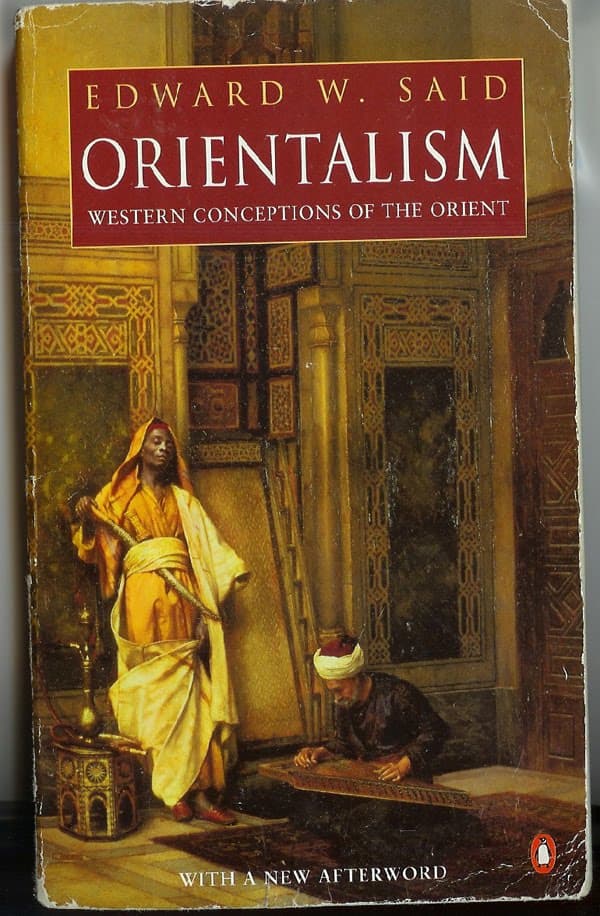
- Orientalism, a term developed by Edward Said, refers to the Western construction of the "Orient" as exotic, inferior, and unchanging. This framework served to justify colonial domination and continues to shape how Hollywood depicts the Middle East, South Asia, and East Asia.
- The subaltern, a concept associated with Gayatri Spivak, refers to marginalized and oppressed groups whose voices are silenced or excluded from dominant discourses. Indigenous peoples and women in colonial societies are frequently cited examples.
In film studies, postcolonial theory analyzes how cinema reflects, reinforces, or challenges these colonial ideologies and how it represents postcolonial subjects and experiences.
The Use of Postcolonial Theory in Film Analysis
Postcolonial theory gives you a framework for examining power relations, cultural exchanges, and forms of resistance as they appear on screen. It helps uncover the ways films perpetuate or challenge colonial ideologies and stereotypes, even when those ideologies operate subtly through casting, framing, or narrative structure.
This approach also highlights the agency and complexity of postcolonial subjects, pushing past simplistic colonizer/colonized binaries. A postcolonial reading recognizes that identities in formerly colonized societies are layered, contradictory, and constantly negotiated.
Beyond individual films, postcolonial theory enables critical analysis of how films circulate globally. The international film industry is shaped by deeply unequal power dynamics: Hollywood and European cinema dominate distribution networks, festival circuits, and critical discourse, which affects which stories get told and which audiences get to see them.
Colonialism's Impact on Cinema

Colonial Representations in Film
Colonialism shaped cinema from its earliest days, influencing both who made films and how colonized peoples appeared on screen. Colonial-era cinema frequently depicted colonized peoples as primitive, exotic, or inferior, while glorifying the "civilizing mission" of European powers. The Tarzan franchise and African safari films are classic examples: they presented Africa as a wild, empty landscape in need of white intervention, erasing the complexity of African societies.
These stereotypical representations weren't just entertainment. They actively reinforced colonial ideologies and maintained the power hierarchy between colonizers and colonized, making domination seem natural or even benevolent.
Postcolonial Responses and Resistance
Postcolonial filmmakers have worked to challenge and subvert these representations by reclaiming agency and presenting more complex portrayals of postcolonial identities. Cinema became a tool for cultural resistance, with filmmakers asserting their own stories against the weight of colonial narratives. The Third Cinema movement in Latin America and the emergence of African cinema in the 1960s are two landmark examples of this resistance.
Entire postcolonial film industries have grown as a response to the imbalance in the global film market. Nollywood in Nigeria (now one of the world's largest film industries by output) and Bollywood in India produce films that assert cultural specificity and resist the homogenizing pressures of global capitalism. These industries don't just imitate Western models; they develop their own production methods, genres, and audience relationships.
Challenging Western Narratives in Postcolonial Film

Alternative Narrative Structures and Stylistic Techniques
Postcolonial films often reject the conventions of Western cinema at a formal level, not just in their content. You'll encounter non-linear storytelling, fragmentation, and hybrid forms that reflect the complex, often fractured nature of postcolonial experience. Ousmane Sembène's Xala (1975), for instance, blends satirical realism with allegory to critique neocolonial corruption in Senegal. The film adaptation of Salman Rushdie's Midnight's Children uses a sprawling, non-linear structure to mirror the chaotic birth of postcolonial India.
Many postcolonial films also incorporate indigenous cultural forms like oral storytelling traditions, music, and dance. Satyajit Ray's Apu Trilogy (1955–1959) drew on Bengali literary and cultural traditions to create a cinematic language distinct from Hollywood. Atanarjuat: The Fast Runner (2001), the first feature film written, directed, and acted entirely in Inuktitut, grounds its narrative in Inuit oral tradition, offering a radically different relationship between story, time, and landscape.
Foregrounding Marginalized Voices and Questioning Dominant Narratives
Postcolonial films frequently center the voices and experiences of groups excluded from mainstream cinema: women, the poor, ethnic minorities, and other marginalized communities. Mira Nair's Salaam Bombay! (1988) follows street children in Mumbai, while Deepa Mehta's Fire (1996) explores a lesbian relationship in a conservative Indian household. Both films bring experiences to the screen that dominant cinema typically ignores.
By presenting multiple, contradictory perspectives and questioning the notion of objective truth, these films challenge the authority of Western narratives and ways of knowing. Some postcolonial filmmakers engage in what's often called "writing back" to the colonial canon, appropriating and subverting iconic images, tropes, and genres from Western cinema. Guillermo del Toro's Pan's Labyrinth (2006) reimagines the fairy tale genre through the lens of Spanish fascism and colonial violence. It's worth noting, though, that not all scholars classify every "writing back" film as strictly postcolonial; del Toro's work and Tarantino's Django Unchained (2012) sit at the edges of the category, and your course may draw the boundaries differently.
Film and Postcolonial Identity
Film as a Space for Articulating Postcolonial Experiences
Film plays a significant role in the formation and negotiation of postcolonial identities. It provides a space where diverse, often conflicting experiences and perspectives can be articulated and made visible. Postcolonial films can serve as cultural resistance by challenging dominant stereotypes and asserting the agency and humanity of their subjects.
These films can also facilitate cross-cultural dialogue by exposing audiences to different ways of life. When a film from Senegal or Iran screens at an international festival, it creates the possibility of empathy and understanding across borders, though this process is never straightforward.
The Complexities of Representing Postcolonial Identities
Postcolonial films are not immune to the forces of commercialization and exoticism. A film may set out to challenge stereotypes but end up reinforcing them if it caters to Western audiences' expectations of the "exotic." This tension is a recurring concern in postcolonial film criticism.
The reception and interpretation of these films also shifts depending on context. A film about partition might resonate very differently with audiences in India, Pakistan, and the United Kingdom. Cultural, political, and economic contexts shape what viewers bring to the screen and what they take away.
Diasporic filmmakers and transnational co-productions add further complexity. A filmmaker born in one country, educated in another, and funded by a third occupies a hybrid position that complicates simple categories of national cinema. Postcolonial cinema ultimately serves as a vital platform for expressing and exploring postcolonial identities, but it also reveals the contradictions inherent in that process: the pull between local specificity and global marketability, between resistance and assimilation, between reclaiming a past and imagining a future.
See Fiveable more often in Google
Mark Fiveable as a preferred source and Google is more likely to show you our guides in Top Stories, with a "preferred" badge in AI Mode and AI Overviews.