5.2 Major Crusades and Their Outcomes

🏰European History – 1000 to 1500 Unit 5 Review
5.2 Major Crusades and Their Outcomes
🏰 European History – 1000 to 1500
The Crusades were a series of religious wars spanning nearly two centuries, launched by Western European Christians to capture and hold the Holy Land. Understanding the major Crusades and their outcomes reveals how these campaigns reshaped political boundaries, strained relations between Christian and Muslim worlds, and even fractured Western and Eastern Christianity from within.
Major Crusades and their Chronology

Top images from around the web for The First Crusade (1096-1099)
Jeruzalemsko Kraljevstvo – Wikipedija / Википедија View original
Is this image relevant?
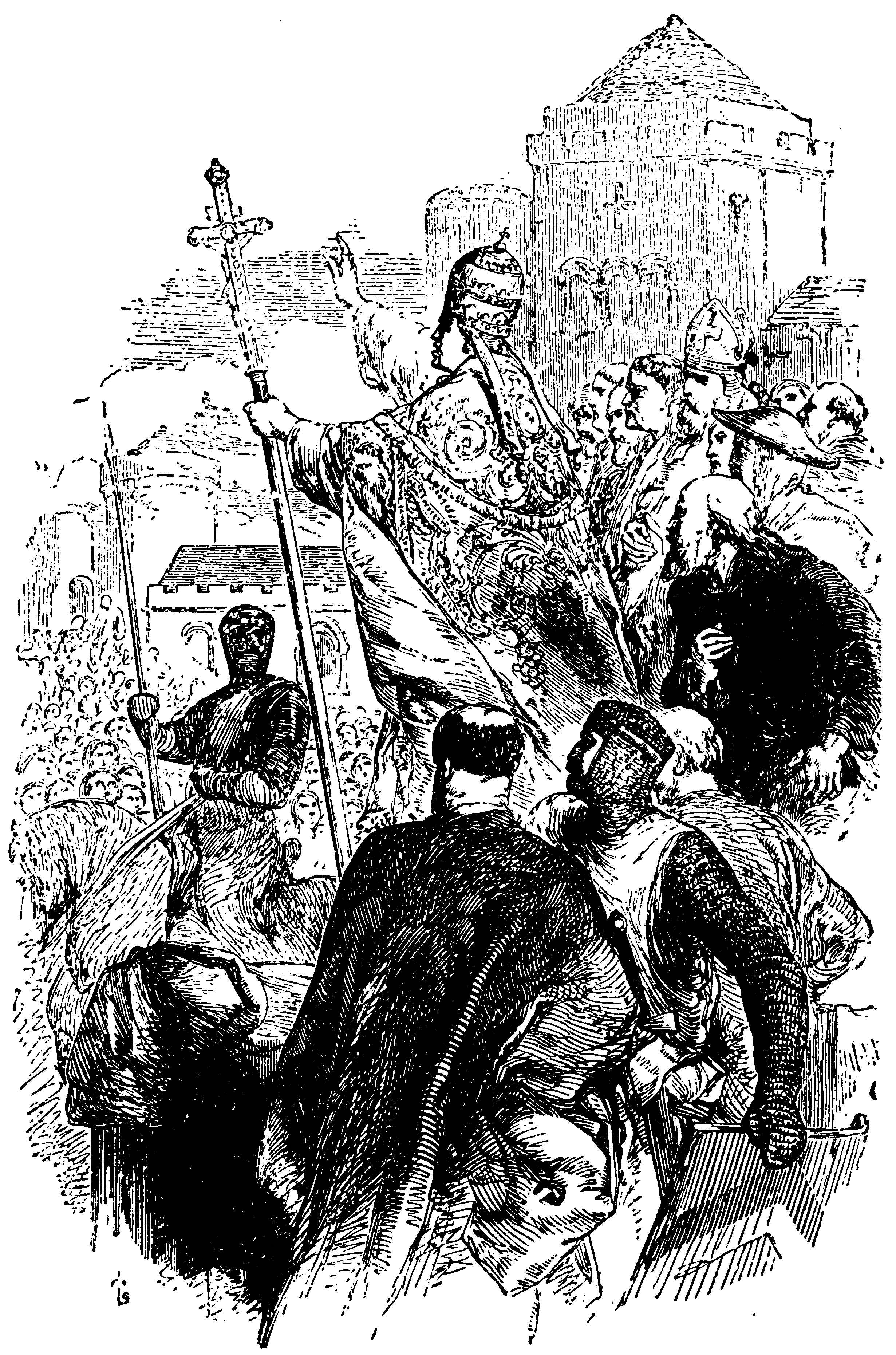
File:Pope Urban II Preaching the First Crusade.png View original
Is this image relevant?
Jeruzalemsko Kraljevstvo – Wikipedija / Википедија View original
Is this image relevant?
File:Pope Urban II Preaching the First Crusade.png View original
Is this image relevant?
The First Crusade (1096-1099)
Pope Urban II called for this Crusade in 1095 at the Council of Clermont, urging Christian knights to recapture Jerusalem and the Holy Land from Muslim (Seljuk Turk) control. It was the most militarily successful Crusade, and the only one to achieve its primary objective.
The Crusaders fought through a series of major engagements on their way to Jerusalem:
- Siege of Nicaea (1097) — Crusaders besieged the Seljuk capital in Anatolia, which surrendered to the Byzantine emperor.
- Battle of Dorylaeum (1097) — A decisive open-field victory over Seljuk forces that opened the road through Anatolia.
- Siege of Antioch (1097-1098) — A grueling eight-month siege; the Crusaders nearly starved before capturing the city.
- Siege and capture of Jerusalem (1099) — The Crusaders stormed the city after a five-week siege, followed by a notorious massacre of the inhabitants.
After taking Jerusalem, the Crusaders established four Crusader States: the Kingdom of Jerusalem, the County of Tripoli, the Principality of Antioch, and the County of Edessa. These states served as Western Christian footholds in the region for nearly two centuries.
Later Crusades (1147-1270)
The Second Crusade (1147-1149) was triggered by the fall of the County of Edessa to the Muslim commander Zengi in 1144. Led by King Louis VII of France and Emperor Conrad III of Germany, it aimed to retake Edessa but was largely unsuccessful. A poorly coordinated siege of Damascus in 1148 ended in humiliating failure, and the Crusaders gained nothing of significance.
The Third Crusade (1189-1192) was launched in response to Saladin's recapture of Jerusalem in 1187 after his decisive victory at the Battle of Hattin. Three major European monarchs participated: Emperor Frederick Barbarossa (who drowned en route), King Philip II of France, and King Richard I of England (the Lionheart). Richard won key victories, most notably at the Battle of Arsuf (1191), but ultimately could not retake Jerusalem. The Crusade ended with a negotiated truce that granted Christian pilgrims access to the holy sites.
The Fourth Crusade (1202-1204) is one of the most infamous episodes in Crusading history. Originally intended to strike at Muslim-held Egypt, the Crusade was diverted by Venetian financial interests and Byzantine political intrigue. Instead of reaching the Holy Land, the Crusaders sacked Constantinople in 1204, the capital of the Christian Byzantine Empire. This led to the creation of the short-lived Latin Empire and permanently damaged relations between Western (Catholic) and Eastern (Orthodox) Christians.
The Fifth through Eighth Crusades (1217-1270) saw diminishing returns:
- Fifth Crusade (1217-1221) — Targeted Egypt as a strategic route to Jerusalem but ended in defeat when Crusader forces were trapped by Nile flooding near Damietta.
- Sixth Crusade (1228-1229) — Emperor Frederick II, who had been excommunicated by the Pope, used diplomacy rather than force to negotiate a ten-year transfer of Jerusalem back to Christian control. This was remarkable but short-lived; Jerusalem fell again in 1244.
- Seventh Crusade (1248-1254) — Led by King Louis IX of France against Egypt. Louis was captured at the Battle of Al Mansurah and had to be ransomed.
- Eighth Crusade (1270) — Also led by Louis IX, this time targeting Tunis in North Africa. Louis died of disease shortly after arriving, effectively ending the era of major Crusades.
Successes and Failures of the Crusades
Successes
- The First Crusade achieved its primary goal of capturing Jerusalem and establishing the Crusader States, which survived in various forms until the fall of Acre in 1291.
- The Third Crusade, despite failing to retake Jerusalem, secured a truce allowing Christian pilgrimage to the city and recaptured the important coastal city of Acre.
- The Sixth Crusade demonstrated that diplomacy could achieve what military force could not, with Frederick II negotiating the peaceful return of Jerusalem.
Failures
- The Second Crusade failed to recapture Edessa and accomplished nothing strategically, damaging the credibility of Crusading as a military enterprise.
- The Fourth Crusade never reached the Holy Land at all. The sack of Constantinople weakened the Byzantine Empire (a potential Christian ally against Muslim powers) and deepened the schism between Catholic and Orthodox Christianity.
- The Fifth Crusade's Egyptian campaign ended in total defeat, with no territorial gains.
- The Seventh and Eighth Crusades both ended in defeat and the death of Louis IX. His death in 1270 effectively marked the end of major Crusading efforts from Western Europe.

Strategies and Tactics of the Crusades
Crusader Strategies and Tactics
Crusader armies relied heavily on siege warfare, since the key objectives were fortified cities like Antioch, Jerusalem, and Acre. They built siege towers, used catapults (trebuchets and mangonels), and constructed battering rams to breach city walls.
Over time, Crusaders adapted to the Middle Eastern environment. They adopted lighter armor in the heat, employed local Turcopole cavalry (mounted archers recruited from local populations), and built massive fortifications of their own, such as Krak des Chevaliers in modern-day Syria.
Religious fervor was a powerful motivating force. The promise of indulgences (remission of sins) and spiritual rewards drove recruitment and sustained morale during brutal campaigns far from home.
Muslim Strategies and Tactics
Muslim defenders used their knowledge of local terrain and strong existing fortifications to their advantage. Rather than meeting Crusader armies head-on in every case, they often employed harassment tactics: raiding supply lines, cutting off water sources, and using hit-and-run attacks with light cavalry and mounted archers.
Saladin's greatest strategic achievement was unifying the fractured Muslim states of Egypt and Syria under his command. This allowed him to concentrate forces that had previously been divided. His victory at the Battle of Hattin (1187), where he destroyed the main Crusader field army, was made possible by luring the Crusaders into waterless terrain during summer heat.
Muslim leaders framed the conflict as a jihad (holy struggle) to defend their lands and faith, which served as a powerful rallying call, much as the Crusade ideology motivated European fighters.
Key Figures in the Crusades
Richard the Lionheart
Richard I of England was the central Christian figure of the Third Crusade. He earned his reputation through genuine military skill: his victory at the Battle of Arsuf (1191), where he maintained disciplined formations against Saladin's cavalry, is considered one of the finest tactical performances of the Crusading era.
Despite these battlefield successes, Richard could not muster the strength to besiege Jerusalem itself. He negotiated a truce with Saladin in 1192 that allowed Christian pilgrims access to the holy sites. Richard left the Holy Land shortly after and died in 1199 from a crossbow wound sustained during a siege in France, not in the Crusades themselves.
Saladin
Saladin (Salah ad-Din Yusuf ibn Ayyub) was the Sultan of Egypt and Syria who unified Muslim forces and recaptured Jerusalem in 1187. His victory at the Battle of Hattin effectively destroyed the military power of the Kingdom of Jerusalem and triggered the Third Crusade.
Saladin was renowned not only for military prowess but also for his reputation for chivalry and mercy. After retaking Jerusalem, he spared the Christian inhabitants and allowed many to ransom themselves, a stark contrast to the Crusader massacre of 1099. This earned him respect among both Muslim and Christian contemporaries.
His rivalry with Richard the Lionheart became legendary, with both sides portraying the other's leader as a worthy adversary. Saladin died in 1193, and without his unifying leadership, the Muslim coalition he had built gradually fragmented.
See Fiveable more often in Google
Mark Fiveable as a preferred source and Google is more likely to show you our guides in Top Stories, with a "preferred" badge in AI Mode and AI Overviews.