13.3 The Middle Ages in Popular Culture and Modern Perceptions

🏰European History – 1000 to 1500 Unit 13 Review
13.3 The Middle Ages in Popular Culture and Modern Perceptions
🏰 European History – 1000 to 1500
The Middle Ages captivate modern imaginations, inspiring countless movies, books, and games. But these popular portrayals often mix fact and fiction, compressing a thousand years of history into a romanticized "medieval" world of knights, castles, and dragons.
These depictions, while entertaining, can perpetuate outdated stereotypes about the "Dark Ages." Historians work to uncover the complex realities of medieval life, challenging simplistic views and exploring how different eras have reimagined the Middle Ages to suit their own needs.
Middle Ages in Popular Culture

Top images from around the web for Common Tropes and Stereotypes
Knight in Shining Armor - All The Tropes View original
Is this image relevant?
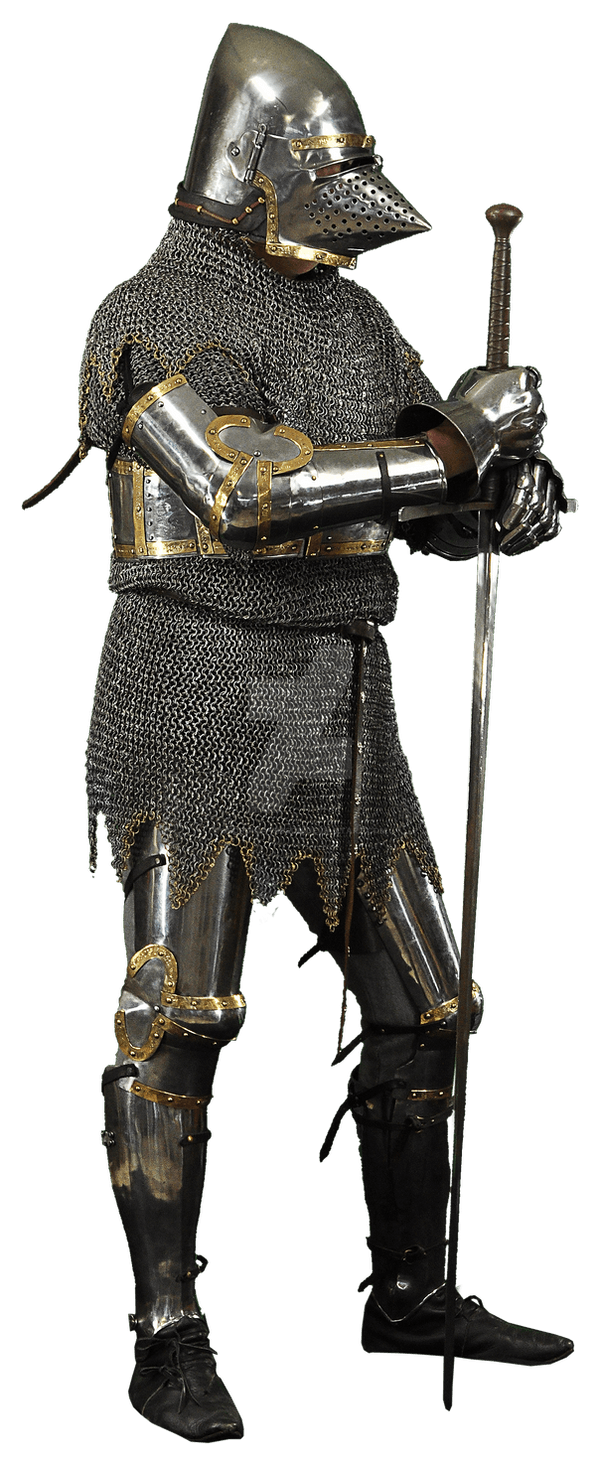
Medieval Knight_1 by Georgina-Gibson on DeviantArt View original
Is this image relevant?
Drachen - Dragon - other.wiki View original
Is this image relevant?
Knight in Shining Armor - All The Tropes View original
Is this image relevant?
Medieval Knight_1 by Georgina-Gibson on DeviantArt View original
Is this image relevant?
Common Tropes and Stereotypes
Films, TV shows, video games, novels, and Renaissance fairs all draw heavily on a shared set of medieval imagery. Some of these tropes have a basis in reality, but most are exaggerated or invented outright:
- Knights in shining armor and grand castles (real, but romanticized far beyond what most medieval warfare looked like)
- Dragons, wizards, and mythical beasts (pure fantasy, though medieval people did believe in supernatural forces)
- The Black Death as a backdrop of constant suffering (the plague was devastating but episodic, not a permanent state)
- Primitive technology and filthy living conditions (misleading; medieval people developed watermills, mechanical clocks, eyeglasses, and sophisticated agricultural techniques)
- Rigid, oppressive social hierarchies with no room for change (oversimplified; social mobility was limited but not nonexistent)
The problem isn't that these tropes exist. It's that they get treated as the whole picture, flattening a thousand years of diverse history into a single grim stereotype.
Influential Works and Representations
A handful of works have done more than anything else to shape how people picture the Middle Ages:
- J.R.R. Tolkien's The Lord of the Rings draws on medieval literature (Old English, Norse sagas) to build a fantasy world with feudal societies, epic quests, and supernatural beings. Tolkien was a medieval scholar himself, but his world is fantasy, not history.
- Monty Python and the Holy Grail parodies Arthurian legend and medieval tropes (knighthood, religious relics, witch trials), and many of its jokes have become the default way people think about the period.
- A Knight's Tale romanticizes medieval tournaments while deliberately inserting modern music and values, blurring the line between past and present.
- Game of Thrones depicts a gritty fantasy world loosely inspired by the Wars of the Roses and other medieval conflicts, emphasizing dynastic politics and violence.
Beyond film and literature, the commercial appeal of the Middle Ages shows up in dinner theaters (Medieval Times), Renaissance fairs, and a massive market for medieval-themed merchandise and experiences.
Compression and Projection of the Medieval Era
Two recurring problems stand out in how popular culture handles this period:
Compression. Popular representations tend to collapse the Early (476–1000), High (1000–1300), and Late Middle Ages (1300–1500) into a single, undifferentiated era. A Viking raid, a Gothic cathedral, and the Black Death might all appear in the same story as if they happened simultaneously. This erases the significant changes in politics, technology, religion, and culture that occurred across those centuries, and it ignores major regional differences between, say, 12th-century Sicily and 12th-century Scandinavia.
Projection. Modern creators frequently impose contemporary values onto medieval settings. Characters express modern ideas about individualism, equality, and secularism that would have been foreign to most medieval people. Current political debates get transplanted into the past. This can make stories more relatable, but it also distorts how medieval people actually understood their world.

Medieval Perceptions: Accuracy vs. Influence
Exaggerations and Misrepresentations
Popular culture exaggerates the prevalence and uniformity of several medieval institutions:
- Chivalry was an ideal code of conduct for knights, but it was inconsistently practiced and evolved over centuries. Real knights often behaved nothing like the courtly heroes of romance literature.
- Feudalism varied enormously by region and period. The neat pyramid of king → lord → vassal → serf that textbooks sometimes present is itself a simplification that many historians now question.
- Religious persecution like the Inquisition and witch trials did occur, but not constantly or everywhere. Large-scale witch trials, for instance, were actually more common in the early modern period (1500s–1600s) than during the Middle Ages proper.
Some of the most damaging misrepresentations involve what gets left out entirely. Popular depictions overwhelmingly focus on warfare and violence while ignoring the intellectual and cultural achievements of the period: Gothic architecture, the founding of Europe's first universities, the development of scholastic philosophy, advances in law and governance, and a rich tradition of vernacular literature from Dante to Chaucer.
The assumption that medieval people lived in constant squalor is also not supported by evidence. Archaeological findings show varied diets, organized towns, and standards of hygiene that, while different from modern ones, were not the filth-ridden nightmare that popular culture suggests.
Imposing Modern Conceptions
Depictions of medieval social structures often reflect modern assumptions rather than medieval realities:
- Class and mobility: Medieval society was hierarchical and corporate (organized around groups like guilds, monasteries, and communes), not individualistic. Projecting modern ideas of social mobility onto this world misrepresents how people understood their place in society.
- Race and identity: Medieval Europeans primarily categorized people by religion, language, and regional origin rather than by the racial categories that developed in later centuries. Treating medieval identity through a modern racial lens distorts the historical picture.
- Gender: Medieval gender roles were patriarchal, but the specific expectations and possibilities for women varied by region, class, and period. Applying current gender norms backward can obscure what was actually distinctive about medieval gender relations.
Medieval Europe is also frequently portrayed as isolated and homogeneous. In reality, it was deeply connected to the wider world. Trade, diplomacy, and intellectual exchange with the Byzantine Empire and the Islamic world were constant. Within Europe itself, there were vast cultural and linguistic differences between regions like France, Italy, the Iberian Peninsula, and the German-speaking lands.

Critiques and Complexities
Academic historians argue that popular simplifications create a distorted, mythologized "Dark Ages" that owes more to 19th-century Romantic and nationalist stereotypes than to actual medieval evidence. These portrayals fail to appreciate medieval society on its own terms.
That said, creative adaptations aren't worthless just because they're inaccurate. Medieval settings can serve as a space to explore universal themes like power, justice, and identity. They can function as a mirror for examining modern social questions, or simply offer audiences a sense of imaginative escape. The point isn't that fiction must be a history lecture. It's that viewers and readers should recognize the difference between a medieval-inspired story and actual medieval history.
Scholarship vs. Popular Representations
Contrasting Approaches and Goals
Historians reconstruct the medieval past through surviving evidence (documents, artifacts, art, architecture) with an emphasis on verifiable facts, cautious interpretation, and honest acknowledgment of what we don't know. Popular culture, by contrast, freely reimagines the period to serve narrative, entertainment, and sometimes ideological purposes.
These goals aren't necessarily in conflict, but they do produce very different pictures of the Middle Ages. Scholars have increasingly studied not just the medieval period itself but also how later eras have remembered and reinterpreted it. This field, known as medievalism or reception studies, examines how successive generations have constructed their own versions of the Middle Ages to serve contemporary agendas.
Collaboration and Mutual Influence
Academics and creators do sometimes work together productively:
- Historians have served as consultants on films (Kingdom of Heaven), TV shows (Vikings), and video games (Assassin's Creed), improving accuracy even if artistic license remains.
- Museums and exhibitions use popular works as entry points to teach real history to broader audiences.
Popular enthusiasm has also driven new scholarship. Hobbyist and reenactment communities have helped preserve traditional crafts like blacksmithing and textile production. Public interest in topics like medieval cooking, arms and armor, and the Crusades has created demand for accessible historical writing that might not otherwise exist.
Pseudohistory and Public Debate
The flip side of popular fascination is the spread of pseudohistory and conspiracy theories that go well beyond what evidence supports. The "phantom time hypothesis," for example, alleges that 297 years of the Middle Ages were fabricated entirely. More troublingly, far-right groups have appropriated medieval symbols (Crusader crosses, Viking runes, the idea of a "pure" medieval Christendom) to promote white nationalist ideologies.
These appropriations show that debates over the Middle Ages carry real contemporary political stakes:
- Controversies persist over the medieval roots of modern institutions like universities, parliaments, and banking systems, and over how medieval origins relate to modern national and racial identities.
- Both reactionary and progressive movements claim the medieval past to legitimize their positions.
- Tensions between scholarly evidence and popular ideology make interpreting the Middle Ages a live and sometimes contentious public debate, not just an academic exercise.
See Fiveable more often in Google
Mark Fiveable as a preferred source and Google is more likely to show you our guides in Top Stories, with a "preferred" badge in AI Mode and AI Overviews.