8.3 Plot Structure and Pacing

📚English 10 Unit 8 Review
8.3 Plot Structure and Pacing
📚 English 10
Plot Structure Elements
Plot structure and pacing are the tools you use to shape how a reader experiences your story. Structure gives your narrative a skeleton, and pacing controls how quickly or slowly the reader moves through it. Together, they determine whether someone stays engaged or loses interest halfway through.

Top images from around the web for Narrative Arc Components
Plot - Plot: Basics View original
Is this image relevant?
Distinguishing Features of Reading Types | English Composition 1 View original
Is this image relevant?
fiction - How to start writing a book? - Writing Stack Exchange View original
Is this image relevant?
Plot - Plot: Basics View original
Is this image relevant?
Distinguishing Features of Reading Types | English Composition 1 View original
Is this image relevant?
Narrative Arc Components
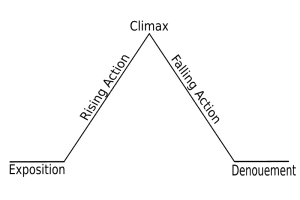
Most stories follow a five-part narrative arc. Each part serves a specific purpose:
- Exposition introduces your characters, setting, and the initial situation. This is where readers learn who matters, where they are, and what's normal before things change.
- Rising action is the longest section. A series of events escalates the conflict through complications and obstacles, building tension toward the climax. Each event should raise the stakes higher than the last.
- Climax is the turning point, the moment of highest tension. This often involves a major confrontation or a critical decision the protagonist must make. Everything in the story has been building to this.
- Falling action shows the consequences of the climax. The conflict starts to unwind, and the effects of that turning point ripple outward.
- Resolution provides closure. Loose ends get tied up, subplots wrap, and the reader sees the final outcome of the story's conflict, whether that's triumph, tragedy, or transformation.
Applying Plot Structure
Not every story arranges these elements the same way. A linear plot moves chronologically from start to finish. A non-linear plot uses flashbacks, flash-forwards, or parallel storylines to rearrange time. An episodic structure strings together a series of connected events rather than building toward a single climax.
When you're reading or writing, ask yourself: Where are the key plot points? Identify the inciting incident (the event that kicks the story into gear), the midpoint (where the stakes shift), and the climax. Then evaluate whether the structure serves the story. Does the pacing feel right? Does the resolution feel earned?
In your own writing, try experimenting. A three-act structure (setup, confrontation, resolution) is the most common framework, but a five-act structure adds more room for complications and reversals. Pick the structure that fits the story you're telling.
Pacing and Narrative Flow
Pacing is how fast or slow your story feels to the reader. Even a well-structured plot can fall flat if the pacing is off.

Techniques for Controlling Pacing
- Vary sentence length. Short, choppy sentences speed things up and create urgency. Longer, flowing sentences slow the reader down for introspection or atmosphere. Read your work aloud to hear the rhythm.
- Use cliffhangers and plot twists. Ending a scene or chapter on an unresolved moment pulls readers forward. An unexpected character action or revelation at the right moment keeps them guessing.
- Control information strategically. Foreshadowing plants hints about what's coming. Red herrings mislead on purpose. Delayed revelations hold back key information to build anticipation. All three give you control over when the reader knows what.
- Balance dialogue, action, and description. Rapid-fire dialogue speeds up a scene and builds tension. Detailed description slows things down for world-building or emotional weight. Action sequences land harder when they follow quieter moments.
- Use time skips. Not every moment in a character's life matters to the story. Compress travel, training, or routine events with a brief transition so you can spend your pages on the scenes that count.
Effects of Pacing on Reader Experience
Slow pacing works when you need to build suspense through a gradual reveal, develop a character through introspective moments, or establish atmosphere with rich setting details. Think of a mystery that slowly tightens the net around the truth.
Fast pacing creates urgency (a ticking clock), excitement (a chase scene), or even disorientation (a character overwhelmed by chaotic events). It keeps the reader's pulse up.
The danger is inconsistent pacing. Rushing through a pivotal scene robs it of impact. Lingering too long on unimportant details bores the reader. Effective pacing alternates between high-tension moments and quieter, reflective scenes. Think of it as breathing: intensity, then release, then intensity again.
You can also match pacing to character emotion. Frantic, fragmented pacing mirrors a character's anxiety. Slow, drifting pacing can reflect sadness or boredom. When the rhythm of your prose matches what your character feels, the reader feels it too.
Compelling Conflicts and Obstacles
Conflict is the engine of your story. Without it, there's no tension, no stakes, and no reason for the reader to keep going.

Types of Conflict
- External conflicts pit characters against outside forces: another character (a rival or enemy), society (oppressive rules or cultural pressure), nature (a storm, a wilderness survival situation), or technology (a dystopian system, a malfunctioning machine).
- Internal conflicts happen inside a character's mind. These include moral dilemmas (choosing between two bad options), psychological struggles (overcoming trauma or addiction), or conflicting desires (love versus duty, ambition versus integrity).
- Interpersonal conflicts arise specifically between characters because of clashing personalities, goals, or beliefs. Family feuds, romantic rivalries, and ideological disagreements all fall here.
- Situational conflicts drop characters into challenging circumstances that test their abilities, like being stranded somewhere unfamiliar or navigating a crisis they didn't cause.
Most strong stories layer several types of conflict together. A character fighting a villain (external) while doubting their own courage (internal) is more compelling than either conflict alone.
Crafting Effective Conflicts
- Make conflicts relevant to your characters. The best conflicts test a character's specific strengths, weaknesses, and values. A pacifist forced into a fight faces a more meaningful challenge than a trained soldier in the same situation.
- Layer conflicts and raise the stakes as the story progresses. Start with smaller obstacles and build toward the major showdown. Each new complication should feel harder than the last.
- Force difficult choices with real consequences. When a character must sacrifice something they care about, their decision reveals who they truly are. That's where character growth happens.
- Balance resolution with new challenges. If you resolve every problem too early, the story loses momentum. Solving one problem only to uncover a bigger one keeps the narrative moving.
- Connect conflicts to your themes. If your story is about trust, your conflicts should test trust. A conflict about honesty that reflects a larger theme of betrayal makes the whole narrative feel cohesive.
Satisfying Resolutions
The resolution is where you deliver on the promises your story has been making. A weak ending can undermine even a great plot.
Providing Closure and Fulfillment
- Address the central conflict. Answer the key questions the story raised. Does the protagonist achieve their goal? What happens in the final confrontation? Readers need to see the outcome.
- Show character change. Demonstrate how the protagonist has grown or been altered by their journey. A selfish character who learns to sacrifice, or a naive character who gains hard-won wisdom, gives the story emotional payoff.
- Tie up loose ends. Resolve subplots and secondary character arcs. Unexplained mysteries or abandoned storylines leave readers feeling unsatisfied.
- Keep it logical. The resolution should follow naturally from the characters' actions and the story's established rules. Avoid deus ex machina, where a sudden, unearned solution appears out of nowhere to fix everything. If the answer wasn't set up earlier in the story, it won't feel earned.
Unconventional Resolutions
Not every story ends with a neat bow, and that's fine when it's intentional:
- Ambiguous or open-ended resolutions leave room for interpretation. These work well in literary fiction or horror, and they can set up a sequel. The key is that the central conflict still feels addressed, even if not every question is answered.
- Tragic resolutions have the protagonist fail or suffer a great loss. These can be powerful in cautionary tales or stories exploring difficult aspects of the human condition, but they need to feel purposeful, not just bleak for shock value.
- Twist endings surprise the reader by reframing everything that came before, like revealing an unreliable narrator. These only work if they're foreshadowed well enough that a reader could spot the clues on a reread.
- Cyclical resolutions mirror the beginning of the story, emphasizing themes of repetition or inevitability. A character repeating their parents' mistakes, for instance, can be haunting.
- Subversive resolutions challenge genre expectations. The hero joins the villain. The quest turns out to be pointless. These are memorable when executed skillfully, but they risk frustrating readers if they feel like the story broke its own promises without good reason.
See Fiveable more often in Google
Mark Fiveable as a preferred source and Google is more likely to show you our guides in Top Stories, with a "preferred" badge in AI Mode and AI Overviews.