14.3 Performance and Breach in Sales Contracts

📄Contracts Unit 14 Review
14.3 Performance and Breach in Sales Contracts
📄 Contracts
Performance in Sales Contracts

Top images from around the web for Seller's obligations under UCC Article 2
Talk:Risk Management Framework - Wikipedia View original
Is this image relevant?
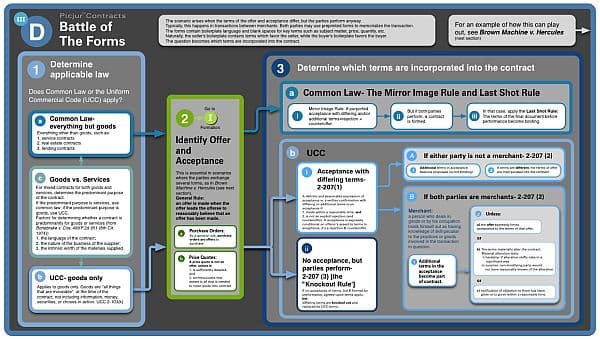
Battle of the Forms | UCC 2-207 View original
Is this image relevant?
Frontiers | Buffering the Breach: Examining the Three-Way Interaction Between Unit Climate Level ... View original
Is this image relevant?
Talk:Risk Management Framework - Wikipedia View original
Is this image relevant?
Battle of the Forms | UCC 2-207 View original
Is this image relevant?
Seller's obligations under UCC Article 2
The seller's core duty is straightforward: make the goods available to the buyer at the agreed time and place. But how that delivery happens matters a lot, because it determines when the seller's responsibility ends and the buyer's begins.
Shipment contracts vs. destination contracts are the key distinction:
- In a shipment contract, the seller's duties end once the goods are delivered to the carrier (a trucking company, shipping line, etc.). After that, the goods are the buyer's problem. These are the default under UCC Article 2 unless the contract says otherwise.
- In a destination contract, the seller's duties continue until the goods actually arrive at the agreed destination, like the buyer's warehouse.
Risk of loss follows from this distinction. Risk of loss determines who bears the financial hit if goods are damaged or lost in transit. In a shipment contract, risk passes to the buyer when the seller hands goods to the carrier. In a destination contract, risk stays with the seller until the goods reach the buyer. If there's been a breach, the breaching party bears the risk of loss regardless of these rules.

Buyer's duties in sales contracts
The buyer has three main duties that happen in sequence: inspect, accept (or reject), and pay.
- Inspection: The buyer gets a reasonable time after delivery to examine the goods and confirm they match the contract. This right exists unless the contract specifically excludes it (as with COD terms, where the buyer pays before inspecting).
- Acceptance: This happens in one of three ways: (1) the buyer tells the seller the goods conform, (2) the buyer tells the seller they'll keep the goods despite a non-conformity, or (3) the buyer fails to reject within a reasonable time. Once acceptance occurs, the buyer is obligated to pay the contract price.
- Payment: The buyer must pay the agreed price on the agreed terms. The contract may specify terms like cash on delivery (COD) or net 30 days. Late payment is a breach.

Breach and Perfect Tender in Sales Contracts
Breach of sales contracts
Either party can breach a sales contract. The most common scenarios:
- Seller breaches by failing to deliver on time, delivering non-conforming goods, or repudiating before performance is due.
- Buyer breaches by wrongfully rejecting conforming goods, failing to pay as agreed, or repudiating before performance is due.
Anticipatory repudiation deserves special attention. This occurs when one party clearly communicates, before performance is due, that they won't perform. The other party doesn't have to wait around for the actual breach date. They can treat the repudiation as an immediate breach and pursue remedies right away. They can also wait a commercially reasonable time for the repudiating party to retract.
Perfect tender and exceptions
The perfect tender rule (UCC § 2-601) is stricter than the common law's substantial performance standard. It requires the seller to deliver goods that conform to the contract in every respect. If the goods fail to conform in any way, the buyer has three options:
- Reject the entire shipment
- Accept the entire shipment
- Accept some commercial units and reject the rest
That said, several important exceptions soften the perfect tender rule:
- Seller's right to cure (§ 2-508): If the seller delivers non-conforming goods and the time for performance hasn't expired, the seller can notify the buyer and deliver conforming goods within the remaining time. Even after the deadline, the seller may have additional time to cure if the seller had reasonable grounds to believe the original tender would be acceptable (for example, the buyer accepted similar goods in past transactions).
- Installment contracts (§ 2-612): When a contract calls for delivery in separate installments, the buyer can reject a non-conforming installment only if the non-conformity substantially impairs the value of that installment and can't be cured. The buyer can cancel the whole contract only if the non-conformity substantially impairs the value of the entire contract.
- Acceptance of non-conforming goods: Once a buyer accepts goods, they lose the right to reject. However, acceptance doesn't waive the buyer's right to recover damages for the non-conformity, as long as the buyer notifies the seller of the defect within a reasonable time. A buyer can also revoke acceptance under § 2-608 if the non-conformity substantially impairs the value of the goods and the buyer accepted either without knowledge of the defect or with a reasonable expectation that the seller would cure it.
See Fiveable more often in Google
Mark Fiveable as a preferred source and Google is more likely to show you our guides in Top Stories, with a "preferred" badge in AI Mode and AI Overviews.