15.4 Avoiding Ambiguity and Potential Disputes

📄Contracts Unit 15 Review
15.4 Avoiding Ambiguity and Potential Disputes
📄 Contracts
Drafting Clear and Unambiguous Contracts
Ambiguity is the single biggest source of contract disputes. When two parties read the same clause and reach different conclusions about what it means, you've got a problem that could end up in litigation. The goal of clear drafting isn't just "good writing" for its own sake; it's risk management. Every vague term, misplaced modifier, or undefined acronym is a potential argument waiting to happen.
This section covers the core techniques for eliminating ambiguity: choosing precise language, defining terms consistently, spotting common trouble spots, and using grammar and formatting to reinforce clarity.

Top images from around the web for Techniques for clear contract language
9.1 Ambiguity – Essentials of Linguistics View original
Is this image relevant?
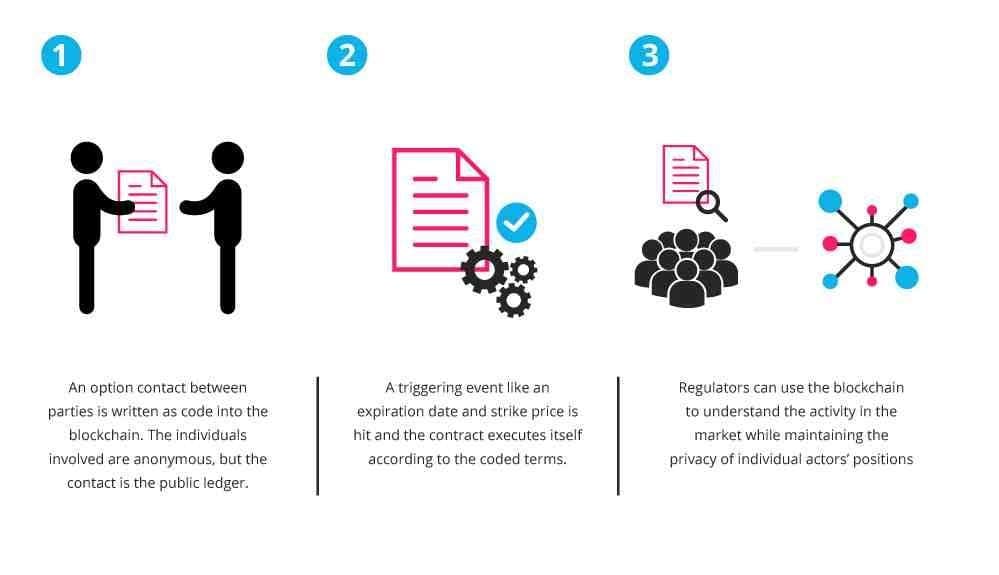
Writing Software Contracts for Ethereum — Part 2 – Satish Manohar Talim – Medium View original
Is this image relevant?
Negotiation | Organizational Behavior / Human Relations View original
Is this image relevant?
9.1 Ambiguity – Essentials of Linguistics View original
Is this image relevant?
Writing Software Contracts for Ethereum — Part 2 – Satish Manohar Talim – Medium View original
Is this image relevant?
Techniques for Clear Contract Language
The simplest way to prevent disputes is to write so clearly that there's only one reasonable interpretation. Here are the main techniques:
- Use plain language. Avoid legalese like "hereinafter" or "witnesseth" when a simpler word works. If you must use a technical term like "force majeure," define it explicitly.
- Keep sentences short. Long, multi-clause sentences are where ambiguity hides. If a sentence has more than one idea, split it into two.
- Be specific. Instead of "payment is due promptly," write "payment is due within 30 days of invoice date." Instead of "the project scope," describe exactly what deliverables are included.
- Avoid vague standards. Phrases like "reasonable efforts" or "timely manner" mean different things to different people. Either define them or replace them with measurable criteria.
- Use active voice. Active voice makes it clear who is responsible for what. Compare "The goods shall be delivered" (by whom?) with "Seller shall deliver the goods" (clear responsibility).
- Eliminate double negatives. "Not unreasonable" forces the reader to do mental gymnastics. Say "reasonable" instead.
- Provide examples when needed. For complex or abstract concepts, a concrete example or illustration removes guesswork. For instance, listing specific categories of confidential information is more useful than leaving the term open-ended.

Importance of Consistent Term Definitions
Defined terms are the backbone of a clear contract. When done well, they eliminate entire categories of disputes. When done poorly, they create new ones.
How to define terms effectively:
- Identify every term in the contract that could have more than one interpretation. Common candidates include "Delivery Date," "Confidential Information," "Services," and "Material Breach."
- Write a clear definition using "means" or "refers to." For example: "Confidential Information" means any non-public information disclosed by either party, whether in written, oral, or electronic form.
- Avoid circular definitions. Defining "Confidential Information" as "information that is confidential" tells the reader nothing. The definition must add specificity beyond the term itself.
- Capitalize defined terms consistently throughout the contract. This signals to the reader that the word carries a specific contractual meaning. If a word is not capitalized, it carries its ordinary meaning.
- Pick one term and stick with it. If you define "Seller," don't switch to "Vendor" or "Supplier" later in the document. Synonyms that seem harmless in everyday writing can create real ambiguity in a contract, because a court might ask whether you intended a different meaning.

Addressing Ambiguity in Contracts
Even careful drafters can introduce ambiguity without realizing it. Knowing where ambiguity tends to appear helps you catch it before it becomes a dispute.
Common sources of ambiguity:
- Vague time references: "promptly," "as soon as possible," "in a timely manner." These are subjective and nearly impossible to enforce consistently.
- Undefined performance standards: "best efforts," "commercially reasonable efforts," and "good faith" all have different legal implications depending on the jurisdiction. If you use them, define what they require in your specific context.
- Subjective qualifiers: Words like "material," "substantial," and "satisfactory" invite disagreement. What counts as a "material breach" to one party may seem minor to the other.
- Ambiguous pronouns: "It," "they," and "them" can refer to multiple possible antecedents. If a sentence could be read two ways, it will be.
- Vague modifiers: "Such," "said," and "aforementioned" often point backward in the document without making clear exactly what they refer to.
How to fix these problems:
- Replace vague terms with objective criteria. Instead of "Material Breach," try: "Material Breach" means any breach resulting in damages exceeding or any failure to perform a core obligation listed in Section 3.
- Use specific dates and deadlines. "Within 30 days of receipt" or "by June 30, 2025" leaves no room for argument. "Promptly" leaves plenty.
- Repeat the noun instead of using a pronoun. It may feel repetitive, but "Seller shall deliver the goods. The goods shall be packaged securely." is far clearer than "Seller shall deliver the goods. They shall be packaged securely." (Does "they" refer to the goods or the Seller?)
- Use "including, but not limited to" carefully. This phrase signals that a list is illustrative, not exhaustive. For example: "Confidential Information includes, but is not limited to, trade secrets, financial data, and customer lists." Without this language, a court might interpret your list as the complete definition.
Grammar and Formatting for Clarity
Grammar mistakes in contracts aren't just embarrassing; they can change the meaning of an obligation. A few areas deserve special attention.
Grammar essentials:
- Subject-verb agreement. "The parties agree" (correct) vs. "The parties agrees" (incorrect). This matters more than it seems, because errors can make it unclear whether a clause applies to one party or both.
- Correct verb tenses. Contracts typically use "shall" for obligations ("Seller shall deliver") and "may" for permissions ("Buyer may request an extension"). Mixing tenses or using them inconsistently creates confusion about whether something is required or optional.
- No run-on sentences or fragments. Each sentence should express one complete idea. If you need a semicolon to hold a sentence together, consider splitting it into two.
Punctuation that matters:
- Commas in lists. Always use the Oxford comma (the comma before "and" in a list). The difference between "financial data, customer lists, and trade secrets" and "financial data, customer lists and trade secrets" has actually been litigated. The Oxford comma removes ambiguity about whether the last two items are grouped together.
- Commas in conditional clauses. "If the Buyer fails to make payment, the Seller may terminate the contract." The comma separates the condition from the consequence, making the structure clear.
- Semicolons between related clauses. "The Seller shall deliver the goods; the Buyer shall make payment upon receipt." This links two obligations while keeping each one distinct.
- Modifier placement. "The contract signed by both parties is enforceable" is clear. "The contract is enforceable, signed by both parties" is ambiguous (is "signed by both parties" a condition or just a description?).
Formatting for readability:
- Use descriptive headings ("Confidentiality," "Payment Terms") and subheadings ("Non-Disclosure Obligations") to organize the contract logically.
- Number all sections (Section 1) and subsections (1.1, 1.2) so that cross-references are precise. "As described in Section 4.2" is enforceable; "as described above" is not always clear.
- Maintain consistent formatting throughout: same font, font size, and spacing. Inconsistencies can signal sloppy drafting and undermine credibility.
Proofreading is non-negotiable. Review for spelling errors ("agrement" vs. "agreement"), grammar mistakes ("their" vs. "there"), missing punctuation, and broken cross-references. Check that every defined term is actually defined and that no synonyms have crept in. Have at least one person who wasn't involved in drafting review the final version with fresh eyes. They'll catch ambiguities that the drafter has become blind to.
See Fiveable more often in Google
Mark Fiveable as a preferred source and Google is more likely to show you our guides in Top Stories, with a "preferred" badge in AI Mode and AI Overviews.